
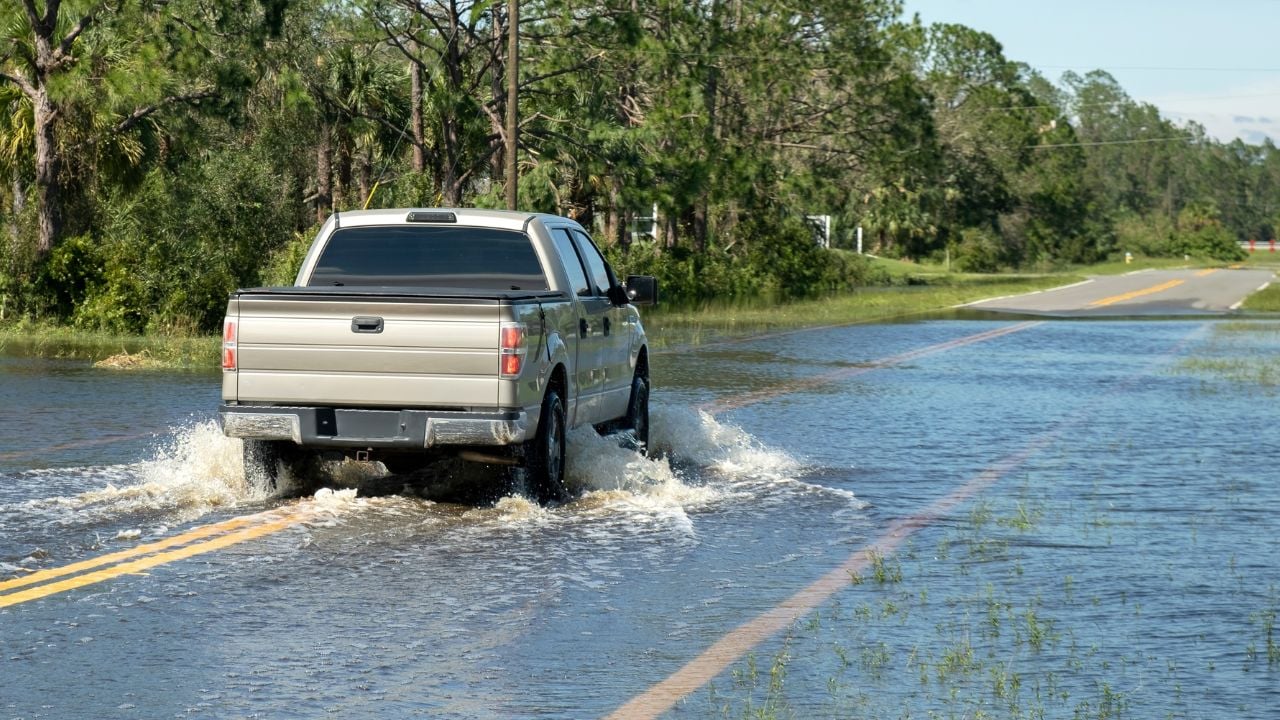
5 Florida Terms and Rules That Don’t Mean What They Sound Like

A label that sounds simple can mean something very different once your money is on the line.
Here’s what some terms and conditions really mean for Floridians, in plain English.
Note: This is general information, not legal, property, or insurance advice. Rules and requirements are subject to change.
1. No-Fault Car Insurance
Florida’s “no-fault” car insurance sounds like nobody is ever at fault for a crash.
Insurers still work out fault every time; the label just changes who pays first.
Florida Statute 627.736 requires you to carry Personal Injury Protection (PIP).
Your insurer pays your medical bills up to $10,000, regardless of who caused the wreck.
That’s the entire “no-fault” part.
A separate law, Florida Statute 627.737, still lets you sue the driver who hit you.
But only once your injury meets one of these thresholds: A significant and permanent loss of a bodily function, a permanent injury beyond scarring, significant permanent scarring, or death.
A sprained wrist that heals in six weeks doesn’t clear that bar, no matter how clearly the other driver ran the light.
Florida lawmakers have tried to scrap the no-fault system outright more than once.
House Bill 1181 died in committee on June 16, 2025, and the latest attempt, Senate Bill 522, died in committee on March 13, 2026.
Until lawmakers change the law, your policy pays first, and the other driver only owes you more once your injury clears that bar.
2. As-Is Real Estate Contracts
Florida’s “AS IS” real estate contract means the home sells exactly as it stands, with no repairs promised.
That sounds like you’re giving up your right to complain about anything wrong with the house.
That’s not what the form does.
The state’s standard AS IS contract for Sale and Purchase is the version Florida Realtors and the Florida Bar put in front of many buyers.
It still gives you an inspection period with a walk-away clause built in.
You can cancel for any reason before that window closes.
Your deposit comes back in writing, no explanation required.
Buyers keep the leverage.
“AS IS” describes the condition of the house on the day you sign, not what you’re allowed to ask about later.
Florida law still requires the seller to disclose defects they know about that you couldn’t reasonably discover walking through the house.
That duty doesn’t disappear just because the contract says “AS IS” at the top.
3. Homestead Exemption
You probably think of Florida’s homestead exemption as one single benefit.
It’s two separate protections that share one name.
The property tax exemption knocks up to $50,000 off your home’s taxable value through your county property appraiser, capped at that amount no matter what the home is worth.
A separate homestead protection lives in the Florida Constitution.
It has nothing to do with your tax bill.
It’s about creditors, not counties.
Section 4 of Article X in the Florida Constitution shields your home from a forced sale by most creditors, with no dollar cap and no application to file.
That protection covers a half-acre or less inside a city, or up to 160 acres outside a city.
You only lose that protection to a short list of exceptions: Unpaid property taxes, a mortgage you signed, or a contractor’s lien for labor or materials on the house.
Two different protections, one shared name, and it’s easy to assume filing for the tax break locks in the creditor shield too.
The Two Layers Inside That $50,000
Florida’s homestead property tax exemption doesn’t arrive as one flat $50,000 cut.
The first $25,000 of your home’s assessed value is exempt from every property tax you owe, school taxes included.
A second $25,000 comes off the value between $50,000 and $75,000, but that layer skips school taxes, so it saves less than the first layer does.
If your home is assessed under $50,000, you only qualify for the first layer, never the full $50,000 break Florida’s Department of Revenue advertises.
4. Milestone Inspection
A “milestone inspection” sounds like a small check-in, the kind of form somebody signs and files away.
It isn’t.
Florida Statute 553.899 requires a licensed engineer or architect to physically inspect your building’s load-bearing structure once it reaches a set age.
If the report comes back failing, your condo association can’t just opt out of the repairs it orders.
The law now covers any building three habitable stories or taller, not just three stories.
The old statute simply read “three stories” until 2025’s House Bill 913 added the word “habitable.”
Your building hits its first deadline at 30 years old, measured from its certificate of occupancy.
If you’re within three miles of the coast, that deadline can arrive earlier, at 25 years.
But only if your local building official decides local conditions call for it.
Not automatically anymore.
That’s the detail older explainers keep getting wrong: The 25-year coastal trigger used to be automatic.
Current law leaves it up to a local call instead.
If you own a unit in a building that hits one of those ages, the inspection bill lands on your association.
Any repairs it uncovers eventually land on your maintenance fees too.
The only buildings excused are single-family homes, duplexes, triplexes, and fourplexes with three or fewer habitable stories.
Psst! Think you’ve got Florida’s tricky small print figured out? Flip these cards and see how many you get right.
5. Mandatory Evacuation Order
On paper, Florida treats a mandatory evacuation order as a command with teeth.
Florida Statute 252.50 makes it a second-degree misdemeanor to violate an order issued under the state’s emergency management law.
A county’s authority to order that evacuation in the first place doesn’t rest on one clean statute.
A 1995 Florida Attorney General opinion traces it to Chapter 252 and a 1980 executive order instead.
That’s the part almost nobody expects.
What changes once officials issue the order is what Florida stops promising you.
Storm conditions themselves can keep help from reaching you until the worst of it passes.
Getting back into an evacuated zone often means waiting behind a checkpoint until officials reopen it.
Ouch.
During Hurricane Irma in 2017, Jacksonville’s mayor acknowledged that residents in flooded areas along the river had ignored the city’s mandatory evacuation order.
The sheriff’s office pulled 356 of them out of their homes, and its only public follow-up was a tweet asking people to take the next order more seriously.
8 Documents You Need to Sell a House in Florida Without a Realtor
Florida Statute 201.02 sets the documentary stamp tax at 70 cents for every $100 of a home’s sale price, due the moment the county records the deed.
Skipping a realtor doesn’t skip a single one of Florida’s required disclosures. It just means you’re the one chasing them down.
8 Documents You Need to Sell a House in Florida Without a Realtor
6 Florida Festivals Locals Guard From Tourists Every Fall

Census Bureau estimates put Micanopy’s population at 747, and its fall festival turns that small a village into its busiest weekend of the year.
These Florida fall festivals stay busy with locals who show up before the out-of-state cars find the parking.
