
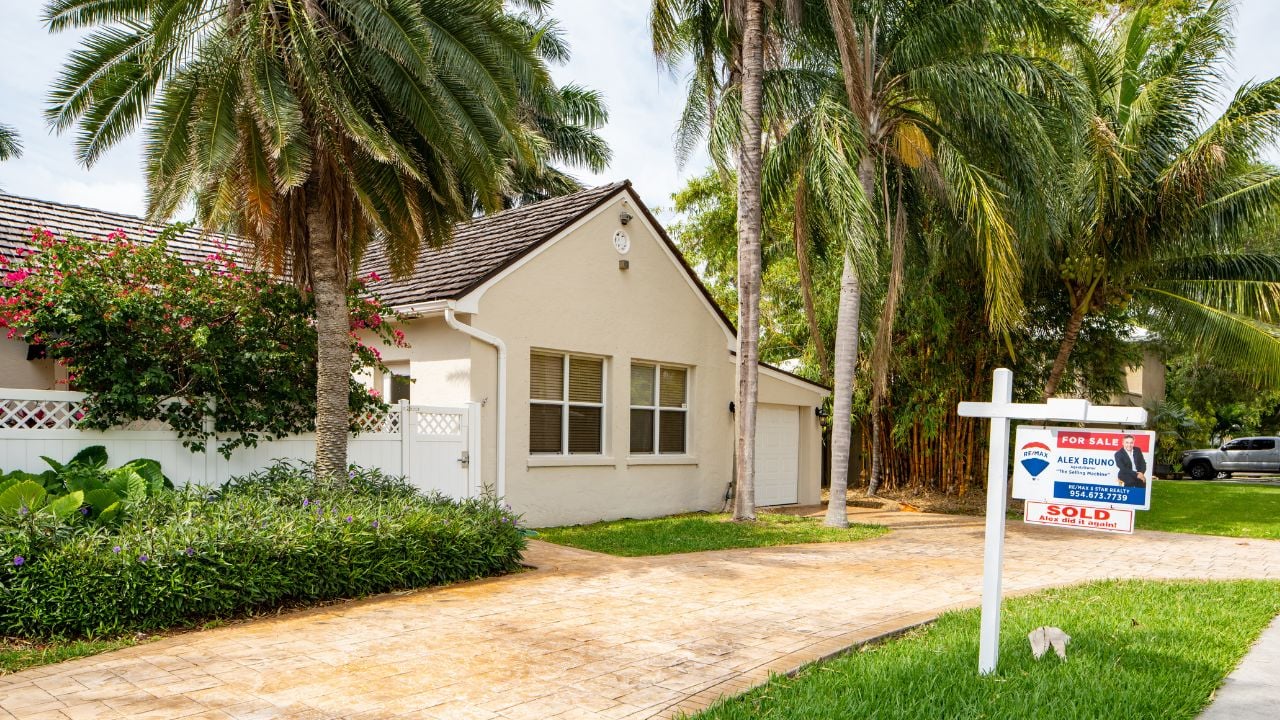
8 Documents You Need to Sell a House in Florida Without a Realtor

Florida charges a documentary stamp tax of 70 cents per $100 of the sale price, which comes to $2,450 on a $350,000 house the moment the county records the deed.
Selling without an agent doesn’t remove one document from the pile. It removes the person who used to chase them down.
The disclosures start with defects, radon and property taxes, and an HOA’s estoppel letter can cost $299 on its own.
Note: This is general information, not legal or tax advice. Documents, fees, and requirements are subject to change.
1. Written Disclosure of Known Defects
Florida doesn’t hand FSBO sellers a government form for disclosing problems with a house, but state law still holds them accountable.
The Florida Supreme Court settled it in Johnson v. Davis, ruling that a seller who knows about a defect that hurts the home’s value has to say so if it isn’t obvious to the buyer.
Silence counts as fraud.
Real estate agents usually hand buyers a standard property disclosure form as a paper trail.
Without one, an FSBO seller should still put every known issue in writing and get the buyer’s signature on it.
That written record protects a seller after closing, not a verbal promise made in the driveway.
2. Radon Gas Disclosure
Florida requires a radon-gas warning on real estate paperwork that many sellers have never heard of.
State law demands the exact radon notice wording appear on at least one document signed at or before the sale contract.
It’s one paragraph.
An FSBO seller can type it directly into the purchase agreement or attach it as a separate page.
Leaving it out isn’t an option, since it applies to every home sale in the state, new or decades old.
3. Property Tax Disclosure Summary
Florida sellers also have to hand buyers a written warning about property taxes before both sides sign the contract.
Under Florida law, that disclosure has to tell the buyer not to assume the seller’s current tax bill carries over.
A change of ownership can trigger a full reassessment.
The number resets.
A buyer who skips this step can end up shocked by a tax bill that runs thousands more than what the listing implied.
Many Florida contracts already build the disclosure in as a page or an addendum.
4. Title Search and Mortgage Payoff Documents
Florida law won’t let a seller hand over a house they can’t clear.
A title search digs through the county’s public records for old liens, judgments, and unpaid contractor claims attached to the property.
Nothing slips through.
An FSBO seller needs that search done just as much as a buyer with an agent does.
The seller’s mortgage lender still has to issue a payoff letter stating the exact balance needed to release the loan.
That number is rarely the same as what’s left on the last statement.
Psst! How much do you know about Florida property law? Take our quiz and see how many you can get right.
Quiz
Florida Property IQ Quiz
Answer these questions on Florida real estate and homeownership. We bet you can’t get them all right. Prove us wrong?
Florida’s constitutional homestead protection shields a home from a forced sale by creditors. Inside a city limit, how much land does that protection cover?
5. Deed and Its Documentary Stamp Tax
Florida taxes the sale itself, right on the deed that transfers the house.
The state charges a documentary stamp tax of 70 cents per $100 of the sale price in every county except Miami-Dade, which charges 60 cents on a single-family home instead.
A non-single-family property in Miami-Dade pays an extra 45-cent surtax per $100 on top of that rate.
No exceptions.
On a $350,000 sale, that's $2,450 due the moment the county records the deed.
By custom, not law, the seller usually pays it, though the buyer and seller can agree to split it any way they want in the contract.
Small mistakes in a Florida deed can turn into big deed problems long after closing, and sellers who skip a lawyer's review sometimes learn that the hard way.
A notary has to witness the deed signature no matter how the sale gets done, and Florida requires two additional witnesses on top of that for the seller's signature.
Many lenders still require a wet-ink signature on the note as their policy.
Florida law itself has allowed remote online notarization for closing documents, mortgages included, since 2020 under Chapter 117, F.S.
6. HOA or Condo Estoppel Certificate
Florida homes inside an HOA or condo association carry one more document that surprises many first-time FSBO sellers.
State law requires the association to issue a written estoppel certificate spelling out exactly what the owner owes.
It has to arrive within 10 business days of a written request.
That letter isn't free.
Current Florida rules cap the fee at up to $299 for a standard request, plus another $119 if a seller needs it rushed within three business days.
The Department of Business and Professional Regulation adjusts those caps for inflation every five years, and the current figures reflect the 2022-2027 adjustment cycle.
A delinquent account can add up to $179 more on top of that.
Miss that 10-day window as the association, and the law says no fee can be charged at all, so a slow board loses money by dragging its feet.
7. Closing Disclosure and Settlement Statement
Florida FSBO sellers still need somebody to prepare the actual closing paperwork, even without a real estate agent in the picture.
That document, often called a closing disclosure or settlement statement, itemizes every dollar moving between buyer and seller: The sale price, prorated taxes, doc stamp tax, and any payoff amounts.
Every number has to match.
Florida Bar rules and case law on the unauthorized practice of law generally restrict who may prepare those binding closing documents.
A licensed title insurance agent only has to run the closing when the sale involves issuing title insurance, under F.S. 626.8417.
A cash sale that skips title insurance can legally close without either professional, though the buyer then goes without that protection.
Who's Allowed to Close a Florida Sale
Florida's closing rules turn on what the sale involves, not on one blanket law that puts a professional in charge of every closing.
A title insurance agent becomes required the moment title insurance enters the deal, since that's the trigger F.S. 626.8417 sets.
Preparing someone else's binding closing paperwork without a license is what Florida's unauthorized-practice-of-law rules target.
That risk is why many FSBO sellers still bring in a closing professional, even on a straightforward cash sale.
8. Permit Closure Letter or Lien Search
Florida sellers who ever pulled a permit for a pool, a roof, or an addition need to close the loop before listing the house.
An open or expired permit shows up fast in a municipal records check.
The Florida Bar's guidance for buyers flags unpermitted or open work as a standard closing question.
It stalls sales.
A quick call to the county or city building department, or a professional lien search, shows whether an old permit ever got its final inspection.
Florida isn't the only state where skipping a permit comes back to bite a seller, and closing the loop early keeps a sale from stalling at the worst moment.
The Federal Disclosure FSBO Sellers Forget
Florida FSBO sellers get so focused on state paperwork that a federal requirement often slips through the cracks.
Any home built before 1978 needs a federal lead-based paint disclosure and pamphlet handed to the buyer before the sale contract is signed.
That rule applies no matter which state the house sits in.
Nobody's tracking it for you.
An FSBO seller unloading an older Florida home has to track this one down alone, since there's no listing agent's checklist catching it for them.
Psst! Are you ready to sell your Florida home without a realtor? Run through this checklist and see where you stand.
FAQ
Quick answers to what sellers ask most about going FSBO.
Do I Need a Real Estate Agent to Sell My House in Florida?
No, Florida doesn't require a real estate agent to sell a home.
A title insurance agent is required only once the sale includes title insurance, and unauthorized-practice-of-law rules still limit who can prepare the paperwork.
What Is the Seller's Legal Duty to Disclose Problems With a Florida Home?
Under the Florida Supreme Court's 1985 ruling in Johnson v. Davis, a seller who knows about a hidden defect that hurts the home's value has to disclose it to the buyer.
The ruling doesn't require that disclosure in writing, but putting it in writing protects a seller if a dispute comes up later.
How Much Does an HOA or Condo Estoppel Certificate Cost in Florida?
State law currently caps the fee at up to $299 for a standard request.
A rush delivery within three business days adds $119, and a delinquent account can add up to $179 more.
Who Pays the Florida Documentary Stamp Tax on a Deed?
Florida law doesn't assign the cost; it's set by custom. The seller typically covers it at 70 cents per $100, except in Miami-Dade, where it's 60 cents on a single-family home.
What Happens If There's an Open Building Permit When I Sell My Florida Home?
An open or expired permit can cloud the sale, since a buyer's lender or title company will often flag it.
Many sellers order a lien search ahead of time to close it out before listing.
That's the whole file.
Recording the deed itself takes no license of any kind, since it's a clerical filing step at the county clerk's office, not a legal service.
A seller or buyer can walk the deed into the courthouse, mail it in, or e-record it through an approved online vendor, the same options Florida's closing agents already use.
7 Reasons Your Florida Driver's License Renewal Was Denied (and How to Fix Each One)
One overlooked toll invoice can turn into a statewide hold on a Florida driver's license.
The fix is almost always simple, once a driver knows which of seven reasons tripped the renewal.
7 Reasons Your Florida Driver's License Renewal Was Denied (and How to Fix Each One)
9 Florida State Parks Locals Visit Before Tourists Find Them

Florida runs 175 state parks, trails, and historic sites, and a typical road trip only touches three or four of them.
Locals reach for these nine parks long before a tourist ever finds them.
9 Florida State Parks Locals Visit Before Tourists Find Them
