
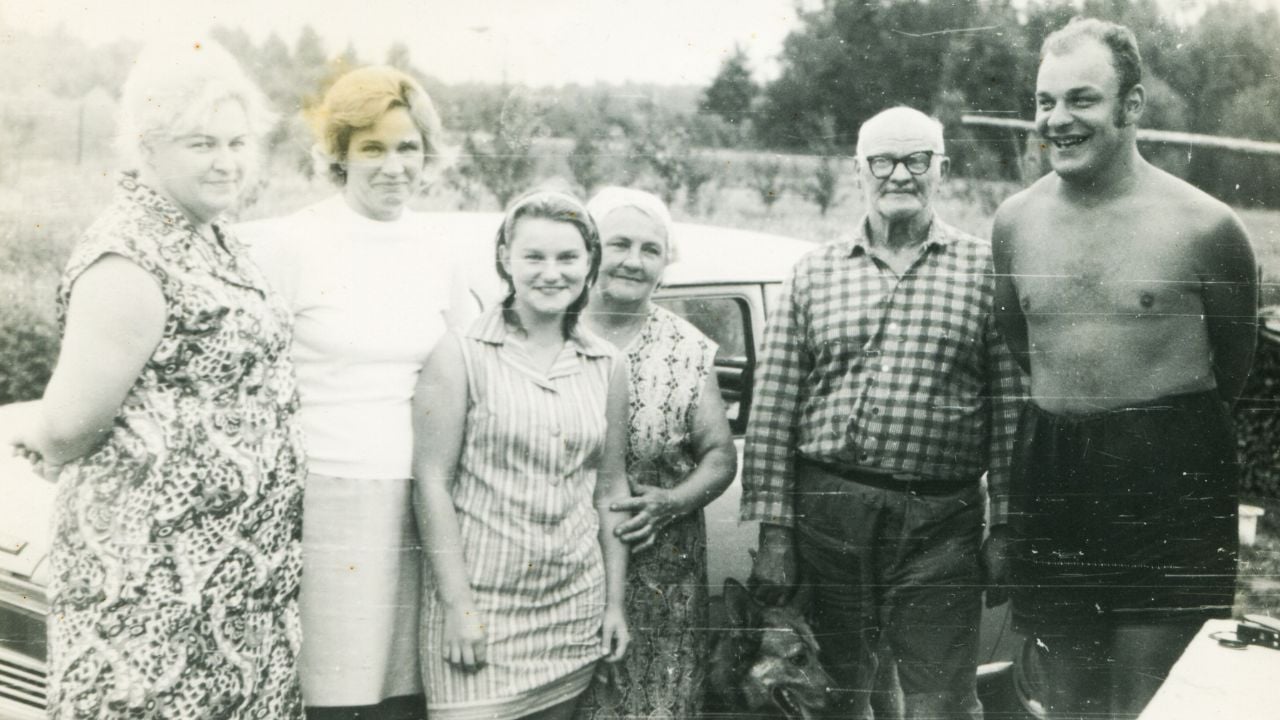
10 Words Kentuckians Used in the 1960s That Make No Sense Today

Back in the 1960s, the fuzz were the police.
People used words like that every day, and today’s teens have no clue what they mean.
Here are the words Kentuckians used in the 1960s that make no sense to youngsters today.
1. Beatnik
Beatnik described a young person of the late 1950s and early 1960s who rejected the norms of ordinary society.
The word dates to 1958, when it joined beat with the suffix -nik.
By March 1959, the Kentucky Kernel at the University of Kentucky ran a story on a campus talk explaining that members of this generation were being called beatniks.
2. Teenybopper
Teenybopper was a 1960s word for a teenage girl who was devoted to pop music and the latest fads.
The word dates to 1964 and pairs teeny with bopper.
Oxford Learner’s Dictionaries label teenybopper old-fashioned.
They also define her as a girl of about 10 to 13, which is younger than the word teenager suggests.
If you’re picturing a high schooler, the dictionary has a younger fan in mind.
Psst! How much do you know about 1960s Kentucky and America? Take our quiz and see if you can ace it.
Quiz
Sixties Trivia
Answer these questions on 1960s Kentucky and American culture. We bet you can’t get them all right. Prove us wrong?
What did the letters in ZIP Code stand for when the Post Office launched it in 1963?
3. Groovy
Groovy meant wonderful or excellent, and it also meant hip and trendy.
One dictionary notes that people usually use the word to evoke the language of the 1960s.
The word is older than the decade, though, with a first known use in 1941.
Green's Dictionary of Slang opens its entry with a 1946 book that describes musicians slipping into the same groove when they work together.
That same entry even lists a teen sense of groovy that means out of date, backed by a single example from 1998.
Say groovy today, and you're borrowing the 1960s on purpose.
4. Dig
Dig meant to like something very much, or to understand what someone was saying.
One learner's dictionary labels that sense old-fashioned slang.
Green's Dictionary of Slang says the word began as jazz-musician slang and was then taken up by fans.
That entry lists a 1960 line from Lord Buckley's Hiparama of the Classics that uses dig for fans of Kennedy and fans of Nixon.
5. Square
Square was the 1960s insult for a person seen as boring or conventional.
Oxford Learner's Dictionaries tag that sense informal, old-fashioned, and disapproving.
They define it as a person considered boring, for example because they're old-fashioned or work too hard at school.
Green's Dictionary of Slang lists a 1962 book that says work is for squares.
The American Dialect Society suggested in November 1958 that the term came from a steady one-two-three-four beat played without variation.
6. Pad
Pad was slang for the place where someone lives, especially an apartment.
Oxford Learner's Dictionaries label that sense old-fashioned and informal, and they use bachelor pad as the example.
Green's Dictionary of Slang traces the word back to the plain English word for a mattress.
Its earliest examples date to 1703 for a bed and 1896 for a home or apartment.
The entry also lists a 1960 Baltimore Sun Magazine item that uses pad for a place to live.
7. Fuzz
Fuzz was slang for the police.
Oxford Learner's Dictionaries mark that sense old-fashioned slang.
Green's Dictionary of Slang labels the word as originally American and lists examples as early as 1924.
Its American examples nearest the 1960s, from 1959 and 1971, bracket the decade.
The entry calls the word's source uncertain, with one guess tying it to the fuss a police officer makes.
8. Far Out
Far out meant excellent in 1960s slang, as in very good or enjoyable.
Oxford Learner's Dictionaries mark that sense old-fashioned, while the other sense, very strange, stays informal.
Green's Dictionary of Slang says the phrase's whiff of other-worldliness made it a staple of 1960s counterculture slang.
By the 1970s, the entry says, the phrase had faded except when people used it ironically.
9. Bread
Bread was slang for money in the 1960s.
Oxford Learner's Dictionaries label the money sense old-fashioned slang.
Green's Dictionary of Slang explains the logic as something basic to life, the way bread is.
A 1959 book in the entry has one character asking why anyone says money when they could sound modern with vitamins or bread.
10. Stewardess
Stewardess was the standard title for a female flight attendant in the 1960s.
Oxford Learner's Dictionaries label the word old-fashioned.
Airline requirements of that era wanted stewardesses who were single and childless, and younger than 32 to 35.
Stewardesses pushed back by flooding the Equal Employment Opportunity Commission with complaints.
The Equal Employment Opportunity Commission was created to enforce the part of the 1964 Civil Rights Act that prohibited discrimination in the workplace.
9 Fall Habits That Are Second Nature in Kentucky and Nowhere Else

Fall in Kentucky has a rhythm that surprises out-of-staters.
Here's a look at the autumn habits locals barely think about.
9 Fall Habits That Are Second Nature in Kentucky and Nowhere Else
7 County Line Rules That Catch Kentucky Drivers by Surprise
Some Kentucky drivers get caught off guard when the rules change at a county line.
Here's what to know before your next road trip.
