
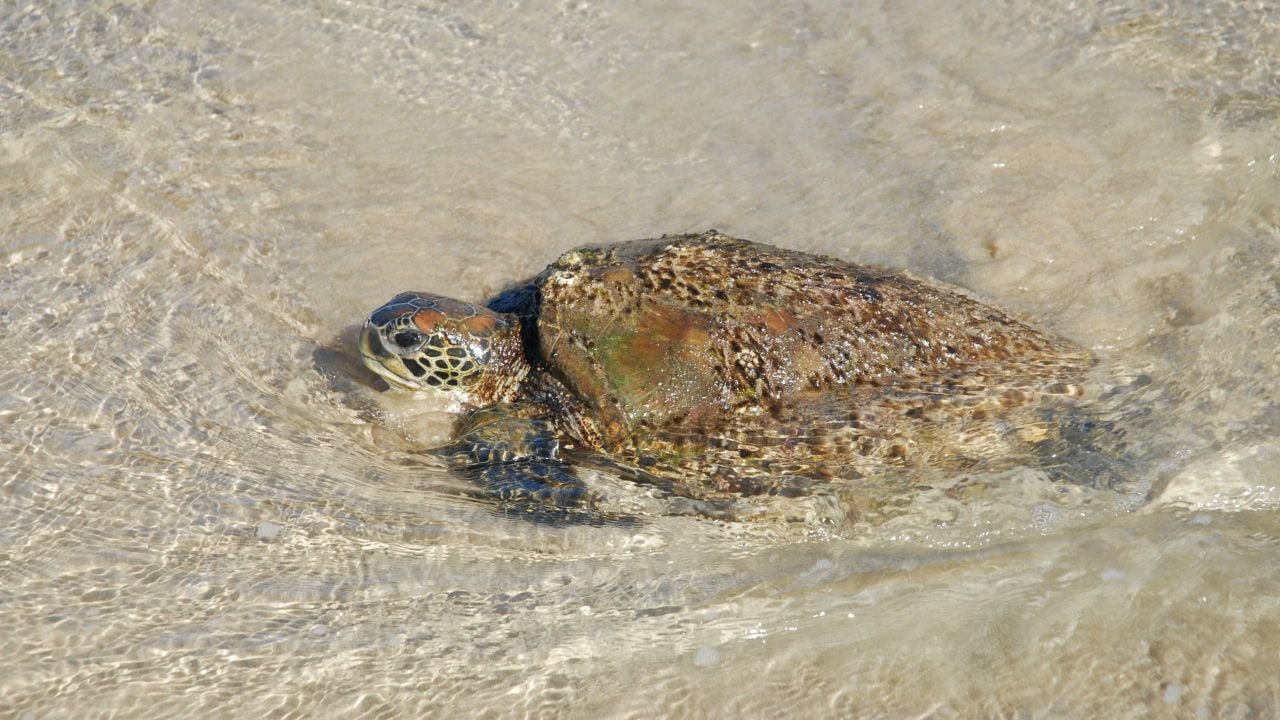
Hundreds of Sea Turtles Wash Up on Cape Cod Every Cold-Stunning Season. Here’s Why Bay Staters Keep Finding Them

Cape Cod Bay’s hook-shaped shoreline turns into a trap for sea turtles heading south in the fall.
Bay Staters walking the beaches this time of year often find them stranded.
Here’s why hundreds of sea turtles wash up on Cape Cod every cold-stunning season.
A Hook-Shaped Trap
Sea turtles swimming south from the Gulf of Maine end up in Cape Cod Bay, which has a hooked peninsula along its southern edge.
Open a map, and you’ll see the bay sits inside the curve of the hook.
That hook is the problem.
To leave, a turtle has to swim back north and then east around the tip of the hook toward warmer seas.
National Oceanic and Atmospheric Administration (NOAA) Fisheries says the hook shape can trap sea turtles inside the bay for weeks to months.
Some young turtles also don’t move south quickly enough before the water cools.
Seasons Measured in Hundreds
Sea turtles have stranded on Cape Cod Bay beaches by the hundreds in each of the 2023, 2024 and 2025 seasons.
If you picture a handful of turtles, the tallies say otherwise.
For 2023, Mass Audubon’s final tally was 662.
By late December 2024, staff and volunteers had rescued around 800 sea turtles.
December 6 alone brought 141 rescues.
Of the 667 sea turtles recovered by December 18, 2025, 573 were Kemp’s ridleys.
The rest were 67 green sea turtles and 27 loggerheads.
The 2025 peak came on November 29, when rescuers recovered 73 turtles in a single day.
Was that season a fluke?
NOAA Fisheries reported a five-year annual average of 739 cold-stunned sea turtles for Massachusetts in a June 2024 feature, compared with 139 twenty years earlier.
Strandings peaked in 2014 at 1,241, according to a 2020 article from Yale’s climate communication program.
What Cold Water Does to Sea Turtles
Sea turtles are cold-blooded, so their body temperatures mirror the water around them.
A cold-stunned turtle is lethargic and hypothermic, and it can’t swim or eat.
Most stranded turtles are juvenile Kemp’s ridleys, though green sea turtles and loggerheads strand too.
Mass Audubon says strandings mainly take place from November to mid-January, beginning when ocean temperatures fall below 55 degrees Fahrenheit.
The 2023 season officially started on October 29, when a Kemp’s ridley stranded in Eastham.
The 2021 and 2022 seasons both started on November 17.
Start dates shift.
Cold-stunning is most likely once water drops below about 50 degrees and strong winds persist, according to research the Yale article cites.
Then onshore winds wash the turtles onto beaches, so you’ll find them mostly along the shore of Cape Cod Bay.
In 2023, turtles also stranded on the South Shore, with 7 in Hull and 2 each in Hingham and Weymouth.
More persistent easterly and southerly winds likely caused the increase outside the bay.
If You Find a Stranded Sea Turtle
A stranded sea turtle can look lifeless and still be alive.
Don’t put the turtle back in the water.
Move the turtle above the high tide line, and never grab it by the head or flippers.
Cover it with seaweed, never sand, and mark the spot with a buoy or driftwood.
Then call the Wellfleet Bay Wildlife Sanctuary hotline at 508-349-2615, Option 2, and wait for instructions.
Both the U.S. Endangered Species Act and the Massachusetts Endangered Species Act cover sea turtles, so interfering with one without a permit is illegal.
A Warming Gulf of Maine
Sea turtles venture farther into the Gulf of Maine and linger later in the season as the water warms there.
That leaves them exposed when fall temperatures drop fast.
If you’re wondering what changed, the water did.
NOAA Fisheries says Cape Cod Bay is part of the Gulf of Maine, which is warming faster than most other bodies of water in the world.
A 2019 study found higher rates of cold-stunning when the Gulf of Maine had warmer sea surface temperatures in late October and early November.
The result?
Mass Audubon says climate change is driving an increase in cold-stunned strandings.
Beach Patrols
Mass Audubon’s Wellfleet Bay Wildlife Sanctuary runs the beach patrols that find stranded sea turtles on Cape Cod.
Since 1979, its staff and an annual corps of over 200 trained volunteers have patrolled Cape Cod’s beaches, especially at high tide.
When volunteers find a turtle, they call a 24-hour hotline.
Staff then collect the turtle and bring it to the sanctuary, where its body temperature stabilizes.
You might assume a turtle on the sand is gone.
Usually, that’s wrong.
Over 75% of the turtles recovered from beaches in 2025 were alive when they headed to the New England Aquarium’s Sea Turtle Hospital.
By December 18, Mass Audubon’s volunteer fleet had completed 34 days of beach patrols and facilitated 59 transports to the hospital.
Turtles also turned up in less common places in 2025, including 9 in Falmouth and 11 on Nantucket.
Psst! How much do you know about the Massachusetts coast? Take our quiz and see if you can ace it.
Quiz
Bay State Coast Trivia
Answer these questions on whales, turtles, canals and radio history along the Massachusetts coast. We bet you can’t get them all right. Prove us wrong?
What first did Guglielmo Marconi stage at his Wellfleet station on January 18, 1903?
Rehab and the Trip South
Sea turtles that Mass Audubon recovers go to the New England Aquarium in Quincy or the National Marine Life Center in Buzzards Bay for rehabilitation.
By December 18, 2025, the aquarium had admitted 473 sea turtles that season, including 404 Kemp's ridleys, 21 loggerheads and 48 green sea turtles.
The hospital had more than 200 sea turtle patients in the first two weeks of the season.
More than 15 secondary rehabilitation facilities had taken turtles by then.
The aquarium expects to release many of them back into the ocean in the spring and summer months.
Massachusetts rehabilitation facilities don't have room to care for every live turtle that strands each year.
So the turtles fly.
If you've ever wondered who flies them, many travel with volunteer Turtle Fliers.
By November 20, 2025, Greater Good Charities had flown 35 turtles to two facilities in North Carolina, the aquarium says.
On December 9, 24 Kemp's ridleys arrived at the Loggerhead Marinelife Center in Juno Beach, Florida, thanks to the nonprofit LightHawk.
The center's plan, as of December 2025, was to release them into the Atlantic Ocean to make their way back to New England.
9 Reasons Bay Staters Keep Crossing Into New Hampshire and Staying
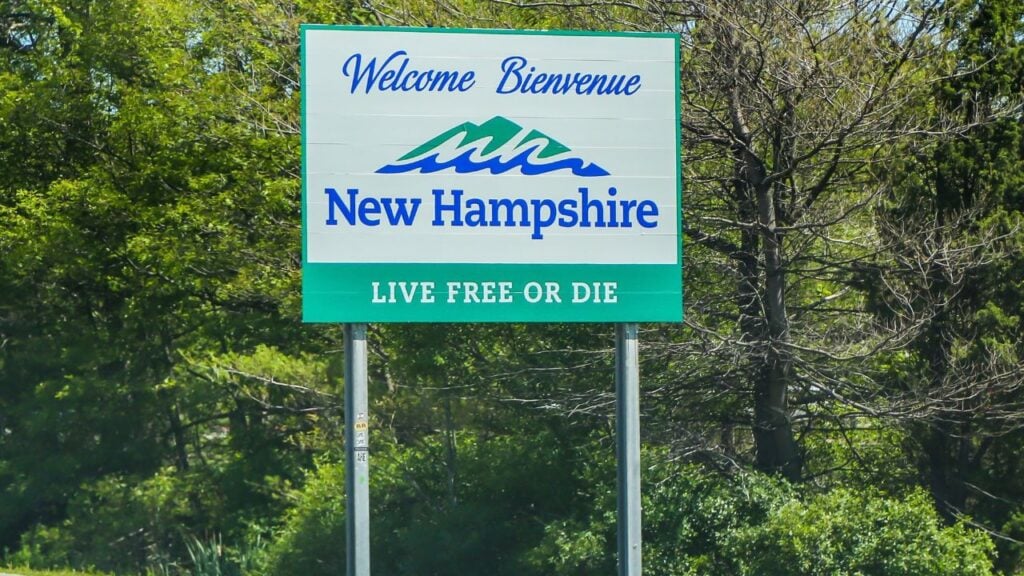
Ever wonder why so many Massachusetts residents head for New Hampshire?
These are the reasons Bay Staters keep crossing into New Hampshire, and why so many of them end up staying for good.
9 Reasons Bay Staters Keep Crossing Into New Hampshire and Staying
8 Highway Habits That Instantly Tell a Massachusetts Driver From a New Hampshire One

Could you tell a Massachusetts driver from a New Hampshire driver in under a minute?
These are the highway habits that tell the two apart.
8 Highway Habits That Instantly Tell a Massachusetts Driver From a New Hampshire One
