
11 Coal Region Habits Pennsylvanians Can’t Shake No Matter Where They Move

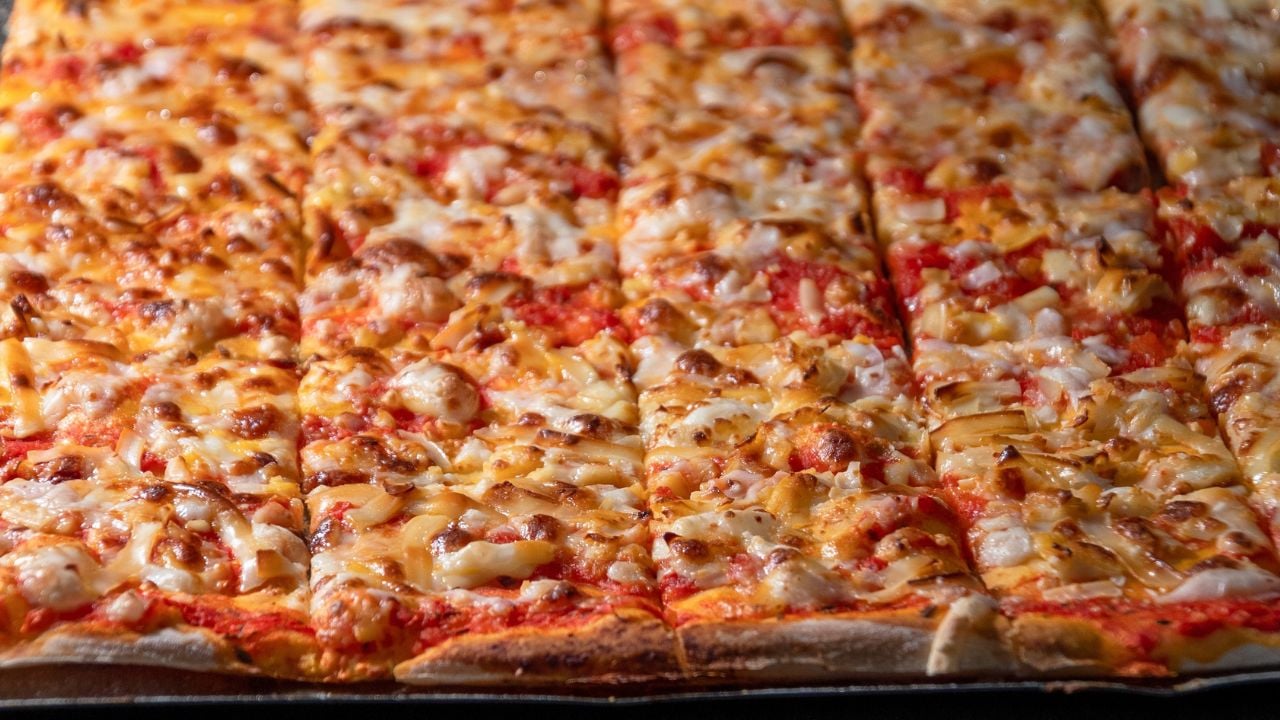
In Old Forge, there’s no such thing as a pizza slice. You order cuts, by the tray.
Pennsylvanians raised in the coal region carry habits like that wherever they go.
Here are the coal region habits Pennsylvanians can’t shake no matter where they move.
1. Haluski From Local Churches
Stephanie Niglio told WVIA that all the local churches make haluski.
If you’ve never had it, haluski is a meat-free dish made mainly with cabbage and noodles of some kind.
Immigrants from Poland, Slovakia and surrounding countries brought the recipe to the region.
The Mt. Carmel Area Silver Bowl sold haluski at football games.
2. Tacking on “Heyna”
People in the coal region tack “heyna” onto questions, says the Keystone Newsroom’s 2026 glossary of Pennsylvania slang.
It’s probably the best-known regionalism.
It means “right?” or “correct?” when you tack it on the end of a question.
It’s similar to the Pennsylvania Dutch English term “here nah.”
A 2018 lecture at the Osterhout Free Library in Wilkes-Barre was even titled “Heynabonics: How We Talk in NEPA.”
The Luzerne County Historical Society hosted it.
Hot today, heyna?
3. Pizza by the Cut
Old Forge has no pizza “slices,” only “cuts,” and you order by the “tray,” according to the Lackawanna County Convention and Visitors Bureau.
PMQ Pizza Magazine describes Old Forge as a coal-mining town of nearly 9,000 residents in northeastern Pennsylvania.
The town calls itself the pizza capital of the world.
Ask for a cut, not a slice, and you’ll sound like a local.
What Goes Into Old Forge Pizza
PMQ says Old Forge pizzerias in the coal region generally keep their cheese blends under lock and key.
Blends often include cheddar, American, brick, cooper and mozzarella.
The double-crust white pizza is a giant grilled cheese pizza.
4. Fasnacht Doughnuts
If you’ve never had a fasnacht, it’s a German doughnut made with mashed potatoes, yeast, sugar, butter, milk and a little salt.
Coal region bakeries in Schuylkill County got busy before Shrove Tuesday, the Republican Herald reported.
Shrove Tuesday is the day before Ash Wednesday.
Plain & Fancy Donut Shop in Schuylkill Haven had made more than 2,000 so far.
Spring Street Bakery in Frackville had 500 preorders, with pickup from 7 a.m. to noon.
5. Saying “Youze”
If you’re talking to a group in the coal region, “youze” is the plural “you.”
“Youze” is similar to Philly’s “youse,” but with more of a “z” sound.
You might also hear “yuz” or “yiz.”
6. Easter Basket Blessings
Easter basket blessings were still a tradition at St. Richard’s in Barnesville in 2018, when the Times News reported that about 30 families took part.
Baskets there include kielbasa, paska, hrudka, chrin and butter shaped like a cross or lamb.
The kielbasa signifies God’s favor and generosity, while the paska is a sweet bread symbolizing Jesus.
Hrudka is an egg dish strained through cheesecloth for several hours.
Chrin, made of horseradish and red beets, symbolizes the passion.
The butter lamb stands for Jesus as the Lamb of God.
Each family lights a candle, and the priest blesses the baskets.
One woman learned the Slovak customs as a child at St. John’s Byzantine in Hazleton, when each ethnic group had a separate Catholic church.
If you look at the whole basket, you can read it as a list of symbols.
Psst! How much do you know about anthracite country? Take our quiz and see if you can ace it.
Quiz
Anthracite Country IQ
Answer these questions on coal, railroads and mining towns. We bet you can’t get them all right. Prove us wrong?
What probably started the 1962 Centralia mine fire?
7. Making Pierogi at Church
At St. John the Baptist in Larksville, parishioners made pierogi for the 2021 Advent Pierogi Sale, according to the Diocese of Scranton.
Starting Oct. 25, 2021, dozens of parishioners gathered in the church basement every Monday morning through Dec. 6 to prepare dumplings for the annual Advent Pierogi Sale.
You didn't have to be old to join in, since all ages took part, including many young people.
WNEP has reported on a Russian Orthodox church in Lackawanna County where members gathered for an annual Ash Wednesday fundraiser.
Parishioners cooked up pierogi for a traditional sale.
8. Calling It "Barbecue"
Barbecue refers to something more like a sloppy joe in the anthracite coal region.
That means you'll get tangy ground meat on a hamburger bun.
If you're expecting slow-roasted meat, you'll get a surprise.
9. Turning Out for Scranton's Parade
Scranton's St. Patrick's parade draws as many as 150,000 spectators each year, according to the Keystone Newsroom.
If you're planning to go, the parade is held on the Saturday before St. Patrick's Day.
Irish immigrants hosted the first Scranton parade in the 1850s, likely organized by Irish miners and other laborers.
The parade was revived in earnest in 1962, and it drew 40,000 people despite several inches of snow the night before.
The parade association says it has run the event since 1962.
10. Counting "Couple, Two, Tree"
Keystone's glossary lists "couple, two, tree" as a coal region way of counting a few.
You might be asked whether you want to go out and get a couple, two, tree beers.
Count accordingly.
11. Marking the Knox Mine Anniversary
In 2024, a small group that included family members of those who died marked the 65th anniversary of the Knox Mine disaster, WVIA reported.
On Jan. 22, 1959, the Susquehanna River broke into the mine, and 69 men escaped while 12 were killed.
The disaster ended mining in the northern field, which was already in trouble.
In January 2024, the Brooks Mine at Nay Aug Park in Scranton held Knox-themed tours on Jan. 13 and 14.
Anthracite History Month is celebrated each January.
The month includes the Jan. 22 anniversary.
If you want the full account, the 2024 report covers the disaster and the anniversary.
Who Settled the Anthracite Region
Penn State's anthracite guide names the coal region's six counties as Carbon, Columbia, Lackawanna, Luzerne, Northumberland and Schuylkill.
The first mine opened in 1775 near Pittston, and coal shipped out in large quantities by the 1820s.
The population grew rapidly after the Civil War as mining and railroads expanded.
If you've had haluski in the coal region, you've tasted a recipe that WVIA says immigrants from Poland, Slovakia and surrounding countries brought with them.
The guide says the influence of those immigrants is still strongly felt, with towns that have pronounced ethnic character and cuisine.
English, Welsh, Irish and German immigrants formed a large portion of that growth, followed by Polish, Slovak, Ruthenian, Ukrainian, Hungarian, Italian, Russian and Lithuanian immigrants.
8 Deer Camp Traditions Pennsylvanians Won't Reschedule for Anything
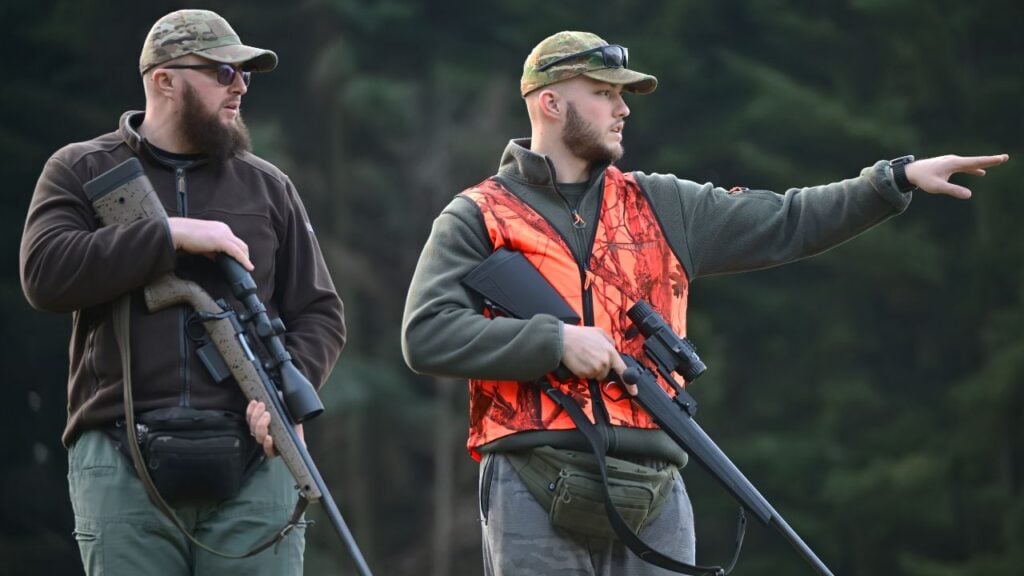
Deer camp runs on unwritten rules.
Some of them outrank the calendar.
8 Deer Camp Traditions Pennsylvanians Won't Reschedule for Anything
8 Things Pennsylvania Does Better Than New York, According to People Who Have Lived in Both
Ask someone who has lived on both sides of the state line, and many will give Pennsylvania their vote.
Housing is only where the list starts.
8 Things Pennsylvania Does Better Than New York, According to People Who Have Lived in Both
