
7 Things That Happen at an Alabama Cotton Gin After the Fields Are Picked

You drive past an Alabama cotton gin every fall, but you’ve never been inside.
Here’s what happens at an cotton gin after the fields are picked.
1. Module Trucks Pulling In
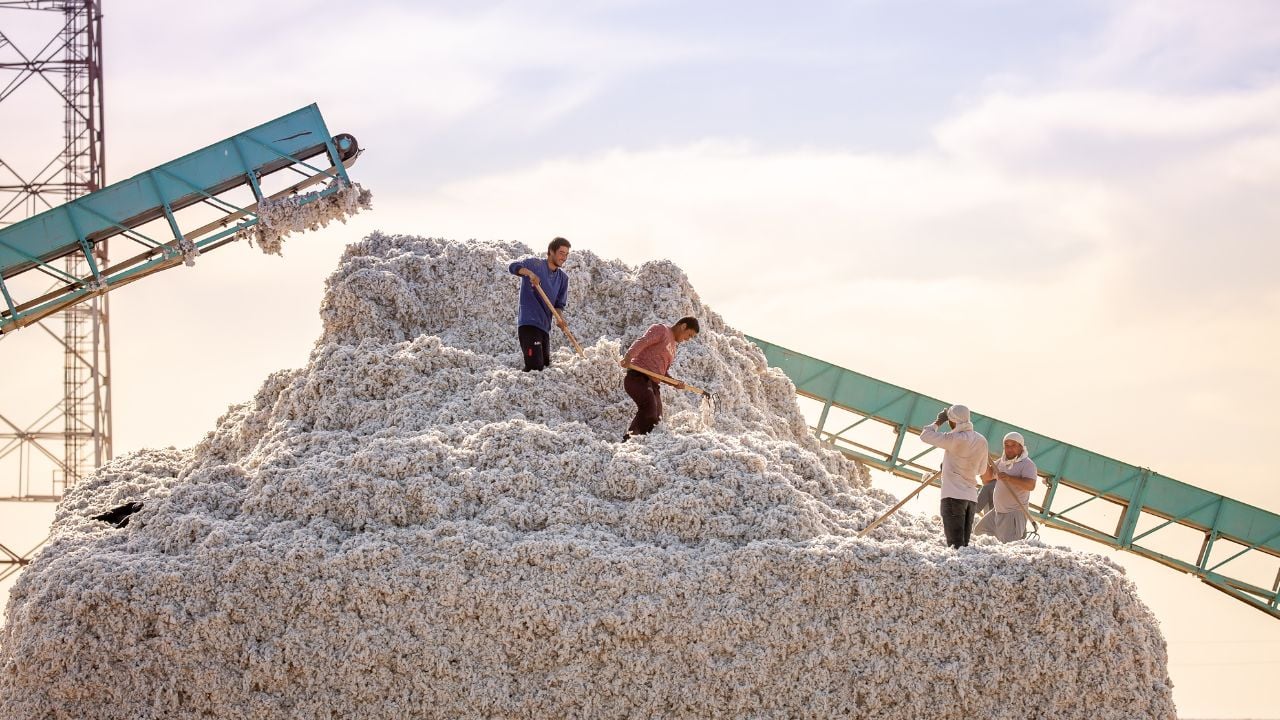
Cotton reaches the gin as seed cotton, which is fiber that still holds its seeds, packed into big modules.
Those modules look like giant loaves of bread.
Specially designed trucks pick up the modules in the field and haul them to the gin.
Then the modules come apart.
Machines called module feeders do that job, feeding the seed cotton into the gin.
Some gins skip the feeder and use powerful pipes to pull the cotton in.
The restored gin at Old Alabama Town shows the older version, with mule-drawn wagons bringing in the seed cotton and platform scales weighing it.
2. Drying and Cleaning
Seed cotton moves through dryers and cleaning machines before it reaches the gin stand.
Out come the burs, dirt, stems, and leaf material.
That’s gin waste.
A 2019 News Courier profile said the Associated Growers Cooperative gin in Limestone County uses four burners to dry its cotton.
The burners come from Samuel Jackson Inc. in Lubbock, Texas.
The profile also said much of the 2018 crop was still damp from rain at harvest, so it had to dry before it could be ginned.
3. Saws Pulling Lint From Seed
Cotton fiber comes off the seed at the gin stand.
Circular saws with small, sharp teeth pull the fiber from the seed.
Lint is the ginned fiber.
From there, lint and seed go different ways.
Merchants sell the baled cotton on to textile mills, so the fiber in a cotton shirt started at a gin.
4. Pressing Into Bales
A cotton gin presses lint into bales that weigh about 500 pounds each.
The same profile said the Limestone County gin’s top speed was 60 bales an hour, though the gin ran at 45 to 50.
At 60, you’d see a new bale roughly every minute.
That wasn’t always the pace.
At Old Alabama Town, the restored gin tells a slower story, with a crew of five men averaging two bales an hour.
Psst! How much do you know about Alabama’s farm country? Take our quiz and see if you can ace it.
Quiz
Alabama Farm Country IQ
Answer eight questions on Alabama’s boll weevil history and farm country. We bet you can’t get them all right. Prove us wrong?
What stood at the center of Enterprise’s first boll weevil monument in 1919?
5. Sampling Every Bale
A licensed agent takes a sample from each side of every bale a cotton gin makes.
Each sample weighs at least 4 ounces.
Each bale gets a tag with a twelve-digit number and a barcode.
One bale, one number.
The samples then go to the U.S. Department of Agriculture (USDA) classing facility that serves the area.
The profile said USDA classes every bale after it is ginned.
That class helps set the price of the cotton.
6. Selling the Cottonseed
Cottonseed is a second product for a cotton gin.
Farmers usually sell their seed to the gin, which sells it on for feed or to an oil mill.
At an oil mill, the seed is processed into cottonseed oil, meal, and hulls.
The 2019 News Courier profile said the Limestone County gin's leftover cottonseed is ground into meal for dairy cattle.
Motes, another leftover from ginning, are used in making paper money and other products, the profile said.
The restored gin at Old Alabama Town shows the math: After ginning, 1,500 pounds of seed cotton made a 500-pound bale and 1,000 pounds of seed.
That oil starts as seed like this.
7. Running Bale Totals
Each cotton gin's bale count goes to the government, and USDA collects those counts twice a month from September through January.
The agency publishes them as running bales, a tally of bales ginned to date, so the totals keep growing as gins keep running.
The counts leave out linters, the fuzz that oil mills remove from the seed.
In USDA's Nov. 15 counts, Alabama's total ranged from 299,150 bales for the 2025 crop to 383,100 for the 2022 crop.
A month later, the 2025 total had reached 466,250 bales.
That's about 167,000 more bales in a single month.
By Feb. 1, 2025, the 2024 crop's total stood at 627,400 bales.
If you want the next update, the agency's calendar lists a Cotton Ginnings report for Oct. 22, with more on Nov. 10 and Nov. 23.
Where the Samples Go
Samples from a cotton gin are placed in a climate-controlled room at the USDA classing office.
Instruments do the measuring.
They check fiber length, length uniformity, strength, color, and trash.
A classer still grades special conditions and extraneous matter by hand.
Results are imported into the classing facility's database right away.
These results are part of why two bales can sell for different prices.
Gin Season in North Alabama
How long does cotton ginning season last?
A 2019 News Courier profile said cotton season at the Limestone County gin runs from mid-September to about Christmas.
The restored gin at Old Alabama Town ran from mid-August to mid-November.
The same profile said the Associated Growers Cooperative's former gin processed 34,607 bales in 2017, and its new gin processed 42,440 bales in 2018.
The profile said the 2018 crop took 65 days to dry and gin, from Oct. 27 to Dec. 30, while the 2017 crop took 137 days.
Faster ginning also meant farmers could collect payment around the first of the year instead of in March, the profile said.
8 Birds That Refuel on Alabama's Coast Every October Before Flying Nonstop Across the Gulf
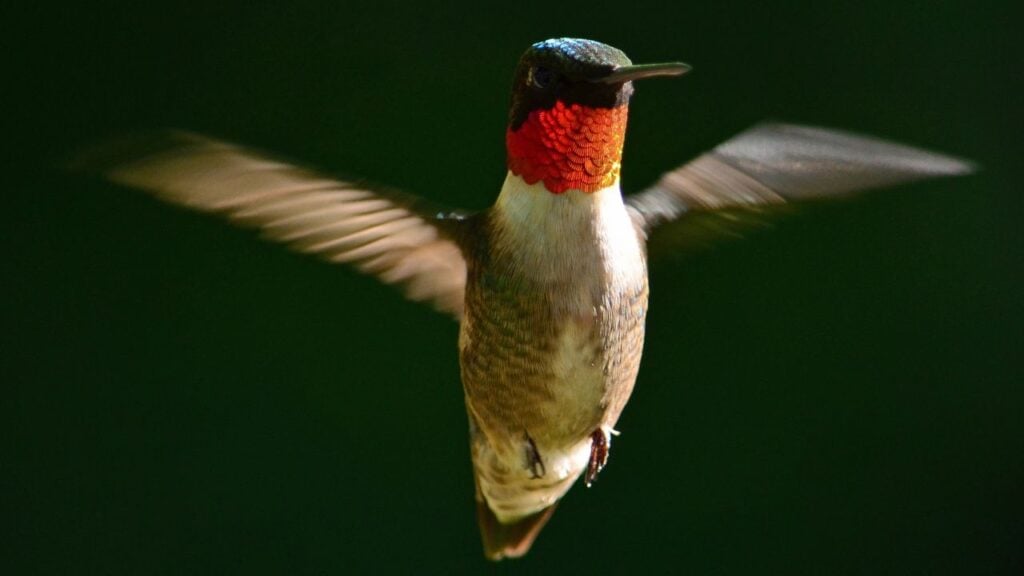
Tiny travelers may be stopping along the Alabama shore to eat and rest this month.
Ahead of them is open water with nowhere to land, so here are the birds fueling up before the trip south.
8 Birds That Refuel on Alabama's Coast Every October Before Flying Nonstop Across the Gulf
8 Alabama Land Rules That Change the Day a Property Passes to Heirs

For Alabamians who inherit property, a few rules start working the moment ownership changes hands.
Some are easy to miss, and a few could matter for your family's land.
8 Alabama Land Rules That Change the Day a Property Passes to Heirs
