
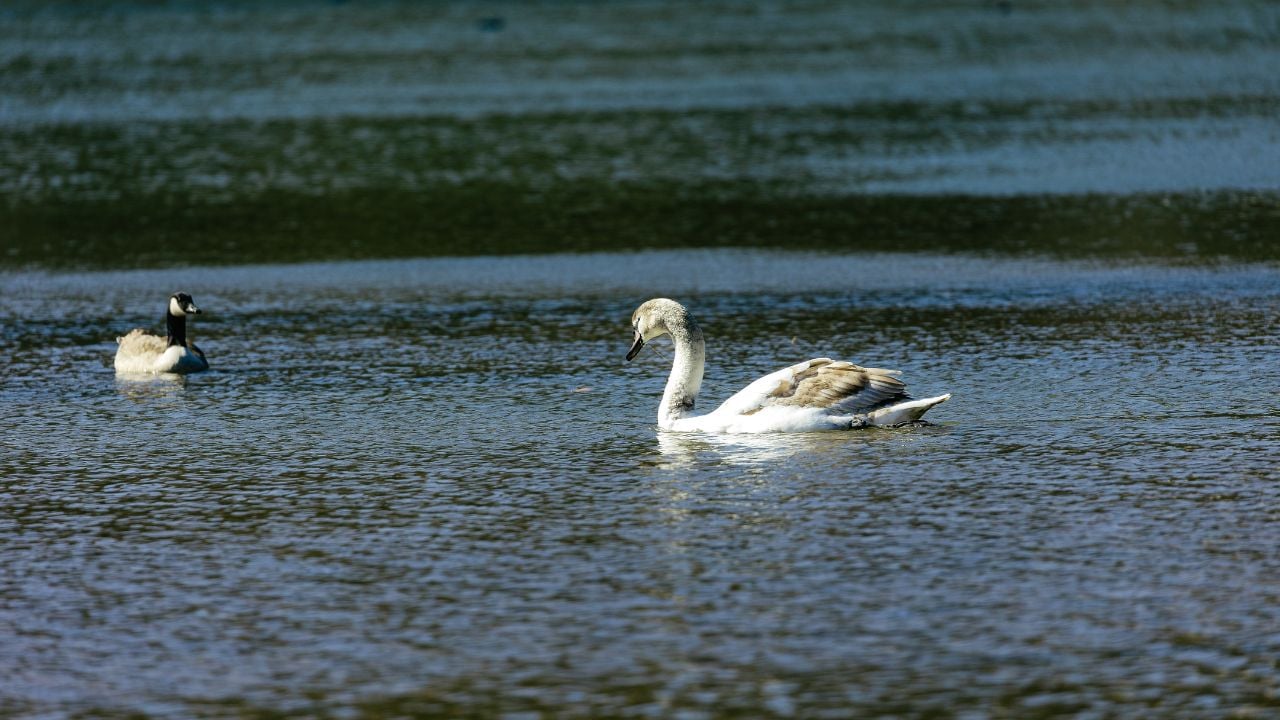
6 Things Tundra Swans Do at North Carolina’s Lake Mattamuskeet Every Winter

You get to Lake Mattamuskeet at dawn, and the swans haven’t left the water yet.
Wait longer, and they head somewhere you wouldn’t expect.
Here’s what tundra swans do at North Carolina’s Lake Mattamuskeet every winter.
1. Arriving From the Arctic
Walter Magazine reported in 2023 that thousands of tundra swans arrive in northeastern North Carolina in November and stay through February.
Swans, ducks and geese gather at Mattamuskeet National Wildlife Refuge in Hyde County from November through February, so that’s your window to see them.
The state Wildlife Resources Commission says about 65,000 to 75,000 swans of the eastern population winter in northeastern North Carolina.
The refuge says most of the state’s wintering tundra swans can be found at and near Mattamuskeet.
North Carolina winters more swans, by far, than any other East Coast state.
The commission says the approximately 25,000 remaining swans in the population winter in Pennsylvania, Maryland, Delaware, Virginia and New Jersey.
Summer for these swans is the Arctic, about 3,000 miles from Hyde County.
Some pass through Montana, North Dakota and South Dakota during fall migration.
Tundra Swan or Mute Swan?
Tundra swans nest in the Arctic and visit the lower 48 only during migration and winter.
Mute swans are a different bird, and the state Wildlife Resources Commission describes them as non-native and mostly non-migratory.
That commission also says mute swans can be aggressive when approached, so you’ll want to keep your distance from any swan you can’t identify.
2. Staying in Family Groups
Migrating swans travel as families, with that year’s cygnets beside their parents.
A U.S. Forest Service review says those families stay together through the fall migration, all winter and the spring trip north.
Several families can combine into one big flock, and it may include some nonbreeding swans.
So if you watch a flock on the water, you may be looking at several families.
The U.S. Fish and Wildlife Service says tundra swans mate for life.
The Cornell Lab of Ornithology says pairs form by the time the swans are 2 to 3 years old, and the two feed and roost together year-round.
3. Gathering in Managed Wetlands
Mattamuskeet’s impoundments are vegetated areas flooded to provide food for birds, The Assembly explains, and tundra swans use them.
The Assembly found hundreds of swans in one managed impoundment just south of the lake, floating and taking short flights.
A January 2024 refuge update says the Entrance Road impoundment had excellent habitat over two-thirds of the unit.
It was attracting large numbers of waterfowl, and refuge staff were monitoring its swans.
That’s where you should look.
4. Roosting on Open Water
If you’re out at dawn, you may find swans still at their overnight roosts on open water, safe from most predators, Walter Magazine says.
When they aren’t feeding, swans spend a lot of time napping and preening.
On their nesting grounds, tundra swans sleep on land almost all the time, but in winter they sleep more often on water, the Cornell Lab says.
Psst! How much do you know about tundra swans? Take our quiz and see how many you can get right.
Quiz
Swan Season Trivia
Answer these questions on tundra swans and North Carolina’s wildlife refuges. We bet you can’t get them all right. Prove us wrong?
Which explorer gave the tundra swan its old name, the whistling swan?
5. Flying Out to Farm Fields
After daybreak, swans fly out from their roosts to feed, and farm fields are one place they go.
A refuge story says the state Wildlife Resources Commission's 2008 mid-winter survey estimated swans on the lake, the refuge and the surrounding farms.
Across their winter range, they glean leftover corn, soybeans and rice from harvested fields and eat growing winter wheat, rye and barley.
A Forest Service review, citing a 1980 waterfowl reference, says swans have commonly flown as far as 10 to 15 miles inland for waste corn and soybeans.
In the state's northeast, the commission says, swans use lakes, sounds and farms for food.
If you drive the farm roads of the state's northeast in winter, you may see swans in harvested fields.
The same Walter Magazine piece says the swans' diet has shifted from aquatic plants to waste grain and winter wheat as natural vegetation has declined.
6. Tipping Up in the Shallows
To reach underwater plants in shallow water, tundra swans tip up like dabbling ducks.
It's dabbling, not diving.
Lake Mattamuskeet suits that, since the lake is 14 miles long and 5 miles wide but only half a foot to 4 feet deep.
Their underwater diet includes the tubers, stems and leaves of plants such as pondweed and sedges.
The Assembly reported in 2025 that birds were dabbling among the vegetation in one managed impoundment.
When you visit, watch the shallow edges, and you may spot swans with their heads underwater.
Fewer Swans Than Before
Mattamuskeet has fewer tundra swans than it used to.
The state Wildlife Resources Commission flies a mid-winter survey in early January.
The commission's 2008 count estimated about 35,000 swans there.
In 2017, that survey tallied 18,000.
The Assembly reported in 2025 that, according to the U.S. Fish and Wildlife Service, around 5,000 tundra swans came to the refuge in 2022.
So if you visit now, you may see far fewer swans than a visitor did in 2008.
A 2024 refuge story says underwater plants covered about a third of the lake by the mid-1950s, but in 2017 refuge staff couldn't find a single blade of vegetation.
That story blamed carp, sediment and algae blooms, along with runoff from surrounding fields, for clouding the water and blocking the light the plants need.
A $1 million federal grant paid for a contract to remove carp, and the project ended in February 2026 with about 18,000 pounds removed.
A May 2026 refuge update says carp aren't currently a major factor affecting lake health.
The refuge says swans may not come as often without the plants.
Where to Watch
Good places to watch waterfowl, swans among them, include the Highway 94 Causeway, the Entrance Road and the Wildlife Drive.
The Wildlife Drive is a 3-mile loop around the refuge's largest wetland impoundment.
Several observation platforms overlook the marsh along the way, so you can stop and watch.
One platform, at the entrance road's impoundment, offers some of the best views, according to the Washington Daily News.
Bring binoculars.
A spotting scope and warm clothes help too.
The refuge hosts special white-tailed deer and waterfowl hunts, and those hunts and winter weather can limit access.
You'll want to check the refuge website or call ahead before you go.
All pets must be on a leash.
Some areas of the refuge close to the public during the winter.
6 North Carolina Words and Phrases Linguists Have Tracked From the Mountains to the Coast

Order a drink or ask for directions in a different part of North Carolina, and the language can sound a little different.
Some of these words may sound like home to you, and others may stump even lifelong North Carolinians.
6 North Carolina Words and Phrases Linguists Have Tracked From the Mountains to the Coast
6 Things a North Carolina Neighbor Can't Legally Do at Your Property Line

Many neighbors get along fine, but a property line can still cause friction.
North Carolina law limits some of what a neighbor can do on or near your land, and some of the limits may surprise you.
6 Things a North Carolina Neighbor Can't Legally Do at Your Property Line
