

7 Washington Utility Bill Relief Programs Households Qualify For and Never Apply For

Seattle’s 2026 income guidelines let a household of four earn up to $98,508 a year and still qualify for a utility discount.
Utilities across Washington run programs like that, and many households that qualify don’t apply for them.
Here’s where to look.
Note: This is general information, not financial advice. Program rules, income limits and discount amounts are subject to change.
1. Puget Sound Energy’s Bill Discount Rate
Your household can qualify for PSE’s Bill Discount Rate if its income is at or below a set limit.
That limit is the higher of 200% of the federal poverty level or 80% of the median family income in your county.
The discount runs from 5% to 45% off your electric bill, your natural gas bill, or both.
PSE posts the dollar limits county by county, and they can change.
For a one-person household, the posted monthly limit runs from $4,863 in Lewis County to $6,808 in King and Snohomish counties.
You apply with a short online form that takes about 5 to 10 minutes.
Enrollment lasts 13 months, and you can reapply as early as 12 months in.
2. Seattle’s Utility Discount Program
Seattle’s Utility Discount Program starts with the name on the bill. Only the account holder can apply.
The 2026 income limits start at $51,228 a year for one person and rise to $98,508 for a household of four.
Households under those limits get 60% off electric bills and 50% off water, sewer and garbage bills every month.
If the name on your Seattle City Light bill appears on a state Supplemental Nutrition Assistance Program (SNAP) award letter, you can send that letter instead of income documents.
One application lets you apply for several Seattle programs.
Seattle’s City Council passed an expansion of the income limits that will add more than 31,000 households when new utility rates start in January 2027.
If you’re over the limit now, that January 2027 expansion may bring your household under it.
3. Avista’s My Energy Discount
Starting November 1, 2026, Avista’s My Energy Discount program will base the cut to your bill on your income group and the season.
The monthly discount applies to your electric bill, your natural gas bill, or both.
Winter discounts, from November through April, range from 10% to 95%.
From May through October, discounts run from 0% to 90%, and some customers receive a discount only in winter months.
Avista’s income limit follows the same two measures as PSE’s.
In Spokane County, a household of four can earn up to $88,400 a year.
Applying takes no paperwork and no appointments, only your household income and the number of people in your home.
Once approved, your discount lasts for two years.
If you also receive energy assistance, Avista applies the discount to the balance left after that payment.
How Each Program Counts Your Income
The same paycheck can fit under one utility’s limit and miss another’s because each counts income differently.
Seattle looks at everyone who lives in your home, related or not.
It adds up their income before taxes.
PSE goes by monthly net income, meaning what’s left after taxes and allowed deductions.
Only household members 18 or older who aren’t in high school count toward it.
Avista adds up wages, Social Security, pensions and support payments.
Energy assistance, tax refunds and one-time gifts don’t count.
4. Pacific Power’s Low-Income Bill Assistance
In Columbia County, a one-person household can earn up to $4,771 a month and still qualify for Pacific Power’s Low-Income Bill Assistance program.
The limit follows the same two measures as PSE’s, adjusted for household size.
Both property owners and tenants can qualify.
Qualifying customers are placed into one of six levels.
You can apply with no paperwork or proof of income, though Pacific Power randomly selects some self-certified customers for income checks after they enroll.
Enrollment lasts one year, or two years if your income is fixed.
If you need money right away, you can ask an agency partner such as Blue Mountain Action Council, which serves Columbia, Garfield and Walla Walla counties, about a hardship grant.
5. Tacoma’s Bill Credit Assistance Plan
Tacoma Public Utilities’ Bill Credit Assistance Plan sets monthly income limits, counted before taxes, from $4,458 for one person to $6,367 for four.
After you apply and qualify, the plan credits your power, water, wastewater, surface water and solid waste bills automatically each month, regardless of payment.
The base credits add up to $58.30 a month.
Pay in full and on time, and you can earn up to $44 more a month, for a top credit of $1,227.60 a year.
Tacoma runs a separate Discount Rate Program too.
It takes 35% off power, water, wastewater, stormwater and solid waste for adults over 62 or people who qualify for or receive state or federal disability income.
To get the Bill Credit Assistance Plan, you apply online or by mail.
The account holder and each household member 22 or older must provide a copy of an accepted ID, plus income verification for the month before you apply.
Psst! How much do you know about Northwest weather and big dams? Take our quiz and see how many you can get right.
Quiz
Northwest Power and Weather IQ
Answer these questions on Washington’s record snow, heat, rain and big dams, and see if you can ace it.
Which Washington ski area measured the most snow ever recorded in a single U.S. season?
6. PSE's Home Energy Lifeline Program
Your PSE electric or natural gas account can receive up to $1,000 in credit from the Home Energy Lifeline Program (HELP), if you qualify.
HELP uses the same income limits as the Bill Discount Rate.
New applicants fill out one online application for both HELP and the Bill Discount Rate.
7. LIHEAP Heating and Cooling Grants
The federal Low-Income Home Energy Assistance Program (LIHEAP) pays a one-time grant, almost always straight to your energy utility.
The grant is mainly for heating, and Washington's LIHEAP page says it also covers cooling services.
Washington sets the income limit at 150% of the federal poverty level.
The page lists electricity, gas, propane, oil, coal and wood among the heat sources it covers.
You apply by scheduling an appointment with the LIHEAP provider in your community.
You can get one grant per program year, which runs October 1 through September 30.
Washington's Department of Commerce says LIHEAP will never ask for your bank or routing information.
7 Ferry Habits That Save Washingtonians Time and Money on Washington State Ferries
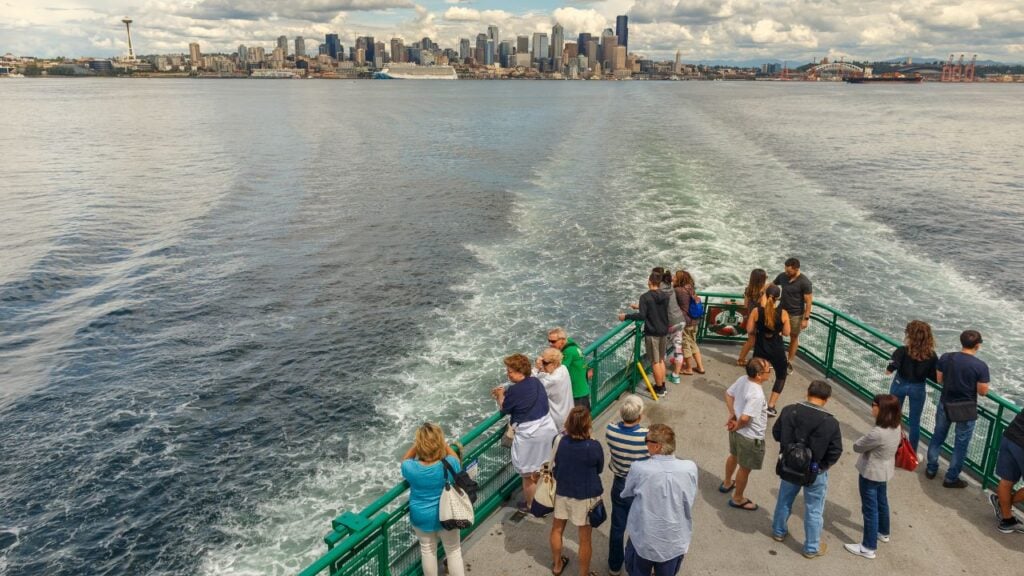
Two people can take the same Washington State Ferries trip and pay very different amounts.
The difference often comes down to a few choices you make before boarding, and some of them save you time too.
7 Ferry Habits That Save Washingtonians Time and Money on Washington State Ferries
