
7 New Jersey Dog Laws Owners Break in Their Own Backyard

A crawl space under your house might seem like decent shelter for your dog. Under New Jersey law, it isn’t.
Rules like that are easy to break without knowing it.
Here are the New Jersey dog laws owners break in their own backyard.
Note: This is general information, not legal advice. Dog laws are subject to change, so confirm the current rules with your municipal clerk.
1. Overnight Tethering
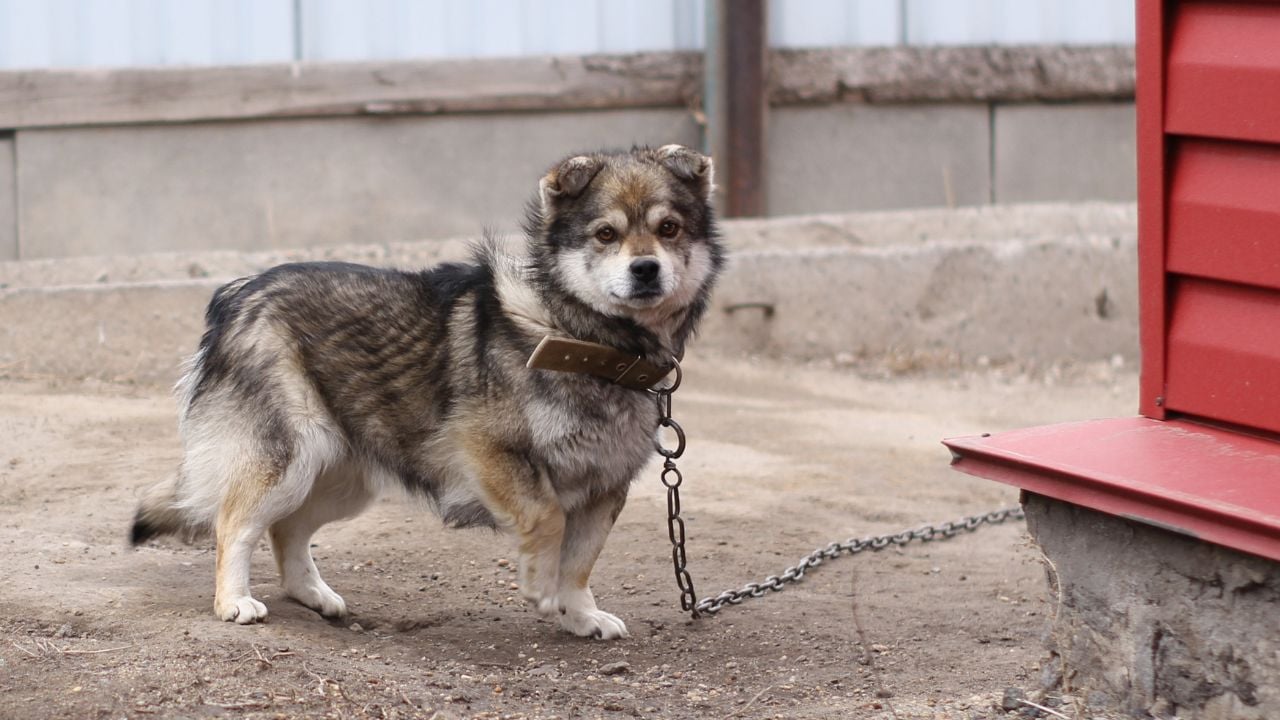
New Jersey’s tethering law bars you from tying your dog outdoors between 11 p.m. and 5 a.m.
If you clip your dog to a stake or porch rail before bed, you’re likely over the line.
A first offense brings a $100 fine at the court’s discretion, and a second brings $200.
A third offense counts as failure to provide necessary care, with penalties of $500 to $2,000.
The same law also bars any tether shorter than 15 feet.
One narrow exception exists.
When the Tethering Law’s Limits Don’t Apply
The tethering law drops three limits when you stay with your dog the entire time it’s tethered.
The three are the overnight window, the 15-foot minimum, and the ban on a tether long enough to reach a fence, pool, tree, or road.
You also have to be able to see your dog at all times while it’s tethered.
If you’re blind or visually impaired, you have to stay immediately adjacent to your dog instead.
2. Thirty Minutes of Bad Weather
New Jersey law doesn’t let you leave your dog out in adverse conditions for more than 30 minutes.
The main way around it is continuous access to proper shelter.
The law sets the cold line at 32 degrees Fahrenheit or below and the heat line at 90 degrees or above.
Wind, rain, snow, ice, sleet, and hail can count too, when a person should reasonably know they pose a risk to your dog.
In heat, direct sun and hot pavement can count the same way.
A hot patio can qualify.
You’re liable for a violation on property you own or live on, whether or not you’re there when it happens.
A weather violation counts as failure to provide necessary care.
3. Shelter That Doesn’t Count
Under New Jersey’s shelter rule, several places you might put your dog don’t count as proper shelter.
A crawl space under a building doesn’t count, and neither does the area under steps, a deck, or a stoop.
The space under a vehicle fails too.
Wire and chain-link floors fail.
A floor with openings your dog’s paw can pass through fails too.
Outdoors, cardboard and any other material the elements easily degrade don’t count either.
Pressure-treated wood that contains arsenic or chromium is out as well.
In cold or wet weather, a shelter that does qualify needs a solid roof, solid walls, and a floor that isn’t the ground.
It also needs insulation, dry bedding, and a windbreak at the entrance.
Keeping your dog in a space that fails the shelter standards is unlawful.
4. Water Access
Your dog’s water falls under New Jersey’s tethering law too.
If you tether your dog for more than 30 minutes, the dog needs continuous access to water the whole time.
That water has to be in a sanitary and liquid state.
A frozen bowl can fail.
Your dog’s shelter has to provide access to water in that same state at all times too.
5. Licenses and Rabies Shots
A New Jersey dog license is required for any dog of licensing age that you own, keep, or harbor.
A dog reaches licensing age at seven months or once it has a set of permanent teeth.
The deadline is ten days.
It runs from the day you get the dog or the day your dog reaches licensing age.
You also have to put a collar or harness on your dog with the registration tag securely fastened.
Your municipal clerk can’t issue the license unless you show evidence of a rabies vaccine or a certified exemption.
State health regulations set how often that vaccine has to be repeated.
6. Rabies Reports
If an animal known or suspected to have rabies bites your dog, New Jersey’s rabies reporting rule applies.
It covers a dog that is affected by rabies or suspected of it, too.
You have to notify the local board with jurisdiction where your dog is located right away.
The notice must be written.
It also has to be signed and say where the animal can be found.
Anyone else who knows about the case has to notify the board as well.
7. Locked Enclosures
New Jersey’s dangerous dog law puts strict yard rules on any owner whose dog a municipal court has declared potentially dangerous.
A court can make that call after an unprovoked attack that caused bodily injury, if the dog still poses a serious threat.
The court’s order then requires an enclosure with sound sides, top, and bottom.
Your dog has to stay inside it unless you take it out muzzled and on a tether.
The enclosure has to sit inside a fence at least six feet high, with at least three feet between the fence and the enclosure.
The order also requires you to lock the enclosure to keep the public out.
An enclosure left unlocked breaks the court order.
An animal control officer has to inspect the enclosure and your property at least monthly.
Psst! How much do you know about keeping a dog in New Jersey? Take our quiz and see if you can ace it.
Quiz
Backyard Dog Rules IQ
Answer these questions on New Jersey dog rules. We bet you can’t get them all right. Prove us wrong?
A dog younger than what age can’t be tethered under the state’s tethering law?
The Warning Before the Summons
Under the 2017 law behind the tethering, weather, and shelter rules, you generally get a correction warning before you get a summons.
Officers can serve a summons if seven days pass after the warning without a fix.
Immediate seizure skips the warning.
A summons comes with written notice of your right to voluntarily forfeit ownership of your dog.
If a court finds you liable, you pay the reasonable cost of caring for a seized dog.
Beginning on the fourth day after a summons is issued, each 30-day period that you still have the dog and haven't complied counts as a separate offense.
A court can also waive or reduce a fine if you show you've come into compliance.
6 Pinelands Rules That Make New Jersey Land Worth Less Than It Looks

Some New Jersey land looks buildable on a map.
The Pinelands can change what you're allowed to do with it.
6 Pinelands Rules That Make New Jersey Land Worth Less Than It Looks
9 Things New Jersey Locksmiths Wish Homeowners Knew

Could you tell a state-licensed locksmith from someone who just showed up with a toolbox?
A few quick checks can tell you which one is at your door.
