

7 Wisconsin Dog Laws Owners Break in Their Own Backyard

Your dog can be in your own backyard and still count as untagged without a license tag on its collar.
Here are the Wisconsin dog laws owners break in their own backyard.
Note: This is general information, not legal advice. Wisconsin’s dog laws mix state statutes with city ordinances that differ by location, and rules and fines are subject to change.
1. Outdoor Shelter
A dog tied or confined outside, unattended, needs a shelter of suitable size whenever the weather hurts its health, and Wisconsin law puts that duty on you.
The statute never sets a temperature. It ties the shelter to the local climate, so a doghouse that works in July can fall short in January.
Summer adds a test, since the law requires shade when sunlight is likely to cause heat exhaustion in an animal tied or caged outside.
The same section tells you to clean an outdoor enclosure periodically, so waste, dirt, and trash don’t pile up.
At the base level, breaking any of these rules brings a Class C forfeiture, a civil fine capped at $500.
2. Daily Water
You have to give a confined dog drinkable water, and at a minimum that means daily.
That minimum applies when water isn’t available to your dog at all times, and the amount has to keep your dog healthy.
A bowl that freezes over can leave your dog with nothing to drink, so check it each time you let your dog out for a stretch.
The same law covers food, which has to be enough to keep a dog in good health.
A water or food violation carries the same Class C forfeiture as the shelter rule.
When Shelter or Water Violations Cost More
Wisconsin’s dog shelter and water rules start out as forfeitures, which are civil fines, but two facts raise the stakes.
If you intentionally or negligently break either rule, the charge becomes a Class A misdemeanor.
A humane officer can issue an abatement order, which tells you to stop a violation and fix it.
Break the same rule again within 3 years of that order, and the penalty becomes a Class A forfeiture that can reach $10,000.
3. Milwaukee’s Tether Limit
Tie your dog out in Milwaukee, and Chapter 78 of the city’s animal code sets the terms.
Those limits apply to an unattended dog. If you stay outside, keep your dog in view, and can step in right away, they don’t.
The code bans tethering an unattended dog during any heat, cold, wind, or storm advisory, so on a cold-advisory night the tether comes off.
Mild days have a limit too. An unattended dog can spend no more than six total hours on a tether in any 24-hour period.
From 10 p.m. to 6 a.m., you can’t tether a dog you aren’t watching.
The tether has to run at least 15 feet, and it can’t weigh more than an eighth of your dog’s body weight.
It needs a swivel at both ends.
Choke, pinch, and prong collars are banned while your dog is tethered.
You can’t tether a puppy under 6 months old, and the same goes for a pregnant or nursing female.
4. Damage Your Dog Causes
If your dog injures a person, a domestic animal, or property, Wisconsin law makes you liable for the full amount of the damages.
That sentence doesn’t name a location, so a bite in your backyard can count the same as one on the sidewalk.
The state also charges a forfeiture of $50 to $2,500 when your dog causes that kind of injury.
Prior notice changes the math. If you knew your dog had bitten someone without provocation before, and a new bite breaks the skin and leaves permanent scarring, you owe two times the damages.
The forfeiture in that case runs from $200 to $5,000.
Psst! How much do you know about dogs? Take our quiz and see how many you can get right.
Quiz
Dog Days Pop Quiz
Answer these questions on state animals, dog breeds, and famous firsts. We bet you can’t get them all right. Prove us wrong?
Which breed is Wisconsin’s official state dog?
5. Bite Quarantine
If your dog bites a neighbor at the fence, an officer who has reason to believe it bit a person has to order the dog quarantined.
You then keep the dog under strict isolation, supervised by a veterinarian, for at least 10 days after the bite.
A dog with a current rabies shot may serve that time at your home instead of an isolation facility.
Wisconsin requires you to vaccinate a dog by the time it's 5 months old, with a booster within a year.
Your vet's certificate comes with a rabies tag made of durable material.
You pay the expenses of the quarantine.
Skipping the vaccine can cost you a forfeiture of $50 to $100.
Refusing a quarantine order can bring a fine of $100 to $1,000, up to 60 days in jail, or both.
6. Collar Tag Rule
A dog in your backyard without a valid license tag on its collar counts as untagged under Wisconsin law.
The exception is a dog that's securely confined in a fenced area.
If your yard has no fence, your dog needs its tag on whenever it's outside.
The tag comes with a license, and the license year runs January 1 through December 31.
It covers any dog more than 5 months old on January 1, plus any dog that turns 5 months old during the license year.
A license bought after April 1 carries a $5 late fee.
The state minimum is $3 for a spayed or neutered dog and $8 for any other dog.
Local governments can charge more.
You need proof of a current rabies shot to get the license.
If you never license, your local treasurer has to notify the district attorney, who must then start proceedings against you.
If your dog goes untagged, you face a forfeiture of $25 to $100 for a first offense and $50 to $200 after that.
7. Dogs Running at Large
Your yard has a property line, and that line matters here.
Under Wisconsin law, a dog is running at large when it's off its owner's premises and not under the control of the owner or another person.
A gate left open or a gap under the fence can put your dog in that category the moment it wanders off.
An officer has to attempt to capture and restrain any dog running at large.
If you negligently or otherwise let your dog run at large, you face the same forfeiture as for an untagged dog.
7 Assumptions About Wisconsin Winters That Locals Correct
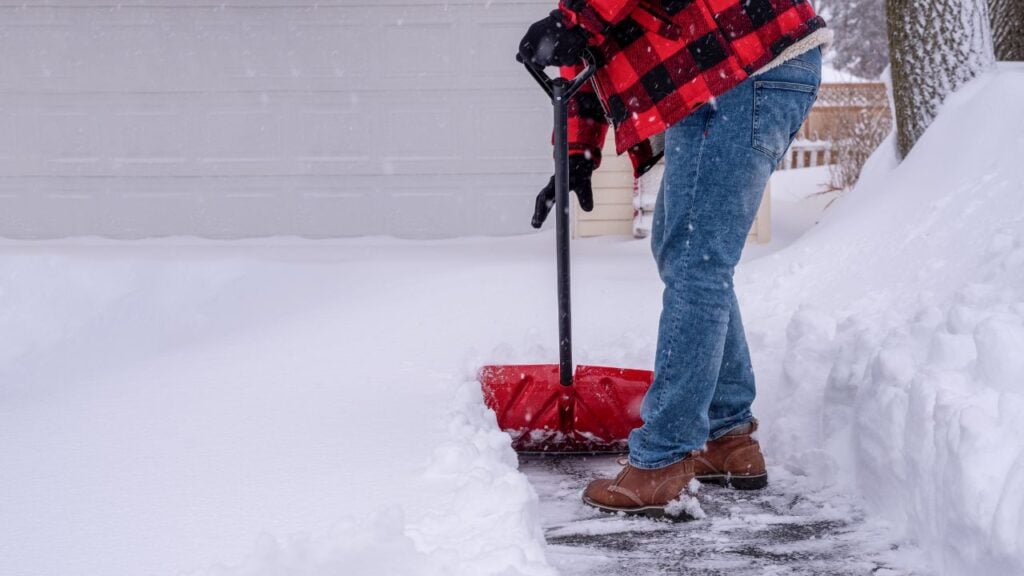
You've lived through enough Wisconsin winters to think you've got this one figured out.
A few things you take for granted turn out to be only half true.
7 Assumptions About Wisconsin Winters That Locals Correct
7 Arguments Wisconsin and Minnesota Have Never Settled

Football is only the loudest fight between Wisconsin and Minnesota.
The two states have plenty to argue about besides football.
