
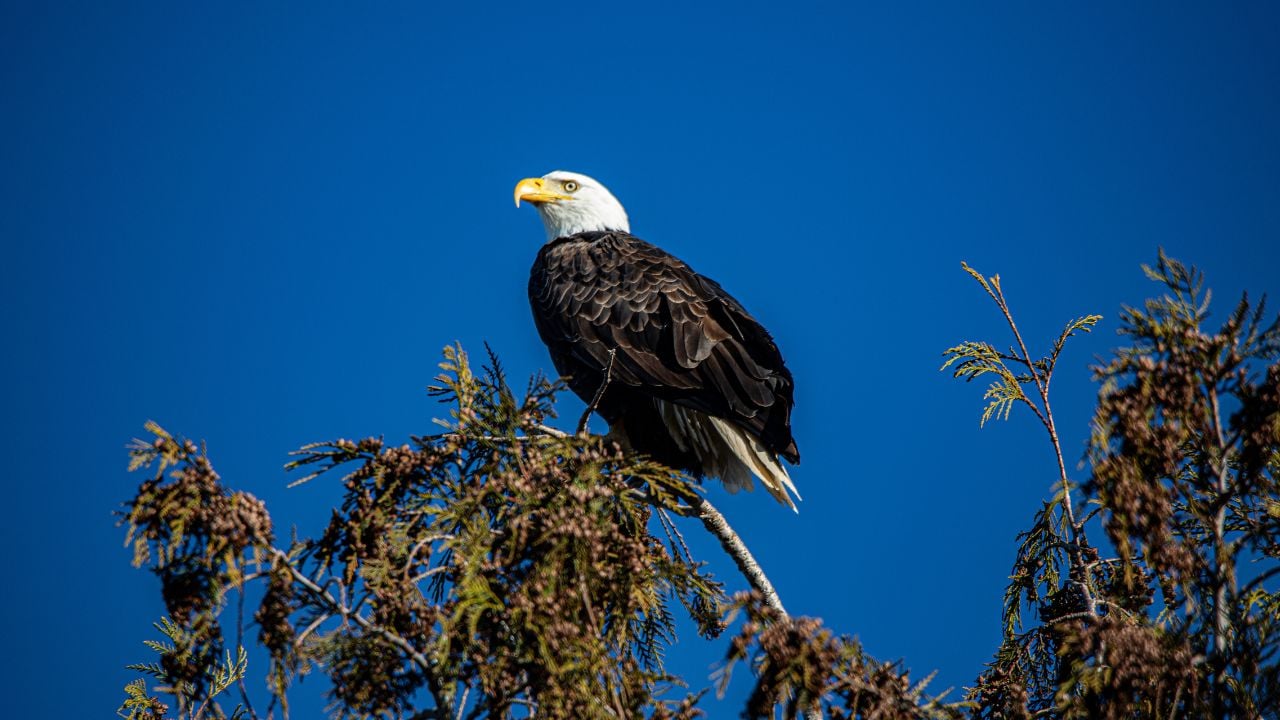
Why Bald Eagles Pack Washington’s Skagit River Every Winter, and How You Can See Them

You’ve seen photos of eagles crowding bare trees along a river, and you want to see them in person.
But showing up at the wrong time can leave you staring at an empty riverbank.
Here’s why bald eagles pack Washington’s Skagit River every winter, and how you can see them.
Chum Salmon Run
Bald eagles gather along the Skagit River each winter for the chum salmon.
The chum swim up from the sea to spawn and die, and the eagles you come to see feed on the carcasses.
The U.S. Fish and Wildlife Service says the Skagit has one of the largest wintering populations of bald eagles in the lower 48 states.
A January 2013 Daily Herald report said one tour guide’s groups saw as many as 300 eagles a day between Marblemount and Rockport.
Many of the eagles you see on the Skagit fly in from Canada and southeast Alaska, that report said.
Gravel Bars Where Eagles Feed
When you watch bald eagles on the upper Skagit, you’re watching them feed on salmon carcasses that wash up on gravel bars.
Your view of the feast depends on the river.
A 2018 Northwest Public Broadcasting report said winter water releases from three large Seattle City Light dams can quickly submerge those gravel bars.
Protected Roost Trees
In the mid-1970s, the state Department of Game, now part of the Washington Department of Fish and Wildlife (WDFW), acquired forested land to protect roost sites for wintering eagles.
The Nature Conservancy assisted with the purchase.
That land is now WDFW’s Bald Eagle Wildlife Area Unit, south of Rockport State Park, where the Skagit meets the Sauk River.
The unit historically had the fifth-largest winter gathering of bald eagles in the lower 48 states.
That was in years when chum returned to spawn in the Skagit and Sauk.
WDFW says that designation has since changed.
The agency ties the change to eagle recovery, delisting and shifts in chum returns.
You can reach the unit only by boat.
A Discover Pass covers vehicles you park on WDFW land, not arrival by boat.
Psst! How much do you know about salmon and eagles in the Northwest? Take our quiz and see how many you can get right.
Quiz
Eagle and Salmon IQ
Answer nine questions on bald eagles, salmon, and Northwest rivers. We bet you can’t get them all right. Prove us wrong?
Chum salmon go by what other name?
When to Go
The Concrete Chamber of Commerce says eagle numbers peak between Christmas and the second week of January.
A 2018 Northwest Public Broadcasting report said researchers from the National Park Service and U.S. Geological Survey modeled the peak in the week of Dec. 23-30.
That peak had moved about two weeks earlier in the three decades before 2018.
Mornings are the best bet.
A Cascadia Daily News guide says eagles are most active from dawn until 10 a.m. and just before dusk.
Water levels matter, too.
A big flood can wash the carcasses back out to sea.
Then the food is gone.
A high river may mean fewer birds on the day you visit, so your count can change from one trip to the next.
Howard Miller Steelhead Park
Howard Miller Steelhead Park in Rockport is a handy place to start your eagle watching.
The Skagit River Bald Eagle Interpretive Center sits inside the park at 52809 Rockport Park Road.
The center's website listed the 2025-26 season as Dec. 6 through Feb. 15, with weekend nature walks starting at 11 a.m. and 1:30 p.m.
A January 2026 Cascadia Daily News guide put the center's weekend hours at 10 a.m. to 4 p.m.
It's a weekend stop.
Confirm this winter's schedule on the center's website before you drive up.
Visit Skagit Valley says the bridge near the park is another spot to look upstream, and it asks visitors to use the sidewalk to stay out of the road.
State Route 20 and Marblemount
Bald eagle viewing continues east of Rockport along State Route 20.
The Cascadia Daily News guide lists the Milepost 100 rest area near Sutter Creek as a place to watch.
If you stop along the highway, pull fully off the road and park only in turnouts or parking lots.
If you're floating instead, the Forest Service's Marblemount boat launch is a popular winter put-in for rafts and drift boats heading into the Skagit River Bald Eagle Natural Area.
The launch charges no fee.
Keeping Your Distance
Federal law protects the Skagit's bald eagles, and that shapes how you watch them.
Whenever you can, use your car as a blind.
Keep your voice down.
The chamber asks visitors to stay away from the river's edge and the gravel bars where eagles are feeding, especially between 5 and 11 a.m.
A telescope, binoculars or a telephoto lens lets you watch from a distance.
The Forest Service lists a voluntary river closure for boaters from Dec. 26 through Feb. 28, from 5 a.m. to 11 a.m. daily.
It also recommends that boaters not beach their boats between the Marblemount and Rockport bridges.
What Counts as Disturbing Eagles
The Bald and Golden Eagle Protection Act bars anyone from taking a bald eagle without a federal permit.
Under the law, taking covers disturbing an eagle, not only shooting or trapping one.
Federal rules define disturbing as agitating or bothering an eagle enough to cause, or likely cause, injury, lower productivity or nest abandonment.
A first offense can bring a fine of up to $100,000 for a person, up to a year in prison, or both.
Boat Tours
Bald eagle tours by drift boat run through the winter, according to the Concrete Chamber of Commerce.
You'll need a reservation.
Check with the chamber for this winter's tours before you book.
7 Ferry Habits That Save Washingtonians Time and Money on Washington State Ferries
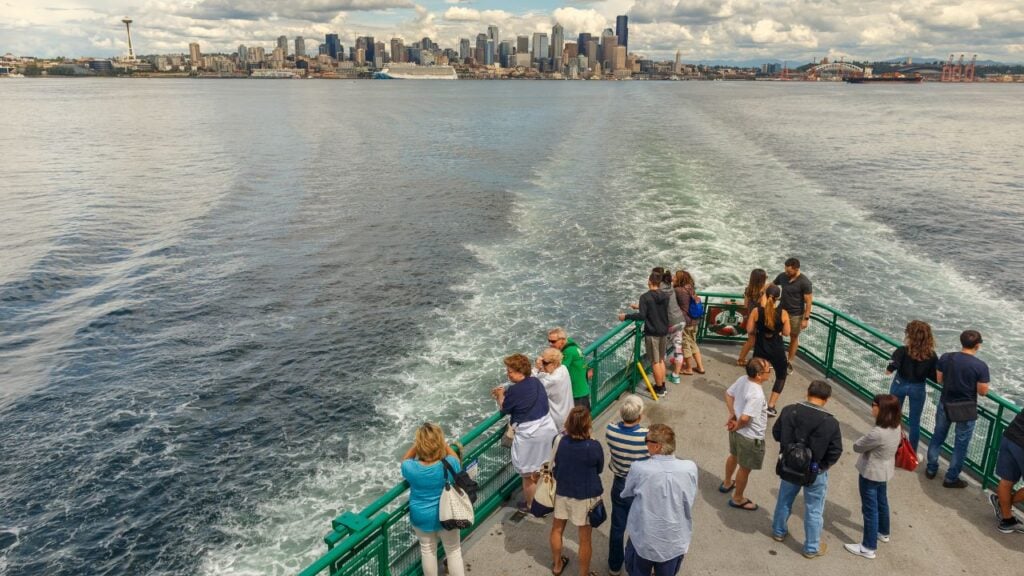
Two people can take the same Washington State Ferries trip and pay very different amounts.
The difference often comes down to a few choices made before boarding.
7 Ferry Habits That Save Washingtonians Time and Money on Washington State Ferries
9 Reasons People Are Leaving Washington, According to Those Who Left
Some Washington employers say they're thinking about moving out of state.
People who've already left gave their own reasons for going.
9 Reasons People Are Leaving Washington, According to Those Who Left
