
7 Things New Jerseyans Get Wrong About the Pine Barrens

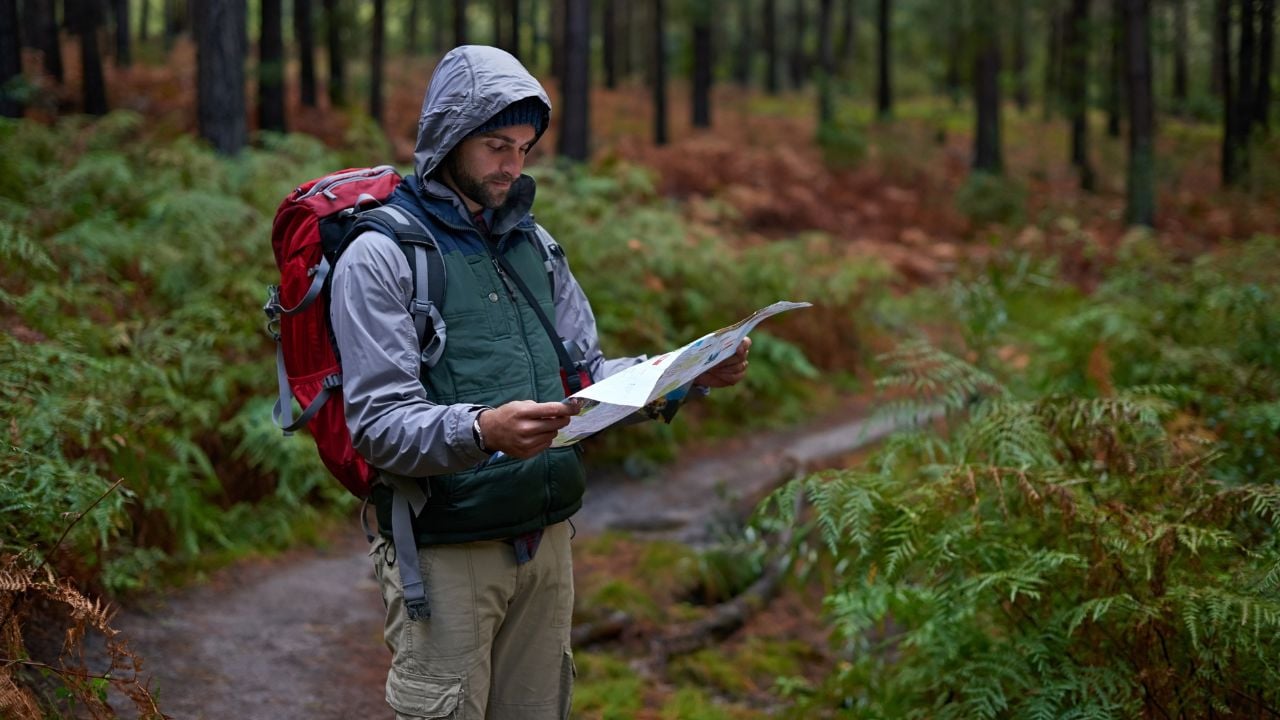
You pull into a trailhead in the Pine Barrens and assume you’re standing in a state park.
Whose land you’re on is a more complicated question than the trail sign lets on.
Here’s what New Jerseyans get wrong about the Pine Barrens.
1. A Misleading Name
Early settlers gave the Pine Barrens its name because most farm crops couldn’t grow in the sandy, nutrient-poor soil.
Many people hear the old name and picture a wasteland, and you might have pictured that yourself.
Your hike there would pass through a region with 850 plant species, including rare ones like curly grass fern and broom crowberry.
The region also marks the geographic limit for 109 southern plant species and 14 northern ones.
That’s hardly barren.
2. The Blueberry Breakthrough
The Pinelands Commission credits Elizabeth White and Frederick Coville with working together to develop the first cultivated blueberry, which led to the first commercial crop at Whitesbog in 1916.
White spent her childhood summers on her family’s cranberry farm in the Pine Barrens, where wild blueberries grew nearby.
In the early 1900s, if you picked wild blueberries for White, she paid $1 to $3 for each large-berried bush you marked.
Coville had hybridized the selected bushes in government greenhouses in Washington, D.C., and the pair named the best bush Rubel.
New Jersey made the blueberry its official state fruit in 2004.
The commission says blueberry and cranberry farms in the Pinelands are among the nation’s top producers.
3. More Than a Million Acres
The Pine Barrens cover about 1.1 million acres, or about 22% of New Jersey.
That ground spans parts of seven counties and all or part of 56 municipalities.
The commission says the reserve is the largest body of open space on the Mid-Atlantic seaboard between Richmond and Boston.
Out in the interior, you’ll find fewer than 10 people per square mile, while more developed communities at the edge pass 4,000 people per square mile.
About 600,000 acres of that ground have permanent protection as of July 2023.
The Reserve and the State Pinelands Area
The Pinelands National Reserve is larger than the state’s Pinelands Area.
The state area covers about 938,000 acres of that ground.
New Jersey’s Legislature passed the Pinelands Protection Act in June 1979 to supplement federal law.
The Pinelands Comprehensive Management Plan covers the entire reserve, so wherever you are in the Pine Barrens, you’re on ground it covers.
4. The Water Underground
Many visitors see a brown stream in the Pine Barrens and assume the water is polluted.
Natural organic contents leaching out of the soil give Pinelands streams their dark tea color.
Brown doesn’t always mean dirty.
Under your boots, the Kirkwood-Cohansey aquifer has an estimated 17 trillion gallons of water, according to the National Park Service.
That water frequently lies at or near the surface, producing bogs, marshes, and swamps.
Psst! How much do you know about the Garden State’s landmarks and wildlife? Take our quiz and see if you can ace it.
Quiz
Jersey Trivia Test
Answer these questions on New Jersey’s landmarks, wildlife, and history. We bet you can’t get them all right. Prove us wrong?
Which dinosaur is New Jersey’s official state dinosaur?
5. Bog Iron Country
The Pine Barrens had iron furnaces by 1765, and bog iron smelting and forging there didn't end until 1869.
In 1778, the British launched a failed campaign to destroy the ironworks at Batsto.
The region's first glasshouse opened at Port Elizabeth in 1799.
As rural industries faded in the mid-1800s, new railroads forever changed the pattern of settlements in the area.
Forest has since grown over some of the abandoned settlements.
The commission lists exploring old abandoned towns among Pinelands activities, so you can see that history in person.
6. The Pygmy Forest
The Pine Barrens have over 12,000 acres of pygmy forest, a stand of dwarf but mature pine and oak less than 11 feet tall.
Many people see a tree that short and assume the forest is young or struggling.
Walk through it and you're among mature trees, not saplings.
Small doesn't mean young.
Frequent fire is thought to be a major cause of the small size, according to the commission's glossary.
The commission's plant page adds that the region's unique plant life is closely related to the occurrence of fire.
7. A Reserve, Not a Park
The National Park Service says the Pinelands National Reserve is the first National Reserve in the nation.
Congress created it through the National Parks and Recreation Act of 1978.
The state's Pinelands Commission manages the reserve.
About 560,000 acres, or 48%, of the reserve is public land, based on 2023 data.
Roughly half isn't public land.
Your trail might cross state, federal, county, or municipal land.
Nonprofit conservation groups own some of the rest.
The United Nations Educational, Scientific and Cultural Organization (UNESCO) first recognized the area in 1983, then redesignated it as a single-site Biosphere Region in 1988.
Brotherton Reservation
The Pine Barrens were the setting for Brotherton, which the Pinelands Commission's timeline calls the first Indian reservation in America.
It dates to 1758.
You can find the site today at Indian Mills, in Shamong Township.
4 Things North and South Jersey Can't Agree On, Starting With Breakfast Meat

North and South Jersey can't agree on much, and the fight starts with breakfast meat.
Neither side backs down easily.
4 Things North and South Jersey Can't Agree On, Starting With Breakfast Meat
8 Things That Only Make Sense to New Jerseyans Who Grew Up Going Down the Shore
Go down the shore in New Jersey, and you're a shoobie or a benny, depending on which end of the coast you drive to.
Out-of-staters hear those words and raise an eyebrow.
8 Things That Only Make Sense to New Jerseyans Who Grew Up Going Down the Shore
