
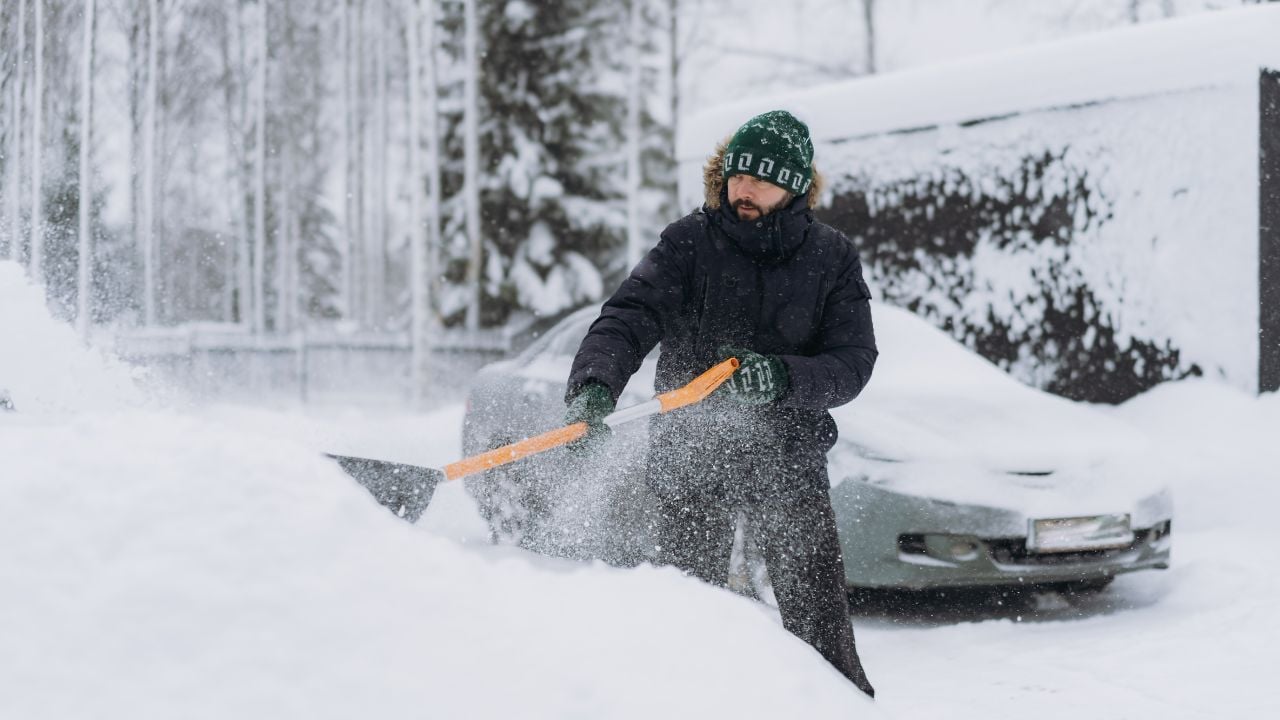
12 Things That Only Make Sense to New Yorkers Who Live in the Lake-Effect Snow Belt

You catch yourself hoping the lake freezes over, and nobody at the table thinks that’s strange.
Ask someone from outside the snow belt, and they’ll think you’re joking.
Here are the things that only make sense to New Yorkers who live in the lake-effect snow belt.
1. Snow on One Side of Town
Lake-effect snow usually forms in narrow bands, so one town can be buried while the next one gets sunshine.
Take the forecast for Erie County over Thanksgiving weekend in 2024.
It called for a trace to 2 inches in the far north, 4 to 8 inches around Buffalo, and 1 to 3 feet in the southern half.
If you live in the belt, you learn which side of the line your street is on, and you plan around it.
2. Hoping the Lake Freezes
Lake-effect snow needs open water to keep falling.
Many people in the snow belt root for Lake Erie to freeze over.
Lake Erie is shallow, so it’s usually one of the first Great Lakes to freeze.
A frozen lake shuts down the lake-effect snow season for western New York sooner than the other Great Lakes would.
Lake Ontario is 802 feet deep, and a Spectrum News meteorologist wrote that it never freezes over completely.
If you live near it, you can’t count on a freeze to end your snow season.
3. Tug Hill’s Snow Totals
Tug Hill sits in the lake-effect snow belt, and its snowfall is almost always over 200 inches a year.
That’s over sixteen feet.
The region covers 2,100 square miles between Lake Ontario and the Adirondacks.
Its snowfall is usually described as the heaviest east of the Rockies.
If you live in the region, you plan your winter around the snow, not the other way around.
4. Warnings by County
A lake-effect snow warning in the belt comes with a county list, and you check whether yours is on it.
Over Thanksgiving weekend in 2024, Spectrum News listed Erie, Genesee and Wyoming counties under a warning until 7 p.m. Sunday.
Oswego, Jefferson, Lewis and St. Lawrence counties were listed under theirs until 7 p.m. Monday.
Right next to Erie County, Niagara County was forecast to see no snowfall impact at all.
5. Bills Game Moved to Detroit
A lake-effect storm in November 2022 forced the National Football League to move the Buffalo Bills’ game against the Cleveland Browns to Detroit.
Orchard Park had 77 inches of snow by early that Saturday, according to the National Weather Service.
Many people who live in the snow belt see a moved game as part of the deal.
If you have seats at a game in the belt, you check the weather as well as the schedule.
6. Thruway Shutdowns
On November 29, 2024, lake-effect whiteouts closed the westbound Thruway to all vehicles from Exit 59 to the Pennsylvania line.
Westbound traffic had to exit.
A state of emergency that day covered 11 counties, from Chautauqua to St. Lawrence.
If you drive for work in the belt, you check the closures before you check your route.
Psst! How much do you know about the lake-effect snow belt? Take our quiz and see if you can ace it.
Quiz
Snow Belt IQ
Answer these questions on lake-effect snow and the snow belt. We bet you can’t get them all right. Prove us wrong?
In the 2025-26 Golden Snowball race, which city finished second behind Syracuse?
7. Golden Snowball Trophy
Syracuse sits roughly 35 miles southeast of Lake Ontario, and its winters come with a trophy, the Golden Snowball Award.
It goes to whichever of five upstate cities gets the most snow in a season.
CNY Signal reported that Syracuse won the 2025-26 award with 143.1 inches, which was 15.3 inches above its 127.8-inch average.
Rochester finished second with 114.1 inches, ahead of Buffalo's 92.5, Binghamton's 75.8 and Albany's 58.4.
If you live in Syracuse, you can measure your winter against the other four cities.
8. Overnight Parking Rules
Syracuse averages 127.8 inches of snow a year, so if you park downtown there, you deal with a snow season too.
The city's 2025 notice said that from Nov. 1, overnight on-street parking on designated downtown blocks alternates and is limited to one side of the street.
The hours ran from 10 p.m. to 6 a.m., so snowplows could clear the streets.
Restrictions went into effect on Nov. 1 and continued to April 1.
Fines rose from $40 to $75 from November through March.
Owners found in violation were subject to ticketing and towing.
Lake-Effect Snow Season Parking Blocks in Syracuse
Near Hanover Square, it listed the 100 and 200 blocks of Erie Boulevard East, East Water Street and South Warren Street.
Near the Galleries, it listed South Warren Street's 300 and 400 blocks.
Near City Hall, it listed the 300 block of Montgomery Street.
Near the OnCenter, it listed Madison Street from the 100 to the 200 block.
Near the Landmark Theatre, it listed the 100 and 200 blocks of East Jefferson Street and the 100 block of West Jefferson Street.
9. Tug Hill Snowmobile Trails
The Tug Hill Commission says the region's abundant snow has created a large network of snowmobiling trails.
New York's tourism site describes the Tug Hill Plateau as covered with 200 to 300 inches of lake-effect snow every year.
If you ride on Tug Hill, you're waiting on the same storms that close the roads.
10. Six Feet Near Fort Drum
A lake-effect storm in November 2022 left Natural Bridge, near Fort Drum, with just under six feet of snow.
In 2024, forecasters expected up to six feet in Jefferson and Lewis counties over Thanksgiving weekend.
If you live in either county, you shovel in feet, not inches.
11. Chautauqua Ridge
The Chautauqua Ridge, south of Buffalo, "sees some of the most snow off of the lakes" every year, a Spectrum News meteorologist wrote.
In the 2018-2019 winter, the Buffalo airport picked up 118.8 inches, while higher elevations saw closer to 230.
Chautauqua County was forecast to get up to 4 feet over Thanksgiving weekend in 2024.
Cattaraugus County was forecast to get 1 to 4 feet.
If you live up on the ridge, the airport's total isn't your total.
12. Southwest Wind
Lake-effect snow in Buffalo depends on wind direction, and a southwest wind is the direction best suited to bring it snow.
That wind tends to travel the lake's full length, 241 miles in all, before it reaches Buffalo at the northeastern end.
That long path is why Buffalo's snowfalls are measured in feet rather than inches, the station reported.
Many people in the belt check the wind direction as closely as the temperature.
If you live in Buffalo, a southwest wind in the forecast tells you what kind of week you have.
The Lake Erie Ice Boom
Winter on Lake Erie also brings an ice boom.
The New York Power Authority operates it to reduce the potential for ice jams in the Niagara River.
For the 2025-26 season, crews could begin installing it once Lake Erie reached 39 degrees Fahrenheit or on Dec. 16, whichever came first.
High winds delayed the installation, and crews finished on Jan. 8, 2026.
The typical removal date is April 1, but thick ice pushed it to April 30 in 2025 and April 23 in 2026.
If you head to Lake Erie in April, the boom may still be in the water.
7 Reasons Wisconsin Snowplows Skip Your Street for Hours After a Storm
After a big snowfall, it can feel like the plow has forgotten your street.
Crews often work from a plan, and some cities and towns post theirs online.
7 Reasons Wisconsin Snowplows Skip Your Street for Hours After a Storm
8 Things Upstate New Yorkers Are Tired of Explaining to New York City

Some of the country's highest property tax rates sit in upstate New York, on some of the state's cheapest homes.
None of those counties touch New York City, and that's only the start of what upstaters have to explain.
8 Things Upstate New Yorkers Are Tired of Explaining to New York City
