
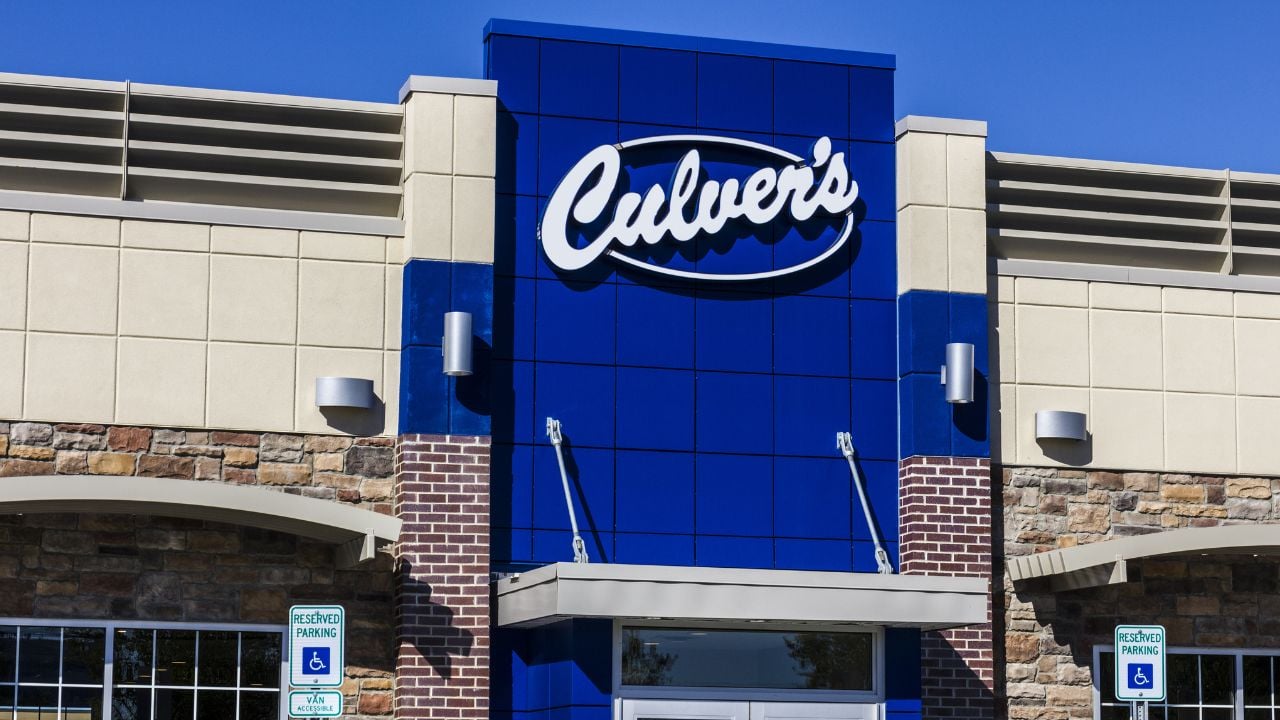
7 Things Wisconsinites Get Wrong About Culver’s

If cheese curds are always part of your Culver’s order, you might figure they’ve been on the menu since the first day.
That’s not the only thing longtime customers assume.
Here’s what Wisconsinites get wrong about Culver’s.
1. Where ButterBurger Gets Its Name
If you’re picturing a patty dripping with butter, you’ve got the wrong part of the burger, the company says. The ButterBurger gets its name from the bun.
The burgers aren’t cooked, marinated, dunked, fried or drizzled in butter.
Instead, the crown of the bun gets a light buttering.
Craig Culver’s mother did it that way, and Culver’s has used the technique since day one.
2. Frozen Custard and Ice Cream
Some people treat Culver’s frozen custard as ice cream with a fancier name.
The federal standard covers both in one rule, titled “Ice cream and frozen custard.”
It says frozen custard must contain 1.4 percent egg yolk solids by weight.
Ice cream, except for frozen custard, contains less than that.
Culver’s says each restaurant makes its custard in small batches all day, every day.
Craig Culver fell in love with frozen custard back in college.
What the Federal Rule Says About Frozen Custard
The same federal standard that covers the custard Culver’s sells bends for some flavors.
In bulky flavors, the rule lets the egg yolk figure drop below 1.4 percent.
It can’t fall below 1.12 percent, though.
For ice cream, the standard sets a milkfat minimum of at least 10 percent (less in bulky flavors).
3. When the Cheese Curds Showed Up
It’s easy to assume Culver’s served cheese curds from the very first day.
Culver’s began serving Wisconsin Cheese Curds in 1997, 13 years after the first restaurant opened.
The company says every single cheese curd it has served has come from a dairy farm in the state, and its wording doesn’t limit that to restaurants in the state.
4. What “Fresh, Never Frozen” Means
Many people assume a drive-thru burger starts as a frozen patty, but Culver’s says its beef is fresh, never frozen, and comes from America’s family farms.
The company explains that frozen beef loses moisture, and moisture carries flavor.
The burgers use a blend of sirloin, chuck and plate.
A little pressure on the grill, it says, seals the beef and keeps the moisture in.
It adds that your food doesn’t touch the grill until after you order.
Psst! Think you know Culver’s? Tap each card to see whether the statement is a myth or a fact.
5. What Came Before Culver’s
You might picture the first Culver’s as a brand-new restaurant, but it opened in a former A&W drive-in in Sauk City.
The Wisconsin Historical Society says George and Ruth Culver bought that A&W in 1961.
Their son Craig reopened it as Culver’s on July 18, 1984, 23 years after his parents bought it.
The family repainted the building blue and white and introduced ButterBurgers.
The restaurant no longer occupies the original building, but a plaque marks the site, and a Culver’s still stands at 716 Phillips Boulevard.
6. Who Owns a Culver’s
It’s easy to picture a Culver’s owner as a distant executive.
When the first successful franchise opened in Baraboo in 1990, the company’s history page says that part of the deal was that the owner-operator would work right in the restaurant.
The page adds that this is still true today.
Craig Culver told the Wisconsin Historical Society that applicants spend 50 to 60 hours in one of the restaurants working with trainers before they open a Culver’s.
Psst! How much do you know about Culver’s history? Take our quiz and see if you can ace it.
Quiz
Culver’s History IQ
Answer these questions on Culver’s history and facts. We bet you can’t get them all right. Prove us wrong?
Culver’s history page says friends and family know Ruth Culver by which title?
7. Culver's Beyond the Midwest
Culver's may feel like a Midwest chain, but it has restaurants in 26 states.
Craig Culver's interview names Florida, Arizona, North Carolina, South Carolina, Georgia and Alabama among them.
From Biology Degree to Drive-In
If you picture a lifelong restaurateur, think again: Craig Culver graduated from the University of Wisconsin-Oshkosh with a biology degree.
He turned down his father's offer to run a supper club at Devil's Lake.
Craig later worked at a fast-food chain, which gave him firsthand restaurant experience.
Dairy Roots
Craig Culver's first custard relied on dairy from local farmers.
His father, George, had worked for several firms that supplied the region's dairy farmers.
A Slow Start
George Culver had no fast-food experience when he bought the A&W, and the seller who was supposed to train him and Ruth never showed up.
Business started slowly after the 1984 reopening, and few customers came.
Craig Culver later recalled that nobody knew what Fresh Frozen Custard or a ButterBurger was.
The first profit didn't arrive until the third year.
A local banker who believed in the family and in Craig also kept the business from going under.
Craig Culver credits word of mouth as the best advertising.
The Founder's Years on the State History Board
Craig Culver served nine years on the Wisconsin Historical Society's Board of Curators.
During that time he helped lead a $75 million fundraising campaign and supported the future Wisconsin History Center.
As of March 2026, he's still chairman of the board at Culver's.
The profile adds that Culver's is a premier sponsor of the Wisconsin History Makers Tour.
7 Reasons Wisconsin Snowplows Skip Your Street for Hours After a Storm

After a big snowfall, your street can wait a while for a plow.
Crews often work from a plan, and some cities and towns post theirs online.
7 Reasons Wisconsin Snowplows Skip Your Street for Hours After a Storm
6 Cabin Rules That Can Result in Fines for Wisconsin Owners

Time at the cabin is meant for unwinding, not for getting a notice in the mail.
Cabin owners can get caught off guard by rules that are easy to overlook.
