
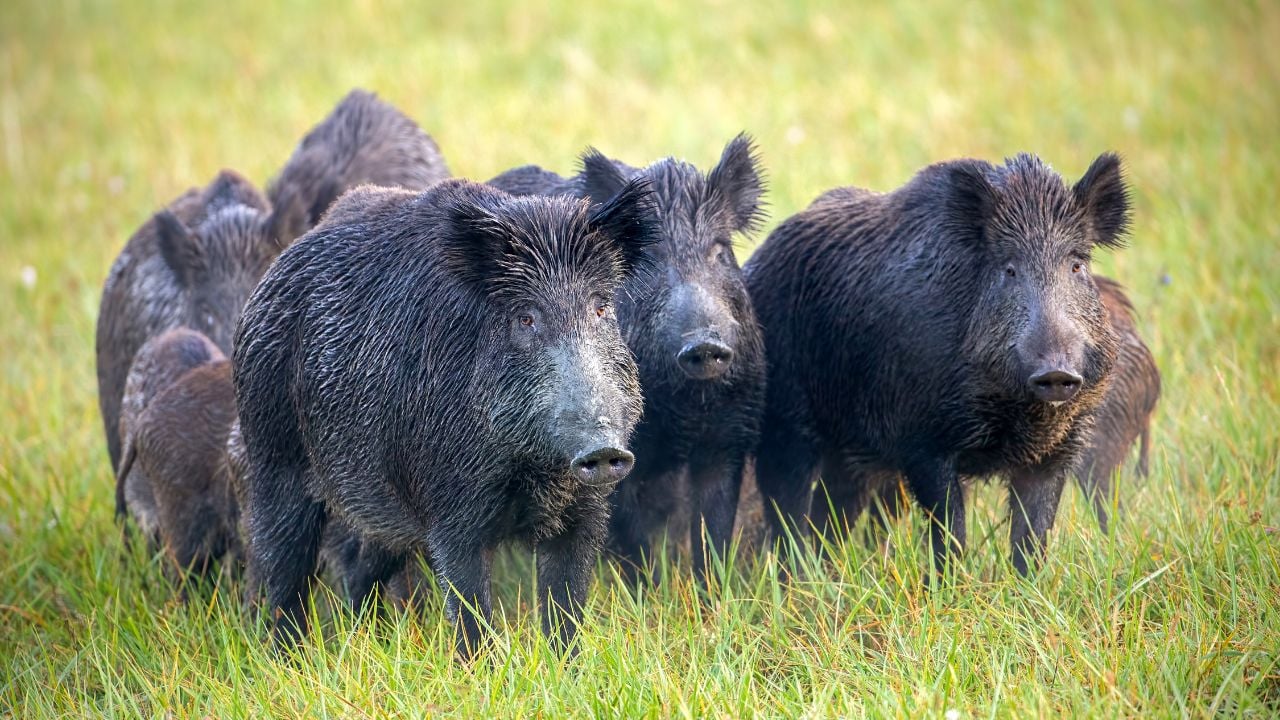
Texans Can Shoot Feral Hogs From a Helicopter. 6 Hog Rules Texans Still Get Wrong

If you catch a feral hog in a trap on your land, hauling it somewhere else might seem like the easy fix.
Texas has rules about where that hog can and can’t go, though.
Here’s why Texans can shoot feral hogs from a helicopter, and the hog rules Texans still get wrong.
Note: This is general information, not legal advice. Hunting and permit rules are subject to change, so confirm the current requirements with the Texas Parks and Wildlife Department (TPWD).
1. Aerial Wildlife Management Permits
A TPWD Aerial Wildlife Management permit is what makes shooting feral hogs from a helicopter legal in Texas.
A pilot named on the permit flies the aircraft.
Only a qualified landowner or landowner’s agent can pay to be the gunner.
The permit covers depredating animals, which the Parks and Wildlife Code defines as bobcats, feral hogs, red foxes, coyotes and coyote-dog crosses.
TPWD’s FAQ names feral hogs and coyotes.
Sport hunting feral hogs from an aircraft is illegal under state and federal law.
Many people picture a helicopter hog hunt as open to anyone with a rifle and a ride, but the permit rules are narrower.
Who Can Pay to Be a Hog Gunner Under TPWD’s Aerial Permit
TPWD’s FAQ says you can’t pay to be a gunner on a feral hog hunt with a Class A misdemeanor or felony conviction under the Parks and Wildlife Code.
A no-contest plea or deferred adjudication for the same kind of violation counts too.
Water Safety Act violations are excluded from that list.
A federal Lacey Act violation disqualifies a person too.
Gunners who aren’t paying are recorded on the permit holder’s daily flight log and reported to TPWD quarterly.
2. Hunting License Exemption
TPWD says a 2019 law exempts any hunter, resident or nonresident, who has the landowner’s consent from needing a hunting license to hunt feral hogs.
It took effect Sept. 1, 2019, and it applies only on private property.
That means a friend from out of state can help you with the hogs on your land, no hunting license required.
Hunter education requirements still apply.
Collecting money for access to a hunt requires a hunting lease license from TPWD.
3. No Closed Season or Bag Limit
Texas A&M AgriLife’s feral hog program says Texas sets no closed season, bag limit or possession limit on feral hogs.
That means you can hunt on private land in July as legally as in November.
Some hunters still assume hog hunting follows the deer calendar.
What you do need is the landowner’s okay, whatever the month.
Psst! How much do you know about Texas feral hogs? Take our quiz and see if you can ace it.
Quiz
Texas Hog IQ
Answer these questions on Texas feral hogs and the agencies that police them. We bet you can’t get them all right. Prove us wrong?
Which Texas county was the only one without feral swine as of 2019?
4. Moving Live Hogs
The Texas Animal Health Commission (TAHC) regulates the movement of live feral hogs.
TPWD calls transporting or releasing a live feral hog unlawful unless it follows those TAHC rules.
If you trap a hog, it can go to a slaughter facility, an approved holding facility or an authorized hunting preserve.
Release is allowed only at an authorized hunting preserve, which is TAHC-approved premises.
Only male swine can be released at a preserve, and each one must carry approved identification.
Until it reaches one of those sites, a trapped hog can wait up to seven days in an escape-proof cage on your vehicle or trailer.
5. Trapping and Baiting
TPWD's hunting rules make trapping feral hogs lawful on private property.
The same rules allow baiting for nongame animals, and feral hogs fall under the nongame and exotic species rules.
That can make a baited trap a legal setup on your land.
Whatever you catch still falls under the live-hog movement rules.
6. Public Land Rules
On TPWD public hunting land, a unit allows hog hunting only if its Legal Game listing includes feral hogs, so check that listing on the unit's map before you go.
You need a hunting license to hunt feral hogs on public hunting land, and the private-land exemption doesn't carry over.
At 17 or older, you also need a $48 Annual Public Hunting permit.
Hog shooting hours on a public unit are limited to daylight unless that unit's rules say otherwise.
Dogs are off-limits unless the listing allows them, and traps and snares need a contract with TPWD or a cooperating landowner.
Baiting is generally prohibited, with an exception only when TPWD authorizes it for that unit, activity and time period.
Paperwork and Flight Rules for Aerial Hog Hunts
A paid helicopter hog hunt starts with a landowner authorization, and TPWD has to sign, stamp and number yours before it counts.
Flights are limited to the tracts named in that authorization, and the rules bar taking animals from half an hour after sunset to half an hour before sunrise.
TPWD won't approve an authorization for hogs on a tract where feral hogs have been released.
TPWD's feral hog page defines aerial gunning as shooting wild pigs from fixed-wing or rotary aircraft, a category that includes helicopters.
It also notes that in a private-land state like Texas, gaining permission and sufficient acreage from contiguous landowners can be a challenge.
The Warfarin Fight
A feral hog poison called Kaput set off a fight in Texas in 2017.
Its active ingredient, warfarin, is a compound you may know as a rat poison or a human blood thinner.
A hog that eats it can die of internal bleeding, and the label says that can take four to seven days.
Agriculture Commissioner Sid Miller championed the poison.
Not everyone agreed.
Opponents, the Texas Tribune reported, included hunters, animal rights advocates, conservationists and meat processors.
If you're wondering how it ended, Scimetrics, the company behind Kaput, announced on April 25, 2017 that it had withdrawn its request to register the product in Texas.
The company cited the threat of lawsuits.
8 Texas Squatter Rules That Still Leave Homeowners Stuck in 2026

A neighbor texts you a photo of your house with the lights on, and the house is supposed to be empty.
Here's where a squatter can leave you stuck.
8 Texas Squatter Rules That Still Leave Homeowners Stuck in 2026
6 Precautions Texans Should Take When Shopping at H-E-B
H-E-B is such a familiar stop for Texans that it's easy to shop there on autopilot.
A few smart habits can protect your wallet and your family, and some start before you reach the store.
