

9 Words North Carolinians Use That Mean Something Else Outside the South

If out-of-state family is coming for Thanksgiving, what you say at the table might not always land the way you meant.
Here are the words North Carolinians use that mean something else outside the South.
1. Carry
A neighbor who offers to carry you to the airport probably isn’t planning to lift you.
The American Heritage Dictionary’s first sense of carry is to hold or support while moving, like carrying a heavy backpack.
Another sense, to escort or accompany, is labeled chiefly Southern US.
Merriam-Webster’s matching sense, conduct or escort, carries the label chiefly dialectal.
In that sense, to carry someone somewhere is to give them a ride.
2. Directly
“I’ll call you directly” can sound like a promise to call right now.
The American Heritage Dictionary labels one sense of directly chiefly Southern US, meaning in a little while or shortly.
Its first sense is in a direct line, as in a road that runs directly north.
In that Southern sense, “I’ll call you directly” means you’ll phone a little later.
Two Timings for Directly
The American Heritage entry for directly also lists a sense that means at once or instantly, as in leave directly.
That puts a fast meaning and a slow meaning under one word.
American Heritage gives the in-a-little-while sense the chiefly Southern US label and leaves the at-once sense unlabeled.
3. Dope
Ask for a dope in parts of the South and you may get a cola.
Merriam-Webster’s entry for dope includes a cola drink, labeled chiefly Southern US.
Its other noun senses include a stupid person, inside information, and an illegal drug.
That cola sense is the only noun sense in the entry with a regional label.
4. Poke
Many locals call a bag a poke.
Merriam-Webster defines that poke as a bag or sack, labeled chiefly Southern US and Midland US, so it isn’t only a Southern word.
That bag is the poke in the old warning against buying a pig in a poke.
A separate poke means a quick jab or a punch and carries no regional label, and a third means pokeweed.
You’re not picking a fight.
5. Toboggan
Merriam-Webster lists a stocking cap among the senses of toboggan, labeled chiefly Southern US and Midland US, so Midland speakers use it too.
Ask a North Carolinian for a toboggan in January and you may get a hat, not a sled.
The sled is the first sense, a long, flat-bottomed one curved up at one end.
Another sense is a downward course or a sharp decline, with no regional label.
Psst! How much do you know about North Carolina English? Take our quiz and see if you can ace it.
Quiz
Tar Heel Talk IQ
Answer nine questions on North Carolina speech, dictionary labels, and word origins. We bet you can’t get them all right. Prove us wrong?
A 2018 North Carolina State University article says the double modal might could was routinely used, without fear of linguistic censure, by which group?
6. Evening
When does evening start?
Merriam-Webster's first sense is the latter part of the day and the early part of the night.
A second sense, labeled chiefly Southern US and Midland US, means afternoon, and the label names the Midland as well as the South.
That's how a plan to see you this evening can start in the afternoon.
7. Buggy
Grab a buggy at the store door and you won't need a horse.
The American Heritage Dictionary defines buggy first as a small, light, one-horse carriage.
The entry also lists a baby carriage, and a shopping cart labeled chiefly Southern US.
It also lists an off-road vehicle with oversized tires.
8. Mash
The public radio show A Way with Words describes another sense of mash, to press hard, as in mash the brake, as Southern.
Merriam-Webster's first sense is to beat or press something into pulp, as in mashing a ripe banana.
If you tell a friend to mash the elevator button, you want it pressed hard, not flattened.
9. Fixing To
Fix usually means repair.
Merriam-Webster also lists an informal sense, labeled chiefly Southern, that means to get set or be on the verge.
If you say you're fixing to leave, you haven't left yet, and nothing needs repair.
The Midland Overlap
Poke, toboggan, and evening share a label in Merriam-Webster, chiefly Southern US and Midland US.
Merriam-Webster defines Midland as the dialect of English spoken in an area of the east central U.S.
So those three senses aren't Southern alone, but each still differs from the word's standard meaning.
The Dictionary of American Regional English adds some use of the toboggan cap in the Inland North, the language blog Grammarphobia reports.
That dictionary dates its earliest cap examples to Minnesota in 1870 and Ohio in 1886, both as "toboggan cap."
The Oxford English Dictionary traces the cap you pull over your ears to a 1929 issue of American Speech.
Early Print Examples of Fixing To
The American Heritage Dictionary ranks fixin' to with y'all as one of the best known markers of Southern dialects.
The same note adds that non-Southerners occasionally use it in informal speech and writing.
The Oxford English Dictionary's earliest example of fixing to is dated 1854-55 and appears in Norman Ellsworth Eliason's 1956 book Tarheel Talk, the language blog Grammarphobia reports.
The earlier phrase fix for shows up in Benjamin Church's 1716 history of King Philip's War.
7 Things That Change the Second You Cross From North Carolina Into South Carolina
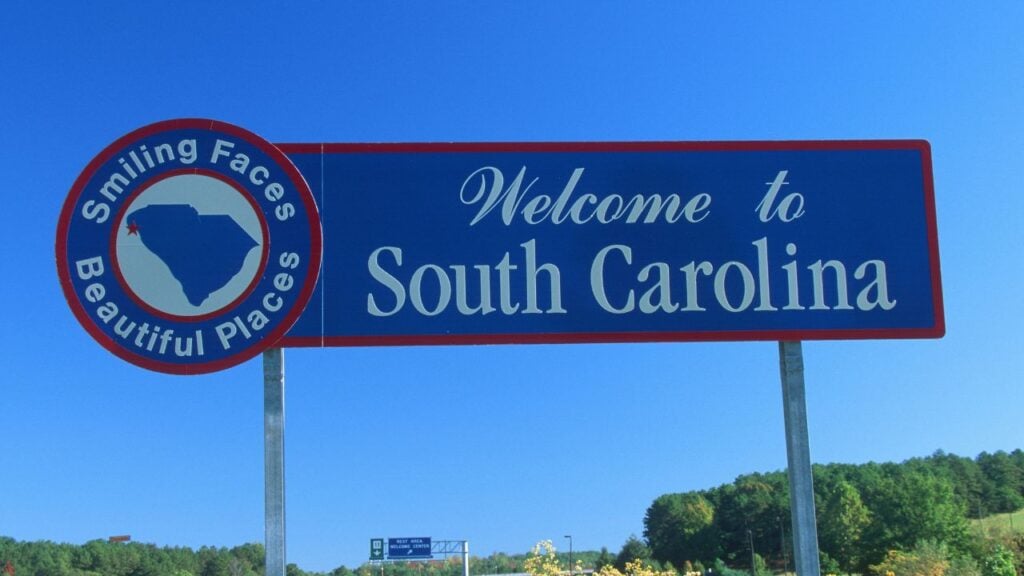
Crossing a state line doesn’t change the road, but it can change what you pay and what you’re allowed to do.
North Carolinians who make the trip may be surprised by what’s different on the other side.
7 Things That Change the Second You Cross From North Carolina Into South Carolina
12 North Carolina Weather Records That Still Stand Today
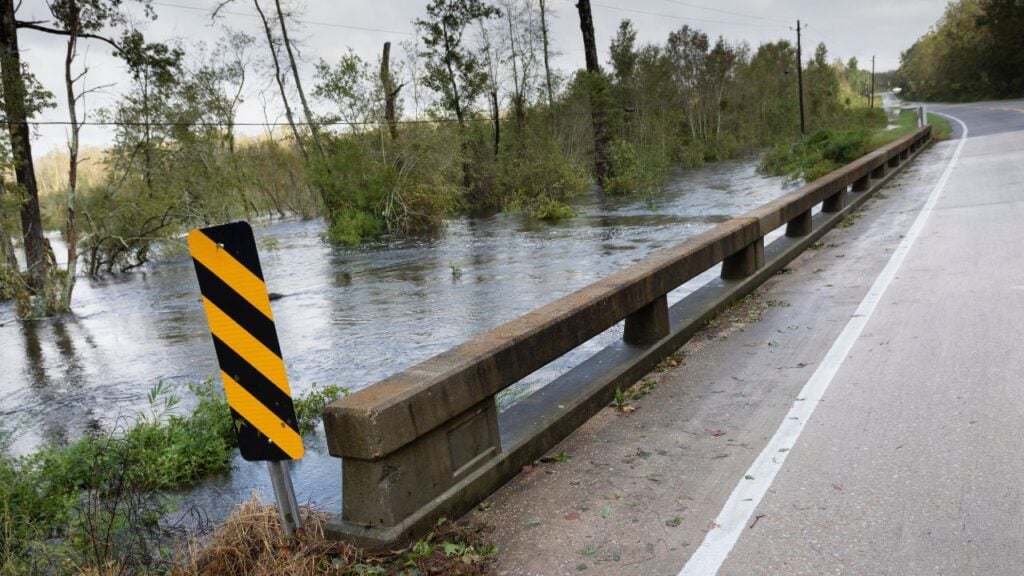
Some weather records get broken every few years.
These are the weather extremes North Carolinians haven't seen topped yet.
