
11 Alligator Rules Floridians Live By That Out-of-Staters Never Think About

If you’ve got relatives flying in for Thanksgiving, you don’t need to tell them not to pet an alligator.
It’s the less obvious habits they won’t know, and one of them has to do with a sunny winter day.
These are the alligator rules Floridians live by that out-of-staters never think about.
1. No-Feeding Rule
Feeding an alligator is illegal and dangerous, according to the Florida Fish and Wildlife Conservation Commission (FWC).
Fed alligators can lose their natural wariness of people and learn to link them with food.
In Texas, intentional feeding is a Class C misdemeanor with a fine of up to $500.
If you’re tempted to share your lunch with a pond alligator, Florida’s penalties increase each time you’re cited again.
How Florida’s Feeding Penalty Builds
Feeding an alligator in Florida starts with a $100 civil penalty for a first offense.
You have 30 days to pay it, and paying counts as an admission.
Refusing the citation, skipping the payment, or missing a required court date is itself a second-degree misdemeanor.
If every offense involves alligators, bears, or other crocodilians, a second offense is a second-degree misdemeanor.
A third alligator-related offense is a first-degree misdemeanor, and a fourth or later is a third-degree felony.
2. Every-Waterbody Assumption
Alligators can turn up in nearly any waterbody in Florida, and your safest move is to always assume they’re present.
The state has about 1.3 million alligators, and they live in all 67 counties.
That’s a lot of neighbors.
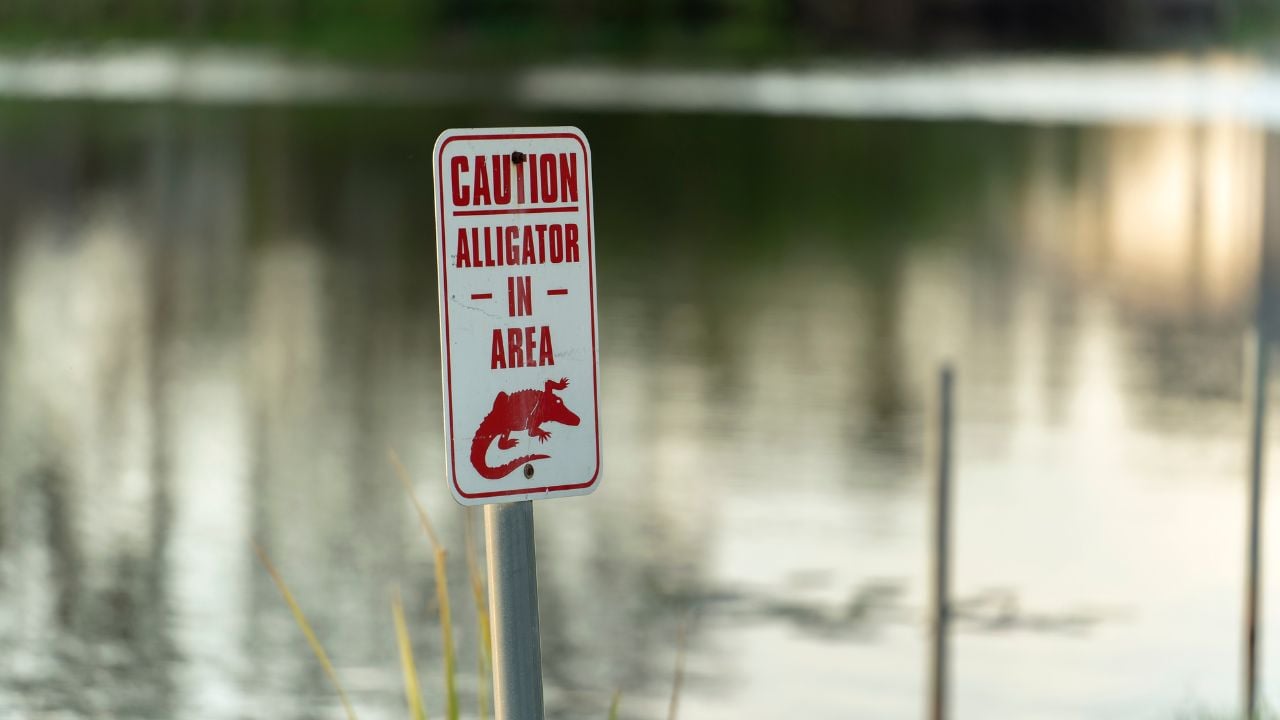
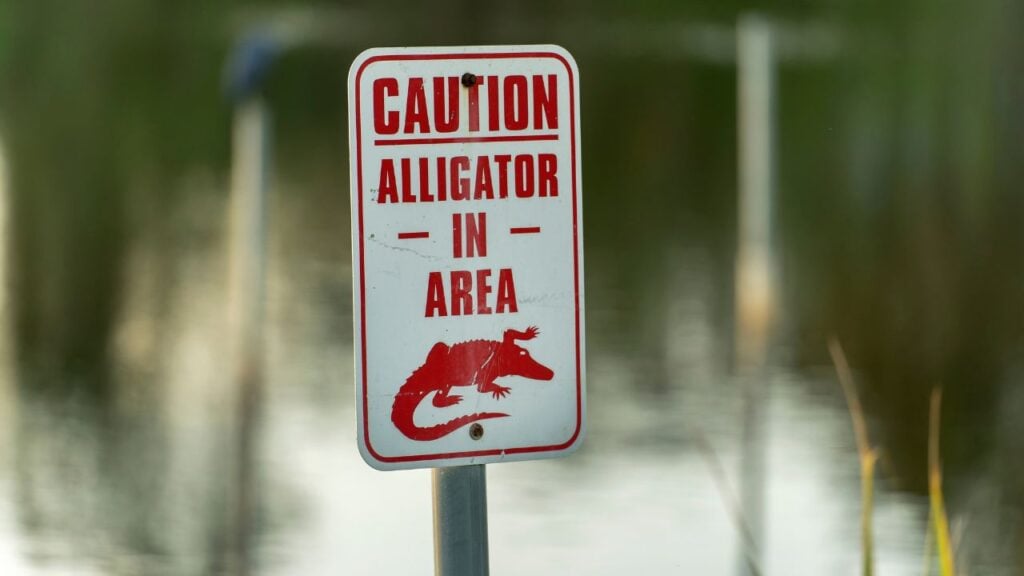
That includes ponds and canals, and FWC offers “Be Alert!” signs to raise awareness of alligators in them.
Many out-of-staters picture alligators in a swamp, not in a subdivision pond.
3. Four-Foot Hotline Call
Florida’s Statewide Nuisance Alligator Program generally treats an alligator as a nuisance once it’s at least 4 feet long and believed to threaten people, pets, or property.
If you spot an alligator like that, you call the toll-free Nuisance Alligator Hotline at 866-392-4286.
The program still removes smaller alligators found in places like a pool or garage.
That’s the number to know.
4. Trapper-Only Removal
When you call about a nuisance alligator, FWC dispatches a contracted trapper to resolve the situation.
In Louisiana, the state wildlife department gives you the name of a licensed Nuisance Alligator Hunter for your area, and you contact that hunter directly.
Relocation isn’t part of the plan, since relocated alligators often try to return to their capture site.
The program doesn’t remove alligators from private property without the owner’s or manager’s permission.
FWC also says the person who calls must be able to grant legal access to the property.
FWC says you should never handle an alligator, even a small one, since bites can cause serious infection and handling is illegal.
5. Leashes at the Water’s Edge
Pets can resemble an alligator’s natural prey, so FWC says to keep them on a leash and away from the water’s edge.
Your dog shouldn’t swim in fresh or brackish water, even briefly.
Texas Parks and Wildlife says to keep pets fenced or indoors for a few days in areas with recent sightings because the alligator will often move on.
6. Daylight-Only Swimming
FWC says alligators are most active between dusk and dawn, and it advises swimming only in designated swimming areas during daylight hours and without your pet.
If your plan involves a swim at sunrise or sunset, the safe answer is to wait.
Psst! How much do you know about Florida’s alligators? Take our quiz and see if you can ace it.
Quiz
Florida Gator IQ
Answer these questions on Florida’s alligators and the wildlife around them. We bet you can’t get them all right. Prove us wrong?
Florida’s heaviest alligator on record, a 1,043-pound male, came from a lake in which county?
7. Safe Distance in Breeding Season
FWC says to keep a safe distance if you see an alligator.
Courtship begins in early April, and mating happens in May or June.
Females then build mound nests from soil, vegetation, or debris and lay eggs in late June or early July.
Hatching runs from mid-August through early September.
Texas Parks and Wildlife says a female guarding her nest might charge a person who gets close, and it recommends viewing alligators from at least 30 feet.
8. Winter Warm Spells
Below about 70 degrees, alligators stop feeding, according to FWC, and below 55 degrees they go dormant.
But they occasionally emerge to bask in the sun during spells of warm weather.
On those days, FWC's advice to keep a safe distance, keep your pets on a leash away from the water's edge, and never feed an alligator still applies.
9. Fish Scrap Disposal
Properly disposing of fish scraps is among the ways FWC lists to reduce conflict with alligators.
Texas Parks and Wildlife says tossed scraps can have the same result as feeding alligators and points anglers to garbage cans, which many boat ramps and fish camps have.
If you clean your catch at the ramp, you'll want to bag the scraps for the trash.
Scraps are food too.
10. Reporting Feeders
If you see someone feeding an alligator, you can report it to Wildlife Alert at 888-404-3922.
You can report anonymously.
FWC lists feeding or enticing alligators and crocodiles among the violations that can earn a $300 reward if a tip leads to an arrest or citation.
Don't mix up the two numbers: Wildlife Alert takes reports of people feeding alligators, and the Nuisance Alligator Hotline is for an alligator that concerns you.
11. Permit-Only Hunting
If you hold a permit in Florida's statewide alligator harvest, you hunt during an assigned week between Aug. 15 and Sept. 11.
Trappers who haven't taken both alligators can hunt in an open period from Sept. 12 through Nov. 1.
Only people with the proper licenses and permits can take an alligator in Florida, according to FWC.
No paperwork, no hunt.
12 Things Floridians Do the First Morning It Drops Below 60 Degrees
The first cool morning of the season can feel like big news in Florida.
You may reach for a sweater you haven't worn in months, and many Floridians may do the same.
12 Things Floridians Do the First Morning It Drops Below 60 Degrees
13 Things Floridians Never Have to Explain to Each Other
Ask a Floridian why many of them watch the sky on summer afternoons, and they might not slow down to explain.
Many out-of-staters might want the whole story.
