
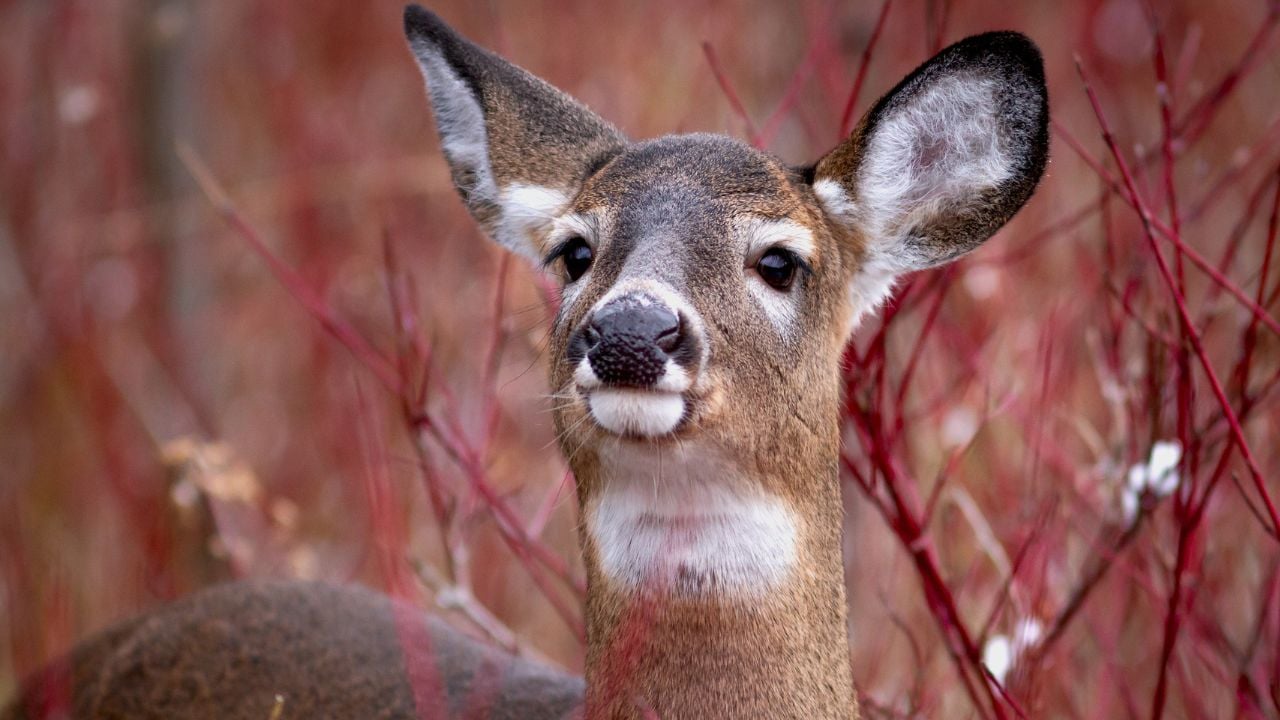
Gun Deer Season Is Open Through Sunday. 7 Things That Change Across Wisconsin That Week

Gun deer week and Thanksgiving land on top of each other in Wisconsin this year.
If someone in your family fills a tag, the wait at the processor could outlast the leftovers.
That’s only one of several things that change across Wisconsin during gun deer season.
1. Deer Are on the Move on the Roads
Deer crashes peak in the fall, and the Wisconsin Department of Transportation (WisDOT) counted more than 17,000 of them in 2024.
Nine people died and 707 were injured in those crashes.
More than one-third of them happened in October and November.
Do you think the deer lie low while the guns are out?
WisDOT urges you to stay alert because more deer are on the move during the fall rut, which is mating season.
Motorcycles were involved in 221 of those crashes, which led to seven deaths.
Brake early.
2. DNR Wants Hikers and Dogs in Orange
If you hike a public trail, the DNR encourages you and your pets to wear blaze orange during gun deer season.
That advice applies on public lands open to hunting.
So where can hunters go?
Wisconsin has over 6 million acres of public land, and the DNR says a majority of it is open for hunting.
Another 8,000 acres of private land, known as Voluntary Public Access lands, allow public access.
Pets count too.
3. State Parks Open Areas to Hunters
State parks allow gun and archery hunting in open areas from Nov. 15 to Dec. 15, the DNR says.
Do you think a state park is always a no-gun zone?
Copper Culture, Governor Nelson, Heritage Hill, Lakeshore and Lost Dauphin are closed to hunting.
At Rib Mountain, High Cliff and Peninsula, deer hunting is limited to archery and muzzleloader.
Part of Rib Mountain is archery only.
And you can’t hunt within 100 yards of the two National Scenic Trails on state Ice Age and North Country Trail properties.
Check the map.
Wisconsin Deer Season Dates for 2026
The DNR lists the gun deer season as November 21 through 29.
Muzzleloader season runs November 30 through December 9.
The statewide antlerless-only hunt runs December 10 through 13.
An antlerless-only holiday hunt runs December 24 through January 1, 2027, in select units.
Archery and crossbow season runs September 12 through January 3, 2027.
4. Other Hunters Need Orange Too
Blaze orange rules reach beyond deer hunters during gun season.
If you hunt any game except waterfowl, you have to wear it when and where a firearm deer season is in progress.
Even if you’re after something other than deer, the rule still applies.
At least 50 percent of your outer clothing above the waist must be blaze orange or fluorescent pink.
Hats and head coverings have to hit the same 50 percent mark.
Waterfowlers skip it.
5. Deer Registration Has a Deadline
Deer registration is required, and it must be done by 5 p.m. the day after the carcass is recovered.
You can register through GameReg at gowild.wi.gov, which the DNR calls the fastest and easiest method.
Or call 1-844-426-3734.
You’ll get a 10-character confirmation number, and a taxidermist or meat processor may ask for it.
Remember the old check stations?
The DNR still lists in-person registration locations as an option.
And a car-killed deer can be registered online through GameReg or by phone at 608-267-7691.
Mind the clock.
Psst! How much do you know about Wisconsin’s deer season? Take our quiz and see if you can ace it.
Quiz
Wisconsin Deer Season Smarts
Answer nine questions on Wisconsin’s gun deer season. We bet you can’t get them all right. Prove us wrong?
Wisconsin’s 2026 gun deer season runs from Nov. 21 through which date?
6. Meat Processors Work Long Days
Many deer processors stay slammed through the nine days.
Becker's Wild Game and Deer Processing in Eleva said it handles about 400 deer in nine days, a local TV station reported in 2025.
Staff there start prepping at 6 a.m. and help customers until about 9 p.m.
Picture working those hours all season.
Do you expect your deer back overnight?
The shop said it doesn't catch up until the season ends.
Call ahead if you can.
7. Some Towns Hold Deer Widow Craft Fairs
Some Wisconsin towns have held deer season craft fairs for people staying home while hunters head out.
Menomonie held a Hunting Widows Craft & Vendor Fair on Saturday, November 23, 2024, at Stout Craft Co.
The listing invited shoppers to take a break from their fellow hunters.
In 2023, Marshfield hosted a Deer Widow's Weekend Craft Show on November 18 and 19 at the state fairgrounds.
Sound like your weekend?
Plan something fun.
Licenses Behind the Season
The DNR reported 777,843 deer hunting privileges sold as of November 23, 2025.
That count includes gun, archery, crossbow, conservation patron and sports licenses.
Gun privileges alone came to 538,865.
If you were born on or after Jan. 1, 1973, you need hunter education certification to buy a hunting license, unless you hunt under the Mentored Hunting Law.
Plan ahead.
How the Rules Took Shape
Wisconsin's first closed season for deer came in 1851 and ran from Feb. 1 through June 30.
The state set its first bag limit, two deer per season, in 1897.
A first buck-only season followed in 1915.
If you've ever pulled on blaze orange, you can thank a rule from 1980.
By 1986, the gun season ran nine days statewide.
Times change.
Venison Advisories in Two Places
Per- and polyfluoroalkyl substances (PFAS) advisories apply to deer taken in two places.
The DNR names the Town of Stella in Oneida County and the area near the city of Marinette in Marinette County.
If you hunt there, make sure you know the local advisory before you eat the venison.
Check the advisory.
6 Cabin Rules That Can Result in Fines for Wisconsin Owners
Time at the cabin is meant for unwinding, not for getting a notice in the mail.
Some of the rules are easy to overlook if you only visit now and then.
6 Cabin Rules That Can Result in Fines for Wisconsin Owners
7 Reasons Wisconsin Snowplows Skip Your Street for Hours After a Storm
After a big snowfall, it can feel like the plow has forgotten your street.
Crews often work from a plan, and some cities and towns post theirs online.
7 Reasons Wisconsin Snowplows Skip Your Street for Hours After a Storm
