
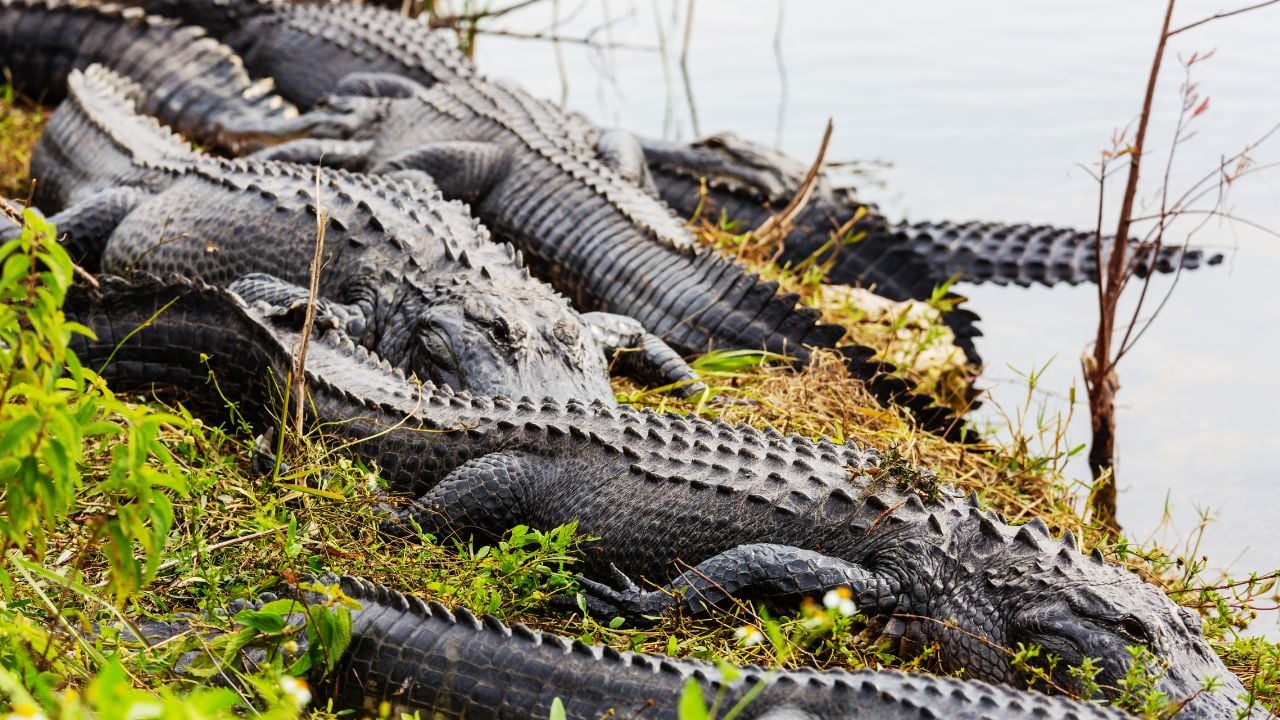
6 Things South Carolina’s Alligators Do When the Water Turns Cold

Many Americans figure alligators disappear for the winter, the way bears do.
Take a walk around a South Carolina pond after Thanksgiving dinner, though, and you might be closer to one than you’d guess.
Here’s what South Carolina’s alligators do instead when the water turns cold since they don’t hibernate.
Note: This is general information, not legal advice. Alligator rules are subject to change, so confirm the current details with the South Carolina Department of Natural Resources (SCDNR).
1. Going Into Brumation
Alligators don’t hibernate, but the Smithsonian’s National Zoo says they go dormant when the weather turns cold.
Wildlife biologists call that dormant stretch brumation.
An alligator in brumation stops eating and mostly stops moving, though it may shift around a little.
The South Carolina Aquarium says brumation can last four to five months, generally from November through February.
SCDNR’s alligator project leader says people new to an area may figure there are no alligators because they don’t see any.
If you’re new to the neighborhood, that pond may have held alligators all along.
2. Skipping Meals
Alligators stop feeding when the temperature falls below about 70°F, according to Florida’s wildlife commission.
In the Lowcountry, alligators turn sluggish from late November on.
SCDNR’s alligator project leader says their digestion doesn’t work as well once the water cools.
So the alligators in your pond may eat very little while the water stays cool, whether you see them or not.
A January bank with no alligator on it can simply be what that slowdown looks like from where you stand.
Why the Alligator Temperature Numbers Don’t Match
The temperatures you’ll see for alligators differ because sources use different cutoffs and measure different things.
Florida’s wildlife commission says alligators become dormant below 55°F, while the University of Florida’s extension service says they become inactive when temperatures stay below 50°F.
The sources also measure differently: Florida’s commission gives its 70°F feeding cutoff as the surrounding temperature, and the extension service gives its 70°F feeding cutoff as water temperature.
Your forecast shows air temperature, so the water in a pond can run colder or warmer than the number you see.
3. Retreating Into Dens
Adult alligators dig dens into the banks of rivers, ponds and swamps to wait out the cold.
ABC4 reports these dens can run more than 15 feet, with twists and turns and big burrows in the back.
The report adds that the entrance is often underwater, while the inside rises above the waterline to leave an air pocket.
Across the species, the Smithsonian’s National Zoo says burrow tunnels can reach 65 feet.
An alligator can stay in a den for weeks or even months.
That means a bank along a pond near you could hide one.
On a January walk along a pond bank, you could be standing above a den, since the entrance is often underwater.
4. Settling Into the Mud
In areas where winters stay mild, ABC4 reports, alligators sink to the bottom of ponds and rivers and bury themselves in the mud.
The water there holds onto some heat.
An alligator can also hold its breath for more than an hour by slowing its heart rate, says the University of Georgia’s Savannah River Ecology Laboratory.
If a cold snap leaves your neighborhood pond looking empty, some of its alligators may be resting on the bottom.
5. Basking on Warm Days
Alligators still come out to bask when a winter day warms up.
SCDNR’s former alligator project supervisor wrote that on a mild January day, an alligator may bask to escape water around 50 degrees.
The same essay says a cold front from the north can end that spell.
In 2024, a Columbia riverfront park ranger told a University of South Carolina news site that you can see an alligator cruising the canal on sunny days in the 70s.
Since an alligator on land feels exposed, SCDNR’s safety guide says it may act defensively if you approach it.
6. Poking Snouts Through Ice
Some alligators in a frozen pond swim up and poke their snouts through the ice to breathe, according to Live Science.
In January 2018, a North Carolina swamp park posted video of alligator snouts poking up through the ice.
In 1977, a male alligator in a South Carolina reservoir stuck its nose through a 4-inch hole in the ice.
Its body was found floating below the hole a few days later.
Alligators also have trouble surviving in water below about 39°F.
If your local pond ices over, a Hilton Head Island Packet article says its alligators may come up to stick their snouts out about every 12 hours.
Hatchlings in Winter
Baby alligators can spend the winter with their mother near her den, ABC4 reports, where they can stay in relative safety.
Baby alligators have it tough, especially those under three feet.
A mother alligator will also dig a gator hole, which is a little pond for her babies.
The Savannah River Ecology Laboratory says alligator holes also hold water during droughts.
If you spot a baby alligator near a pond in winter, its mother may be close by.
The lab says a female can protect her hatchlings aggressively for over a year.
Don’t get closer to even a small one, since SCDNR says never to approach an alligator of any size.
Psst! How many cold-weather alligator myths can you spot? Tap each card and see if you can get them all right.
Handling a Winter Sighting
An alligator on a winter bank isn’t a nuisance just for being there, according to SCDNR.
SCDNR also says that if left alone, most alligators will move on.
A nuisance alligator has lost its fear of people, can harm people or property, or is trapped somewhere it shouldn’t be.
Feeding can make an alligator lose that fear, and it’s illegal in South Carolina.
The law bans feeding, enticing and molesting an alligator, and a violation can bring up to 30 days in jail.
Dumping fish guts or carcasses into water where alligators live counts as indirect feeding and can make alligators lose their fear of people, too.
Keep pets leashed and away from the water’s edge.
SCDNR’s alligator safety guide calls staying at least 10 feet from the water’s edge, whether you see an alligator or not, a good starting point.
If you live in a homeowners association or a property management group, report nuisance alligators to that group first.
If you don’t, contact the nearest SCDNR office, which the department lists by county on its complaint numbers page.
For an alligator-related emergency, call Operation Game Thief at 1-800-922-5431.
11 Things South Carolinians Never Have to Explain to Each Other
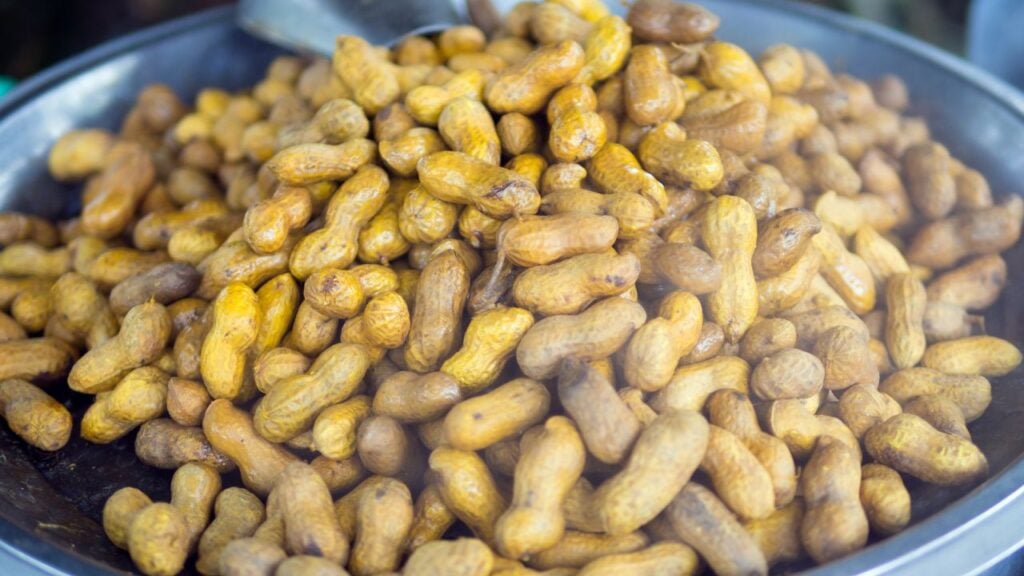
South Carolinians share foods, sayings and traditions that other Americans often have to ask about.
Boiled peanuts are only the start of a list that makes the state feel like home.
11 Things South Carolinians Never Have to Explain to Each Other
7 Things That Change the Second You Cross From North Carolina Into South Carolina

Crossing a state line doesn’t change the road, but it can change what you pay and what you’re allowed to do.
North Carolinians and South Carolinians who make the drive may be surprised by what’s different on the other side.
7 Things That Change the Second You Cross From North Carolina Into South Carolina
