
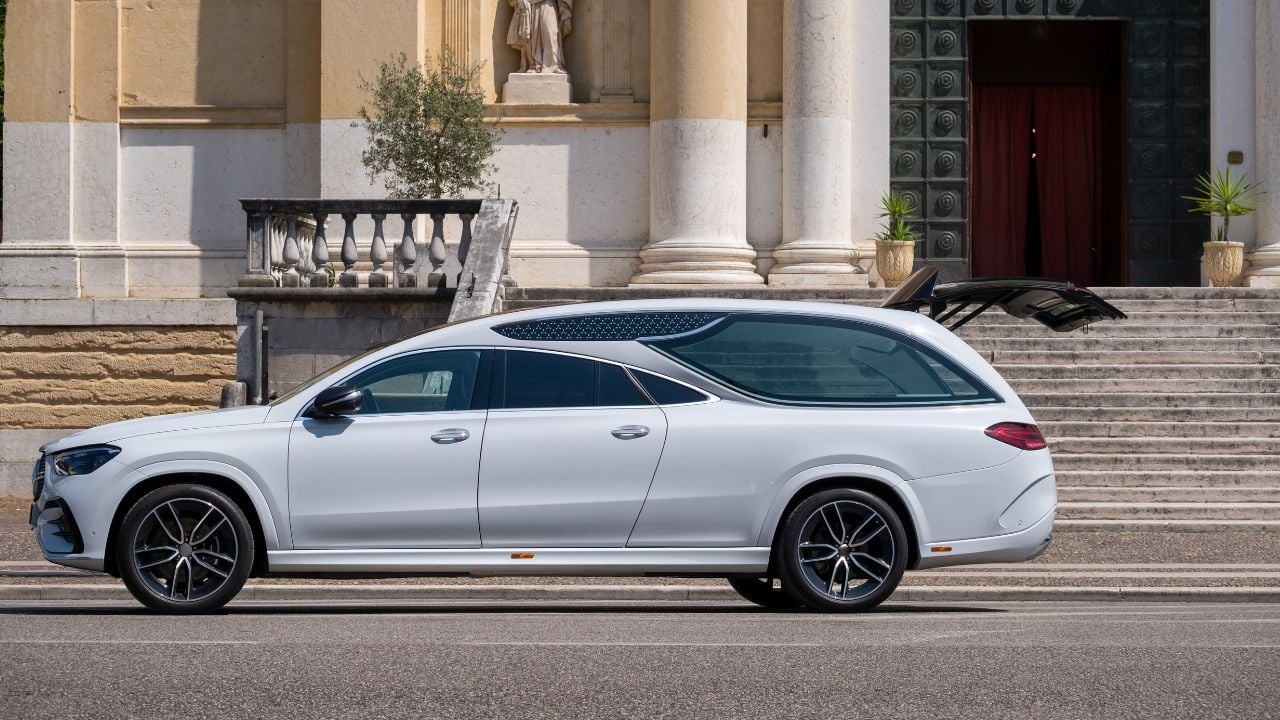
6 Funeral Procession Customs Kansas Drivers Get Wrong

If you’re stopped at a Kansas intersection when a line of cars with their headlights on starts rolling through, you’d probably wait your turn.
The green light doesn’t settle who goes first, though.
Here are the funeral procession customs Kansas drivers get wrong.
Note: This is general information, not legal advice. Traffic laws and city ordinances are subject to change and vary by city, so confirm the current rules with your local police department.
1. Cutting In
Picture the funeral line rolling past your stop sign, with a gap between two cars.
That gap isn’t yours.
Kansas law tells the vehicles in a funeral procession to follow the vehicle ahead as closely as is practical and safe.
The same law sets aside any rule that would make those cars leave room for you or other vehicles to enter the line.
Wichita’s ordinance repeats the follow-closely rule in a separate section on distance.
Topeka’s city code bars you from driving between procession vehicles that have their headlights on while they’re in motion.
In Topeka, drivers in the line have to stay as near to the right edge of the roadway as practicable.
What Counts as a Funeral Procession
Kansas law defines a funeral procession as two or more vehicles accompanying the body of a deceased person.
Vehicles traveling to the cemetery, church, chapel or other place where the funeral service is held count too.
The definition applies only to vehicles traveling in daylight hours.
2. Red Lights
Red doesn’t stop a procession.
Under Kansas law, a funeral procession has the right-of-way at intersections regardless of traffic signals.
That holds even when your light is green.
A funeral escort may also direct the line through the intersection.
Once the escort sends the lead vehicle through, the rest of the line may follow it.
The line still has to use due care to avoid hitting your car, other vehicles or pedestrians.
Wichita passed an update to its ordinance on June 28, 2022, and it adds a limit: Procession drivers can’t run a red light unless the escort directs them to.
In Topeka, a procession vehicle with no licensed escort has to obey the city’s traffic laws, including stopping at red signals and stop signs.
When an escort is there, a driver in the line can’t enter a controlled intersection until the escort vehicle’s driver directs it to.
Topeka’s code treats uncontrolled intersections differently, since drivers in the line may proceed after using due care and caution.
3. Procession Gaps Past 300 Feet
The last car in the procession may reach your intersection long after the others.
Kansas law takes the intersection right-of-way away from any procession vehicle that falls more than 300 feet behind the vehicle directly ahead of it.
Wichita’s ordinance gives a lawfully escorted procession the right-of-way over all other vehicles, including yours, at any intersection.
It sets the same 300-foot cutoff.
Topeka gives procession vehicles with illuminated headlights the right-of-way at any intersection when they follow a properly lighted escort vehicle.
4. Pulling Over
A funeral procession is coming up the street.
In Topeka, the city code tells you to pull over.
The rule starts as soon as the procession or its lit escort vehicle approaches.
If you’re going the same direction, you have to move as close as possible to the right curb or edge of the street.
Then you stop there, clear of any intersection, and wait until the procession and its escort vehicle have passed.
Emergency vehicles with sirens or flashing lights are exempt.
5. Headlights On
You’re watching a funeral procession cross in front of you.
Kansas law requires each vehicle in a funeral procession to keep its headlights and tail lights on, high beam or low beam.
It adds that the vehicle may also use flashing hazard lights if it’s so equipped.
In Topeka, a procession driver turns on the headlights to identify the vehicle as part of the procession.
Topeka also requires the escort vehicle to carry flashing amber lights and a flashing red light.
Those lights can be used only when the vehicle is in a funeral procession.
Wichita goes further, giving escorted vehicles with lit headlamps and flashing hazard lights priority at intersections.
6. Emergency Vehicles
A siren starts up while a funeral procession is crossing the intersection ahead of you.
Who yields?
The procession does.
A funeral procession has to give way to an approaching emergency vehicle with a siren or lights on, such as an ambulance.
That includes the intersections where the procession otherwise has the right-of-way.
Kansas law also tells procession drivers to yield when a police officer directs them to.
Topeka’s code says the same about approaching emergency vehicles with sirens or flashing lights.
Wichita’s ordinance adds that procession drivers must obey lawful orders from any police officer.
You have to pull to the right, clear of any intersection, and stop for an approaching emergency vehicle using its siren and lights.
That’s true even if a funeral procession is in front of you.
Psst! How much do you know about your driving? Take our quiz and see how many you can get right.
Quiz
Kansas Road IQ
Answer these questions on Kansas traffic laws and state history. We bet you can’t get them all right. Prove us wrong?
A school bus is stopped with its red lights flashing on the other roadway of a highway with separate roadways. What does Kansas law say you must do?
City Rules on Top of State Law
Kansas lets cities and counties add funeral procession rules on top of the state's.
A city or county can require a law enforcement or other funeral lead vehicle or escort.
Kansas law counts law enforcement agencies and groups designated to escort military funeral processions as funeral escorts.
It can also require advance notice of a planned procession to the city police department or the county sheriff.
A city or county can also require compliance with its other ordinances or resolutions, as long as they don't conflict with the state statute.
Kansas' current funeral procession statute took effect July 1, 2021, and Wichita passed an update to its ordinance in 2022.
In Topeka, a properly licensed and equipped escort vehicle may exceed city speed limits, as long as it doesn't endanger life or property.
Vehicles behind the escort have to stay within the posted limits.
That includes you if you're in the line.
7 Things Inside a Kansas Grain Elevator Most Farm-Country Visitors Never Get to See
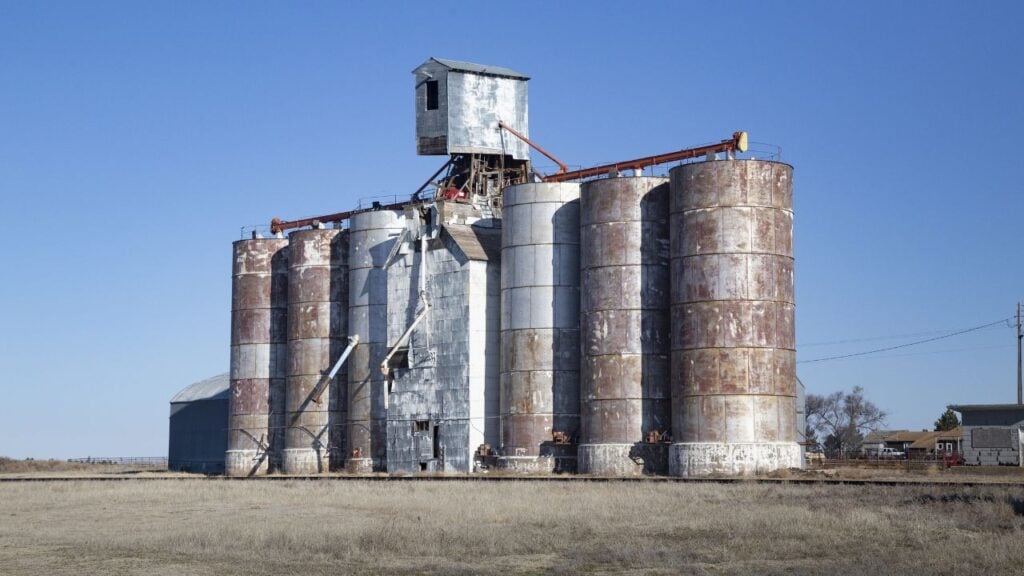
A grain elevator is hard to miss on a drive through Kansas farm country and easy to ignore.
Behind those walls, a lot of equipment is already working by the time a truck pulls in.
7 Things Inside a Kansas Grain Elevator Most Farm-Country Visitors Never Get to See
7 Things Kansans Do on Friday Nights That Nobody Else Would

Friday nights can start to feel the same after a while.
Small towns get creative when the lights come on.
