
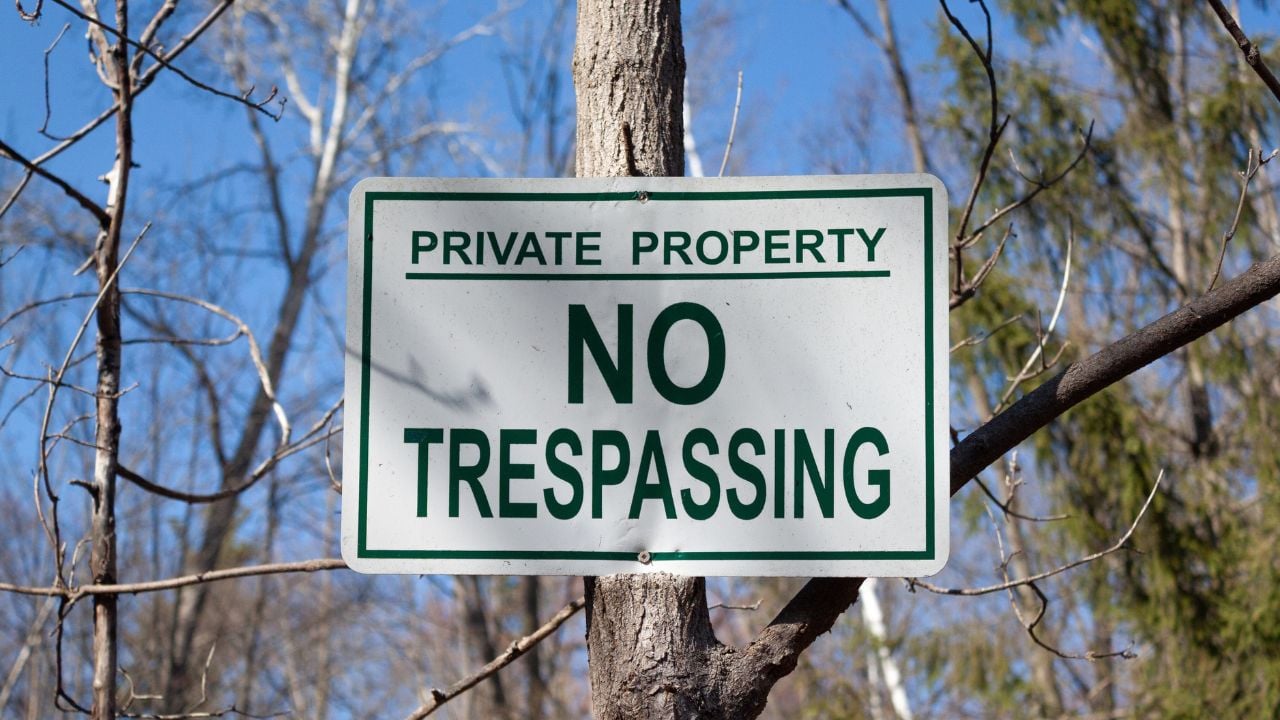
7 Things Ohioans Can’t Legally Do to a Trespasser

Say a stranger’s drone has buzzed over your Ohio backyard all afternoon, and now it’s sitting in your grass.
Before you lock it in the garage, it’s worth knowing how that could get you into trouble.
There are things Ohioans can’t legally do to a trespasser, even one who’s clearly in the wrong.
Note: This is general information, not legal advice. Ohio laws and penalties are subject to change.
1. Deadly Force Over Property
Deadly force isn’t legal in Ohio just because someone is standing on your land without permission.
The Ohio attorney general’s concealed carry manual puts it plainly. Deadly force can never be used solely to protect property.
Ohio’s self-defense law covers defending yourself, another person or your residence, with no duty to retreat from a place you have a right to be.
Civil immunity for owners is narrower: It covers reasonably necessary force against someone making an unlawful entry into a building you maintain as a dwelling.
Deadly force is covered only if you reasonably and in good faith believe you or a family member faces imminent danger of death or serious physical harm.
It also has to be your only way out, even if your belief turns out to be mistaken.
That immunity also reaches past the house if you live on the property. It ends when you intentionally use a firearm, a vehicle or another object to hurt a trespasser outside of self-defense.
Where Ohio’s Self-Defense Presumption Stops
The law presumes you acted in self-defense when you use deadly force against someone unlawfully entering the residence or vehicle you’re in, though a court can rebut that presumption.
That presumption doesn’t reach a stranger crossing your back lot because that person isn’t entering the residence or vehicle you’re in.
A residence is a dwelling where a person lives or visits as a guest. A dwelling has to be designed for people to lodge in at night, though an attached porch and a tent count.
2. Spring Guns and Traps
Setting a spring gun or trap for a trespasser can leave you owing damages if someone gets hurt.
Civil immunity for owners ends when you intend to create a risk of injury, death or loss to a trespasser through spring guns, traps or other dangerous instrumentalities.
A shotgun rigged to your shed door fits that wording, and so does any other device you set up to hurt whoever walks in.
Even without a trap, Ohio’s trespasser law says you owe a trespasser no duty of care beyond avoiding willful, wanton or reckless conduct that’s likely to cause injury.
3. Making a Citizen’s Arrest
A trespasser on your land doesn’t qualify for a citizen’s arrest.
A private person can make a warrantless arrest only for a felony, and only with reasonable cause to believe the person did it.
Criminal trespass is a misdemeanor of the fourth degree, so that arrest isn’t available to you.
Lock a trespasser in your garage and you can face a charge of unlawful restraint, a misdemeanor of the third degree.
What you can do is tell the trespasser to leave.
A trespasser who refuses to leave after you say so commits criminal trespass.
4. Seizing or Smashing Their Property
Taking a trespasser’s phone, bike or drone and keeping it can get you charged with theft, even though it was sitting on your land.
Theft means acting with purpose to deprive an owner of property and knowingly controlling it without the owner’s consent, and the base charge is a misdemeanor of the first degree.
Smashing the drone or slashing a bike tire brings a different charge, criminal damaging, which covers knowingly causing physical harm to another person’s property without consent.
The base charge for that one is a misdemeanor of the second degree.
Psst! How much do you know about Ohio trespass rules? Take our quiz and see if you can ace it.
Quiz
Ohio Property Law IQ
Answer these questions on Ohio trespass rules and property law. We bet you can’t get them all right. Prove us wrong?
A hunter wants to hunt on your Ohio land. What does state law require before they do?
5. Towing Their Car
You can't have a trespasser's car hauled off your property whenever you feel like it.
You can set up a private tow-away zone, but only if you meet every condition in the law. Those include a posted sign and a written contract with the towing service.
Skip a requirement and having the car removed can be a minor misdemeanor.
Ohio also has a route through law enforcement, for property that isn't a tow-away zone.
If a vehicle sits on private residential or agricultural land for four hours or more without permission, a sheriff or police chief may order it into storage on your complaint.
6. Hurting a Trespasser Already in Danger
Ohio's trespasser law makes you liable if you cause injury to a trespasser you know is in danger and don't use ordinary care to avoid it.
Say you're mowing a back field and spot a trespasser asleep in the tall grass ahead.
If you keep going and hurt that person, you knew they were in a position of peril and didn't take ordinary care to avoid causing the injury.
The law also holds you to what the facts within your knowledge should have told you, so you can't claim you didn't notice.
7. Pointing a Gun at Them
Pointing a gun at a trespasser to scare them off can bring you an aggravated menacing charge.
Aggravated menacing covers knowingly causing someone to believe you'll seriously harm them.
The offense turns on what the other person believes, not on whether anything fires.
It's a misdemeanor of the first degree, which carries up to 180 days in jail.
What Counts as Criminal Trespass
Ohio's criminal trespass law covers more than a stranger crossing your lawn.
A person commits it by knowingly entering or remaining on another's land or premises without privilege.
A posted sign that reaches potential intruders also counts as notice, and so does a fence clearly built to restrict access.
For a sign to trigger the refusal-to-leave offense, you have to post it in a conspicuous place, so a hidden sign won't count.
Child Trespassers
A child trespasser changes what you owe on your land.
Under Ohio's trespasser law, you can be liable when an artificial condition on your property hurts a child trespasser, but only if every one of these conditions applies.
You know or have reason to know that children are likely to trespass where the condition sits.
You also know or should realize that the condition poses an unreasonable risk of death or serious injury to them.
Because of their youth, the children likely to wander in don't discover the condition or realize the risk.
The usefulness of the condition to you and the cost of removing the danger have to be slight compared with the risk to the children.
You can be liable only if you also failed to use reasonable care to eliminate the danger or otherwise protect them.
5 Documents an Ohio Private Car Sale Needs Before Anyone Hands Over Cash

A private car sale can feel simple once you've shaken hands.
But a missing form or signature can come back to bite the buyer or the seller.
5 Documents an Ohio Private Car Sale Needs Before Anyone Hands Over Cash
5 After-Hours Messages That Can Count as Paid Work in Ohio

Your phone buzzes after dinner, and it's work.
Answering takes a minute, but for Ohioans, some of those minutes can count as time you should be paid for.
