

5 After-Hours Messages That Can Count as Paid Work in Ohio

Your phone buzzes after dinner, and it’s work.
Answering takes a minute, but for Ohioans, some of those minutes can count as time you should be paid for.
Here’s when an after-hours reply may count as paid work.
Note: This is general information, not legal advice. Wage and hour rules are subject to change.
1. Emails You Answer at Home
Federal rules can treat an after-hours email you answer from your kitchen table as work.
A federal rule from the U.S. Department of Labor covers work away from the job site, even at home.
That time counts as hours worked when your employer knows or has reason to believe you’re doing the work.
If your boss sends the email and asks for an answer, that can give your employer reason to believe you’re working on it.
Unless you’re exempt, those minutes can count toward your hours worked, and covered employees get overtime pay for hours past 40 in a week.
Why Exempt Status Matters for After-Hours Paid Work
Whether after-hours work earns overtime can hinge on one label: unless you’re exempt, the overtime rules cover you.
The Labor Department says an executive, administrative or professional employee has to meet the duties tests and be paid on a salary basis to be exempt.
As of 2026, the federal pay test is a salary of at least $684 a week.
Ohio’s overtime statute, section 4111.03 of the Revised Code, incorporates the federal exemptions.
2. Chat Replies Nobody Asked For
Nobody asked you to answer that chat message tonight, yet a reply like that can still count as paid work.
A federal rule says work nobody requested can still count as work time when your employer allows it.
Ohio’s wage statute, section 4111.03(D)(1) of the Revised Code, defines “employ” as “to suffer or to permit to work.”
The catch: Your employer has to know, or have reason to believe, that you’re working.
3. Texts Against Company Policy
An after-hours text can count as work even when your employer has a rule against answering it.
U.S. Department of Labor rules say your employer’s ban on the work isn’t enough.
Management must make every effort to enforce the ban.
A 2017 ruling from the Seventh Circuit involved Chicago police officers who said the department didn’t pay them for off-duty work on their BlackBerrys.
According to the U.S. Courts website, appeals decisions are binding on lower courts within the same circuit.
Ohio sits in the Sixth Circuit, so the Seventh Circuit ruling doesn’t bind Ohio’s federal courts.
The opinion says employers must pay for all work they know about, even if they had a rule against doing the work.
The officers still lost.
The court found their supervisors didn’t know, or have reason to know, that the officers weren’t submitting the slips that would get them paid.
Psst! How much do you know about hours and pay? Flip each card and see how many you can get right.
4. Work-Trip Replies
Can an after-hours message count as work when it reaches you on a work trip?
It can, when your employer requires you to answer it.
Federal rules count any work you’re required to perform while traveling as hours worked.
That can include a reply your boss requires you to write from your seat.
On overnight trips, a separate regulation sets an enforcement policy of leaving out the time you spend as a passenger outside your regular working hours.
Work you’re required to do during that ride can still count under Section 785.41.
5. Required Status Updates
When your supervisor requires an after-hours status text or email from you regularly, the time you spend can fit a federal rule about required work time.
That rule says an employer may not arbitrarily fail to count any part, however small, of the time you’re regularly required to spend on assigned duties.
The rule reaches time that you can practically measure.
The Quick-Ping Exception
A quick after-hours message that takes you a few seconds may not count as paid work under Section 785.47 of the federal wage rules.
That regulation lets your employer disregard insubstantial or insignificant time beyond your scheduled hours when it can’t practically record that time precisely for payroll.
Courts have held such trifles are de minimis, meaning too small to count.
But the exception covers only uncertain, indefinite stretches of a few seconds or minutes.
On-Call Customer Calls
Say your employer requires you to stay home to take customer work calls when the office is closed, and you get long periods of uninterrupted leisure.
In that case, the Labor Department’s Field Operations Handbook says its Wage and Hour Division will accept any reasonable agreement of the parties for determining the number of hours worked.
The agreement should cover the time you spend answering the calls, plus some allowance for the limits on your freedom.
The Emergency Call-Out Trip
When an after-hours call sends you back out for a customer’s emergency, the trip can turn into paid time.
Federal rules count all the travel time as working time when you’ve gone home for the day and your employer calls you out at night.
The job has to be an emergency for a customer, and the trip has to be a substantial distance.
If the call sends you back to your regular workplace instead, the regulation says the Labor Department takes no position on whether that travel counts.
Ohio’s Minimum Wage
Ohio’s minimum wage is the lowest hourly rate covered employers can pay you for an after-hours message, when that time counts as work.
That rate is $11.00 an hour for non-tipped employees in 2026, and it rises to $11.40 on Jan. 1, 2027.
The tipped rate moves from $5.50 to $5.70 on the same date.
Starting that day, the state minimum wage applies to businesses with annual gross receipts above $420,000, up from $405,000 in 2026.
If you work at a smaller business, or you’re 14 or 15, the state minimum wage follows the federal minimum of $7.25 an hour.
Ohio voters passed the yearly inflation increase in 2006 as Section 34a of Article II of the Ohio Constitution.
The state Commerce Department says Ohio adjusts the minimum wage each year.
The adjustment uses the consumer price index for urban wage earners and clerical workers over the 12 months ending in August.
7 Line Items on an Ohio Utility Bill That Aren’t Electricity
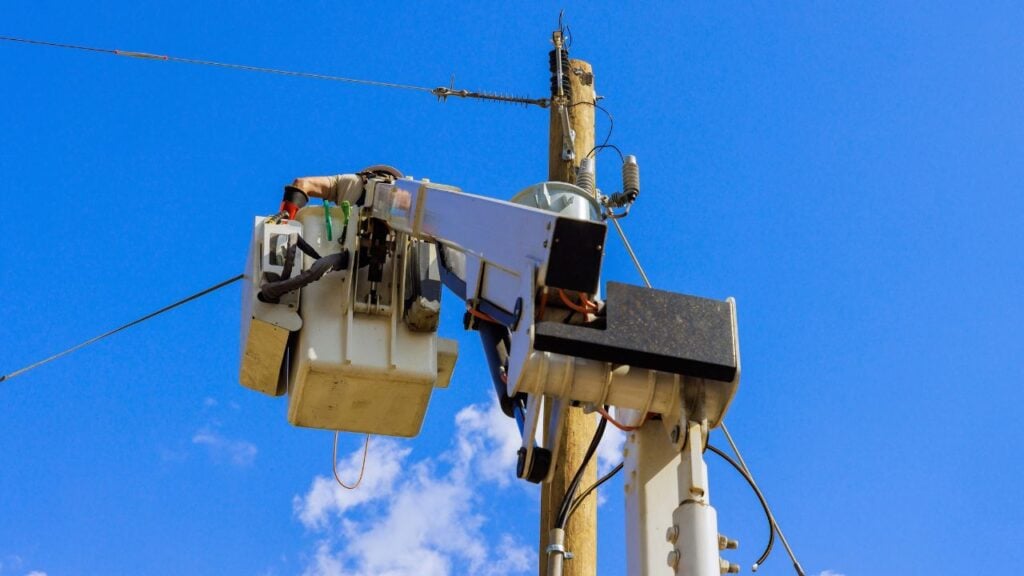
The Public Utilities Commission of Ohio approved $11 million of the $97 million base distribution revenue increase American Electric Power’s Ohio utility requested, according to WOSU public radio.
7 Line Items on an Ohio Utility Bill That Aren’t Electricity
8 Ohio BMV Rules That Send Drivers Home Empty-Handed

Could you walk up to an Ohio Bureau of Motor Vehicles counter and leave with what you came for?
