
7 Line Items on an Ohio Utility Bill That Aren’t Electricity

The Public Utilities Commission of Ohio approved only $11 million of a $97 million rate increase that AEP Ohio requested this year.
Not one cent of it pays for electricity.
It pays for wires, fees, and state taxes tucked into lines many Ohioans skim past every month.
These are line items on an Ohio utility bill that aren’t electricity.
Note: This is general information, not financial or legal advice. Utility rates, riders and charges are subject to change, so confirm current figures with the Public Utilities Commission of Ohio.
1. Your Distribution Charge
Two separate jobs sit inside every Ohio electric bill.
The distribution charge only covers one of them.
The Office of the Ohio Consumers’ Counsel splits every bill into two pieces: Generation, the electricity itself, and delivery, the wires and poles that carry it to a house.
Distribution is the delivery half.
It pays for line maintenance, tree trimming, transformers, and meter reading, never a single kilowatt of power.
FirstEnergy’s Ohio utilities want to raise this exact charge for three years straight, starting in 2027.
Toledo Edison’s request alone could raise a typical monthly bill by about $5.30 a year for three years straight, adding up to $15.90 more a month by year three.
Ohio Edison and the Illuminating Company have filed similar requests.
2. Your Customer Charge
AEP Ohio, which delivers power to about 1.5 million Ohio homes and businesses, puts a flat monthly fee on every customer’s bill before a single appliance turns on.
AEP Ohio’s bill guide calls it a flat fee that all of its customers pay, no matter how much power they use that month.
Leave for a month-long vacation with everything unplugged, and the charge shows up anyway.
Zero usage, same fee.
It covers reading the meter, printing and mailing the bill, and keeping the wire that runs to that house in working order.
None of it changes with usage. None of it is generation.
3. The Kilowatt-Hour Tax
Ohio taxes the electricity running through the meter, separately from anything a utility charges for making or moving it.
State law sets the rate at just under half a cent per kilowatt-hour for the first 2,000 kilowatt-hours a household uses in a month.
Every kilowatt-hour after that costs a little less.
A tax, not a fee.
AEP Ohio’s rate schedule lists it as a separate rider, right next to the charges that cover the electricity a house consumes.
The Math Behind Ohio’s Kilowatt-Hour Tax
Ohio’s kilowatt-hour tax runs on the meter, not the bill total, so the dollar amount depends on how much power a household uses.
A household using the national average of about 899 kilowatt-hours a month falls inside that first, cheapest tier.
At just under half a cent per kilowatt-hour, that comes out to roughly $4.18 for the month, before a single dollar goes toward the electricity a household consumes.
That rate is set in Columbus. The same rate applies whether the bill comes from AEP Ohio, Duke Energy Ohio, AES Ohio, or one of FirstEnergy’s Ohio utilities.
4. Your PIPP Rider
PIPP Plus, short for the Percentage of Income Payment Plan, caps what an eligible low-income Ohio household pays on its utility bill at a share of its income.
Everyone else pays the difference.
A qualifying household pays that set percentage toward electric and gas bills instead of the metered amount.
AEP Ohio’s rate schedule lists a Percent of Income Payment Plan Rider as a separate charge, apart from generation and distribution.
The rider spreads that cost across the rest of AEP Ohio’s customers.
It’s a small line, but it still isn’t electricity.
Psst! How much do you know about Ohio’s electric history and rules? Take our quiz and see how many you can get right.
Quiz
Ohio Power Bill IQ
Answer these questions on Ohio’s electric history and rules. We bet you can’t get them all right. Prove us wrong?
Ohio’s kilowatt-hour tax was created in 2001 to replace what other tax electric companies used to pay?
5. Your Legacy Generation Resource Rider
AEP Ohio and AES Ohio, the former Dayton Power and Light, both bill customers a Legacy Generation Resource Rider whose name is misleading.
Despite the word "Generation," it doesn't pay for power being made right now.
It pays for power plants the utilities built or committed to years ago, some of which have since closed.
Old plants, new bill.
A section of Ohio law lets the utilities recover those old commitments through a separate line instead of folding them into today's generation charge.
A customer never chose that plant. Opting out was never offered.
6. Your Distribution Investment Rider
AEP Ohio's Distribution Investment Rider covers something the everyday distribution charge doesn't: Brand-new poles, transformers, and substation upgrades the utility has already built.
New equipment, separate bill.
The routine distribution charge recovers the cost of keeping the existing grid running: Tree trimming, meter reading, line repairs.
This rider recovers the cost of adding to that grid: New circuits, new substations, capacity for growing demand.
The wires overhead look the same, but they're being billed for two different reasons.
7. Your Storm Damage Recovery Rider
A bad storm knocks out power across Ohio, and utilities bill separately for the cleanup afterward.
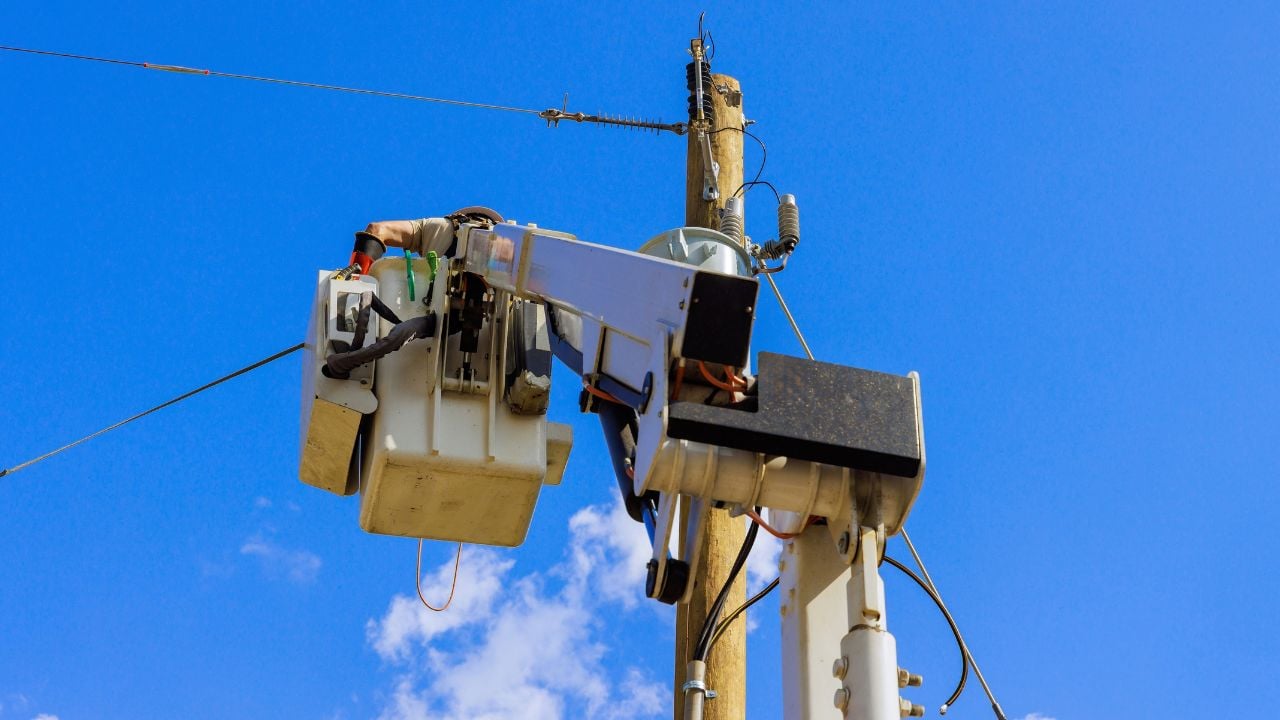
AEP Ohio's tariff carries a Storm Damage Recovery Rider built to recover what it spends sending crews out after wind, ice, or a downed tree takes out a line.
Bucket trucks aren't free.
That cost shows up on this line months later, long after the lights came back on and crews hauled the branch to the curb.
How Much Regulators Approve
Utilities don't automatically get every rider increase they ask for.
In an April 2026 case, the Public Utilities Commission of Ohio approved an $11 million boost to AEP Ohio's base distribution revenue.
That's a fraction of the $97 million the company had originally requested.
Money flows back, too.
The same case sent about $105 million back to AEP Ohio customers over eighteen months, a refund tied to federal tax law changes that lowered the company's tax bill.
Every rider on an Ohio bill runs through a public case file before it ever reaches a customer's mailbox.
Anyone can look up the docket to see what a utility asked for versus what it got.
AEP Ohio says that same case shaves about $1 off an average monthly bill this year, once the small distribution increase and the tax refund net out.
The Ohio Environmental Council reads the same numbers differently, projecting bills as much as $10.28 a month higher by 2028 if AEP Ohio spends the full amount regulators approved.
6 Fees That Turn a $50 Ohio Traffic Ticket Into $156

A $50 speeding ticket in Ohio almost never stays $50.
Ohio law lets a court stack a list of separate costs on top of that fine, each one drawn from a different line in the Ohio Revised Code.
6 Fees That Turn a $50 Ohio Traffic Ticket Into $156
8 Aldi Habits That Can Cost Ohio Shoppers More Than They Save Every Week

Aldi's prices run well below the average grocery store, according to a national pricing study.
A handful of everyday habits can hand a slice of that discount right back to the store before a shopper ever notices.
8 Aldi Habits That Can Cost Ohio Shoppers More Than They Save Every Week
