
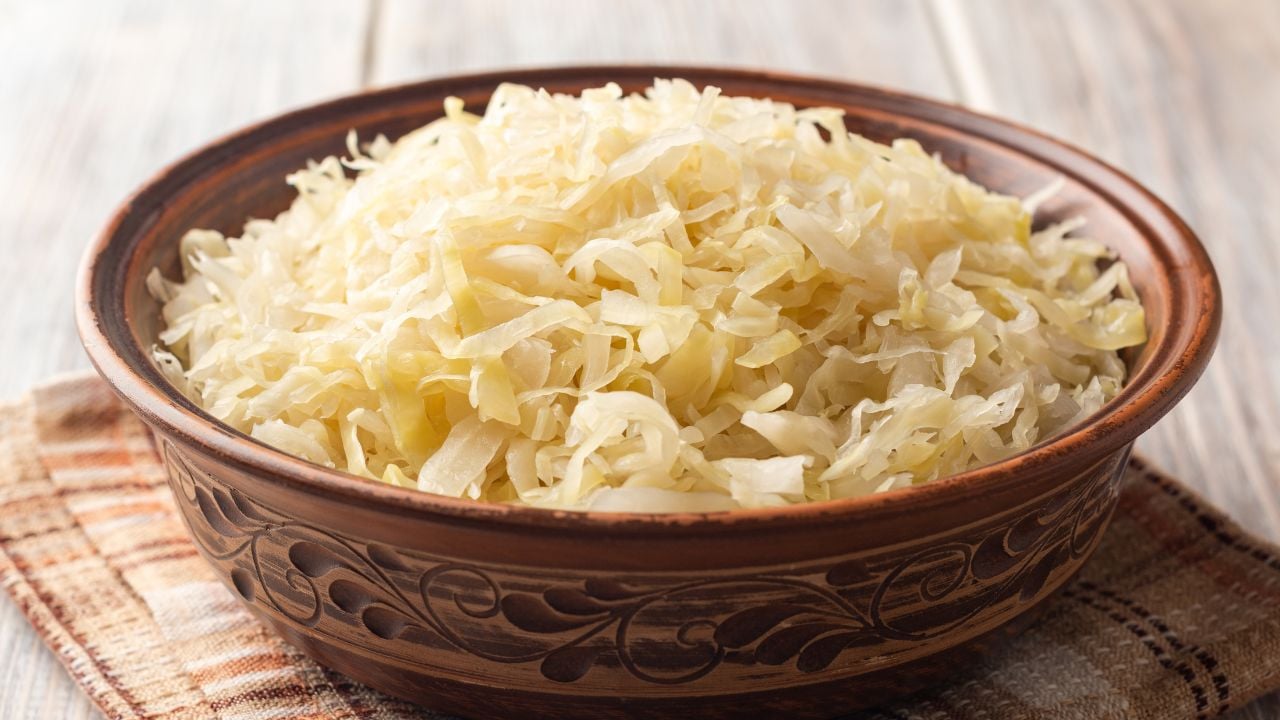
Sauerkraut Is on Maryland’s Thanksgiving Tables Today. 6 Things Out-of-Staters Get Wrong About Why

Is there a bowl of sauerkraut sitting next to the turkey on your table this Thanksgiving?
Passing it along without taking a spoonful might not go over as well as you’d expect.
These are the things out-of-staters get wrong about why sauerkraut is on Maryland tables today.
1. Baltimore’s German Wave
Many out-of-staters picture a hot dog when you mention sauerkraut, not a turkey.
Britannica calls sauerkraut an ancient preparation known to the Romans.
German people began curing and fermenting cabbage sometime in the 1600s, Baltimore Magazine reports.
The B&O Railroad and the North German Lloyd shipping company built an immigration pier and depot at Locust Point in 1867.
The first immigrants to arrive there, on March 23, 1868, were German.
At their peak in 1900, bilingual German-English schools served some 7,000 immigrant kids.
Federal Hill’s Holy Cross parish, founded in 1858, served some 1,000 Catholics of German descent.
More than 1.2 million immigrants landed at the pier between 1868 and 1914.
At the time, Baltimore was the nation’s third-largest port of entry, behind New York and Boston.
The Maryland Association of Counties says German immigrants brought their culinary traditions with them to America, sauerkraut included.
2. Eastern European Arrivals
A lot of out-of-staters credit only the Germans when you ask about Baltimore’s sauerkraut.
Poles, Lithuanians, Slovaks, Bohemians, Russians and Ukrainians didn’t board ships to Locust Point until the 1880s.
Polish parishes took root, with St. Stanislaus in Fells Point in 1880 and St. Casimir later in Canton.
By 1893, some 23,000 Polish-Americans were living in the city.
By the 1890s, Baltimore Heritage says, a larger number of arrivals came from the Russian and Austrian Empires.
Baltimore Magazine says sauerkraut followed Eastern European families into the city’s home kitchens, where it became a Thanksgiving reminder of traditions from back home.
3. Crossing Ethnic Lines
Chef John Shields, who came of age in Baltimore surrounded by Italians, remembers sauerkraut served next to ravioli and roast turkey on Thanksgiving.
Shields says sauerkraut soon spread beyond the immigrant communities that brought it.
Chef Tonya Thomas told Old Line Plate that in Baltimore, sauerkraut is on the holiday table no matter who you are.
Baltimore artist Krystal C. Mack told Food & Wine her grandmother cooked sauerkraut with pig tails every Thanksgiving and Christmas.
She links the dish to Black Southern families who carried their culture north during the Great Migration.
Mack calls sauerkraut a necessary touch that balances the rest of the meal.
The site’s author adds that nobody knows just how or why sauerkraut became so shared across cultures in Baltimore.
Psst! How much do you know about Maryland and Thanksgiving? Take our quiz and see if you can ace it.
Quiz
Maryland Trivia Test
Answer these questions on Maryland symbols, food and Thanksgiving history. We bet you can’t get them all right. Prove us wrong?
Maryland’s tourism office says the state was the first in the nation to name an official state exercise. Which one is it?
4. Tablespoon Rule
At Thanksgiving, chef John Shields says, you feel you have to put at least a tablespoon of sauerkraut on your plate.
Otherwise, you could be in for bad luck, probably forever.
In Pennsylvania, families gather for a New Year's feast of pork and sauerkraut to bring good luck.
5. Harvest Timing
Food & Wine says German settlers reached Pennsylvania and Maryland in the 1700s with a habit of turning harvest cabbage into sauerkraut.
Fermentation author Julia Skinner says families salted and shredded cabbage in large batches after the harvest.
The sauerkraut was ready weeks later, so it makes sense families ate it around Thanksgiving, she says.
6. 19th-Century Roots
Some out-of-staters assume the sauerkraut you see at a Thanksgiving table is a recent quirk.
Abraham Lincoln's Thanksgiving proclamation of October 3, 1863 asked the nation to observe the last Thursday of November.
Baltimore Magazine dates the sauerkraut ritual to around the latter 19th century, decades after that proclamation.
Old Line Plate cites an 1886 Baltimore County Union report that sauerkraut had become a favorite dish on fashionable tables after being tabooed.
Food historian Kara Mae Harris suggests the custom could be older still, nearly as old as Thanksgiving.
Beyond Baltimore
Thanksgiving ads and menus outside Baltimore feature sauerkraut too.
Old Line Plate reports that a 1930 Hagerstown Daily Mail ad touted homemade mincemeat and sauerkraut in late November.
Frederick newspaper ads promoted Thanksgiving specials that included sauerkraut.
Carroll Magazine's Thanksgiving dinner for Carroll County families includes a sauerkraut recipe.
It wasn't only Baltimore's.
The association's 2025 post describes sauerkraut as a beloved Thanksgiving side dish in many Baltimore households.
Chef John Shields considers the tradition a distinctly Maryland one.
No source we found measures how far the custom reaches beyond Baltimore, so your family's table may differ.
Other Dishes
A 2023 roundup from the Maryland Association of Counties lists sauerkraut and Chesapeake Bay oysters among Thanksgiving dishes found throughout Maryland.
The roundup also points to St. Mary's County stuffed ham as a dish found especially there.
A 2013 Thanksgiving menu from the Baltimore public radio show Radio Kitchen paired a sausage-and-caraway sauerkraut recipe with an oyster stuffing recipe.
One essay on Eastern Shore Thanksgiving dinners covers oyster stuffing, sweet potatoes, cranberries and Maryland beaten biscuits, and it doesn't mention sauerkraut.
It's one writer's list.
If your family is on the Eastern Shore, you know better than any list what's on your table.
Family Recipes
Chef Tonya Thomas's grandmother cooked her sauerkraut with pigtails.
Thomas later switched to smoked turkey instead of pork, then to vegetable stock and spices.
Her recipe has changed twice.
One cook rinses hers before sautéing it with apples and caramelized onions.
In another family, a grandmother put a little sugar in the sauerkraut to take away some of the bitterness.
Carroll Magazine's recipe calls for butter, onion, tart apples, apple cider and caraway seeds.
The magazine says you'll commonly find it served with smoked sausage.
6 Unwritten Rules at a Maryland Crab Feast
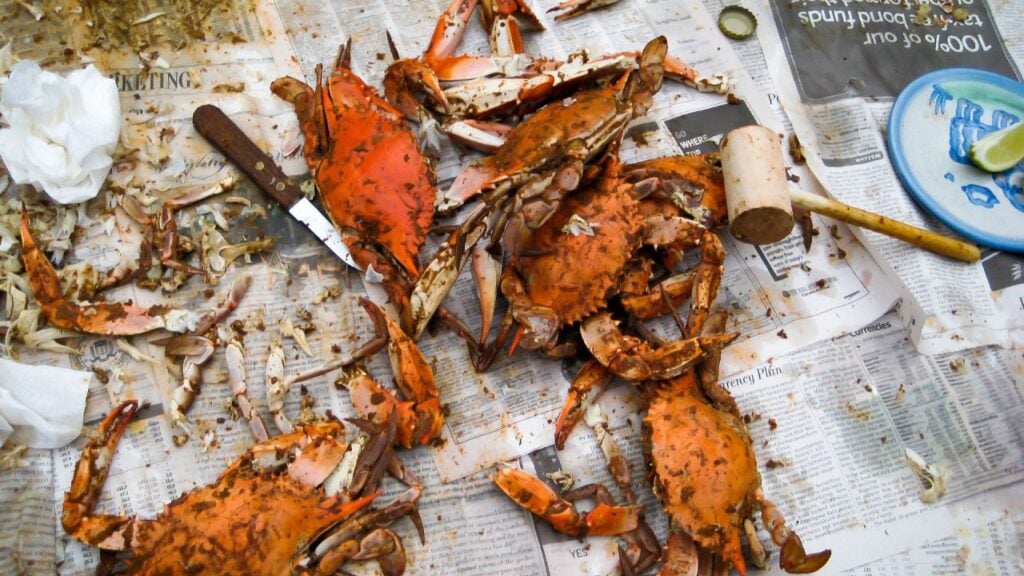
Someone dumps a pile of steamed crabs onto brown paper, and the whole table digs in.
If it's your first crab feast, you may feel a step behind.
6 Unwritten Rules at a Maryland Crab Feast
7 Royal Farms Habits That Give Away a Lifelong Marylander
Royal Farms comes with a routine that locals know by heart.
See how many of the habits sound like yours.
