

4 Things Pennsylvanians Get Wrong About How Black Friday Got Its Name

It’s Black Friday, and the sales are everywhere you look.
The name “Black Friday” meant something very different long before anyone lined up for a doorbuster.
Here’s what many Pennsylvanians get wrong about how Black Friday got its name.
1. Red-to-Black Story
Many people think retailers named Black Friday for the day stores finally move into the black.
The Philadelphia Inquirer reports that numerous accounts trace the shopping-season name to the Philadelphia Police Department in the late 1950s or early 1960.
It notes that researcher Bonnie Taylor-Blake cites a 1961 Public Relations News article saying it had become customary for officers to call the post-Thanksgiving days Black Friday and Black Saturday.
The Inquirer ties the name to the traffic jams on the day before the Army-Navy game, a Philadelphia fixture.
Retailers disliked the label, the Inquirer says.
A 1961 city press release tried to rebrand the weekend as Big Friday and Big Saturday, according to public media outlet WHYY.
That rebrand didn’t stick.
History.com says retailers reinvented Black Friday sometime in the late 1980s, and the term’s Philadelphia roots were largely forgotten.
You’ve probably heard that stores stay in the red all year until today, but you can date that version to the late 1980s.
What Black Friday’s Paper Trail Shows
Philadelphia police weren’t the only ones using the name in 1961.
A Ben Zimmer mailing-list post credits word researcher Barry Popik with finding a December 1, 1961, newspaper report of police in Rochester, New York, doing the same.
A mailing-list post by Taylor-Blake describes a 1959 used-car ad in the Monongahela, Pennsylvania, Daily Republican.
It ran the day after Thanksgiving, but it’s unclear whether the ad relates to the later traffic uses.
Merriam-Webster dates the first known use in the shopping sense to 1961.
It says the origin isn’t known for certain, so you should treat the Philadelphia account as the leading explanation, not a settled one.
2. Slavery Claim
PolitiFact found no evidence that Black Friday is associated with the sale of enslaved people, despite viral posts saying otherwise.
The posts claim Southern plantation owners could buy enslaved workers at a discount on the day after Thanksgiving.
PolitiFact rated Facebook posts making the claim False in December 2021.
History.com says the claim has no basis in fact.
Neither source found a link.
If a post repeating it lands in your feed this weekend, you can scroll past it.
Psst! How much do you know about Thanksgiving weekend? Take our quiz and see how many you can get right.
Quiz
Thanksgiving Weekend IQ
Answer these questions on Thanksgiving weekend, Philadelphia, and the shopping days around it. We bet you can’t get them all right. Prove us wrong?
Philadelphia’s Thanksgiving parade began in 1920, four years before Macy’s held its first. Which department store started it?
3. 1951 Factory Article
Many people assume Black Friday was coined for shoppers.
According to a Ben Zimmer column, a November 1951 article in the trade journal Factory Management and Maintenance used the name for the Friday after Thanksgiving.
It was about worker absenteeism.
The same column places the shopping meaning in early 1960s Philadelphia, so the 1951 article is an earlier use of the name, not of the shopping sense.
So when you hear that the name was built for shoppers, you can point to a factory magazine from 1951.
4. Nationwide Name Assumption
Many people assume Black Friday has been a nationwide name for generations.
The name was mostly local.
The Inquirer says the term was common in the Philadelphia area in the 1970s but didn't become a national phenomenon until the late 1980s or early 1990s.
A 1975 New York Times report on the Army-Navy game, as found by Language Log, still described it as what Philadelphia police and bus drivers called the day.
The Inquirer also notes that retailers in Cincinnati and Los Angeles were still unaware of the term in 1985.
Language Log's Mark Liberman found his earliest examples outside Philadelphia in 1987, in New York, Washington and Orange County, California.
That was one search of newspaper archives, so you shouldn't treat it as a complete record.
One of those 1987 items, in the Orange County Register, has a retailer describing the day as the point when stores move from red ink into the black.
So the name on the ads you scroll past today is a mostly local phrase that went national in the late 1980s or early 1990s, by the Inquirer's account.
1869 Gold Panic
Until the Philadelphia usage took hold, the Inquirer says, Black Friday usually referred to the stock market crash of 1869.
That crash came on September 24, 1869, when President Ulysses S. Grant ordered the Treasury to sell $4 million in gold.
The sale broke a corner on the gold market that financiers Jay Gould and Jim Fisk had been trying to build, and gold fell from about $160 to $133.
History.com says that first recorded use had nothing to do with shopping.
No shopping involved.
Philadelphia police were using the name for post-Thanksgiving traffic by 1961, more than 90 years later.
If anyone tells you the name goes back to Wall Street, you can tell them the 1869 crash and the shopping day are two different Black Fridays.
Thanksgiving's Moving Date
Black Friday falls where it does because of a Thanksgiving law that President Franklin Roosevelt signed on December 26, 1941.
You may have assumed Thanksgiving was always the fourth Thursday of November, but that rule only dates to that law.
Before it, Thanksgiving usually fell on the last Thursday, which in 1939 was November 30.
The National Archives says Roosevelt moved the holiday a week earlier that year to protect the Christmas shopping season.
Critics called the new date "Franksgiving."
Not every state followed.
Because of the fourth-Thursday rule, Black Friday can fall only between November 23 and November 29.
Your Black Friday this year, November 27, sits near the late end of that range.
8 Penn State Game-Day Traditions Pennsylvanians Would Never Skip
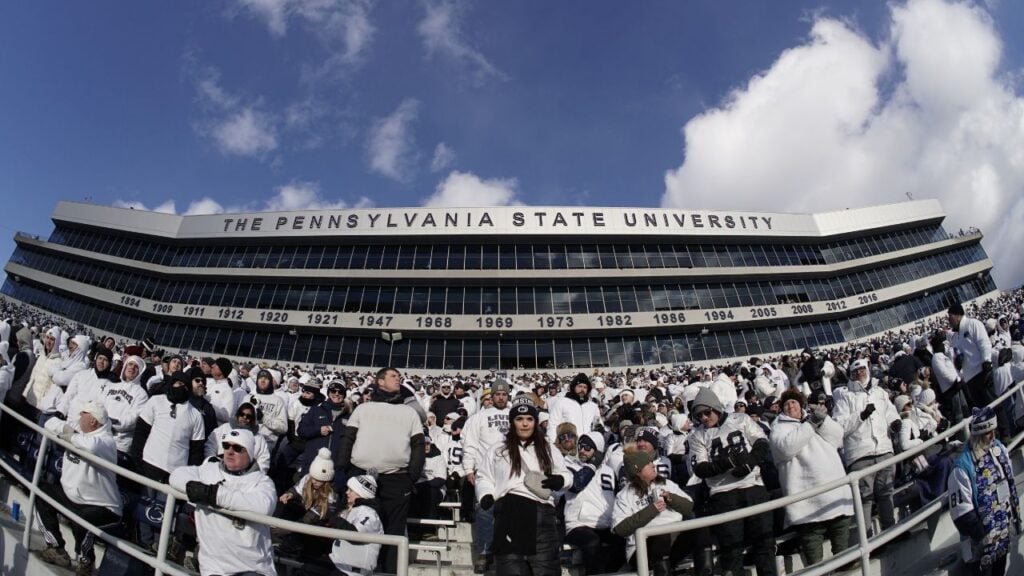
For a lot of Pennsylvanians, a Penn State home game is an all-weekend affair.
Kickoff is only part of it, and many fans have rituals they wouldn't miss for anything.
8 Penn State Game-Day Traditions Pennsylvanians Would Never Skip
7 Things Pennsylvania Christmas Tree Farmers Do Months Before Anyone Buys a Tree
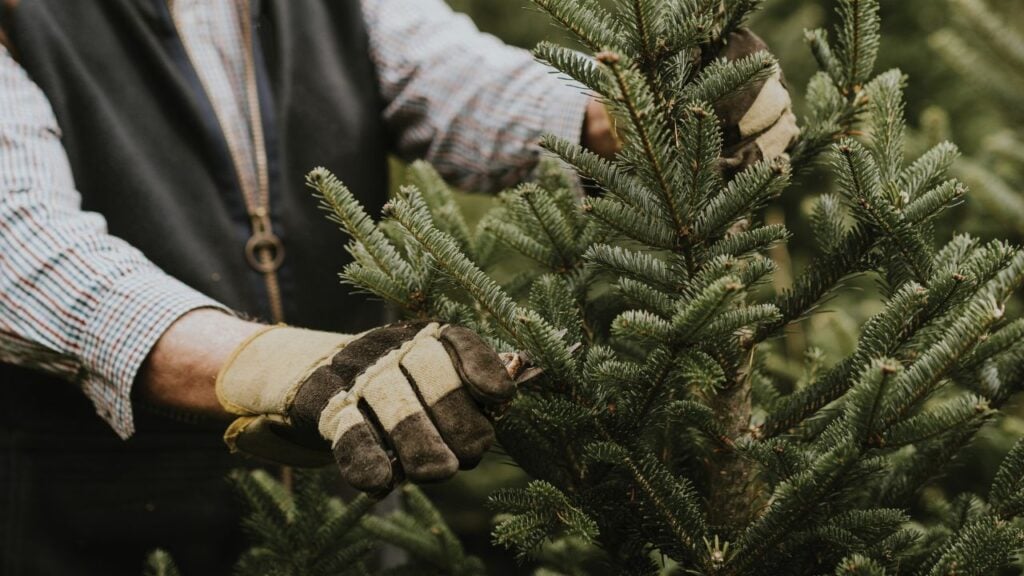
Picking out a Christmas tree takes an afternoon.
Growing a Christmas tree takes years, and the work in the rows starts long before anyone pulls into a tree farm.
7 Things Pennsylvania Christmas Tree Farmers Do Months Before Anyone Buys a Tree
