

7 Normal Things From the 1950s That Are Banned in Missouri Today

Think back to riding in your family car as a kid in the 1950s, maybe standing on the seat to see out the windshield.
Let a grandchild ride that way today, and you’d have some explaining to do.
These are the normal things from the 1950s that are banned in Missouri today.
Note: This is general information, not legal advice. Federal and Missouri laws and penalties are subject to change.
1. Lawn Darts
In a 1971 federal appeals court opinion, the government said Jarts lawn darts had been on the market since the late 1950s.
If you grew up with a set, it usually had four large darts and two targets.
The danger was real.
The Consumer Product Safety Commission says pointed lawn darts have been responsible for the deaths of three children.
Since December 1988, a federal ban has covered the sale of lawn darts anywhere in the United States.
That ban applies in Missouri the same as in every other state, so no Missouri store can legally sell them.
2. Lead House Paint
Before 1955, a significant amount of white house paint sold and used in the United States was 50 percent lead.
Manufacturers adopted a voluntary limit of 1 percent lead in house paint in 1955.
But house paint with higher levels of lead continued to be manufactured.
Federal law changed that.
The federal lead paint ban covers consumer paint made after February 27, 1978.
Today, paint with 0.009 percent or more lead by weight is banned for consumer use.
If you’re repainting a Missouri living room, any can sold for consumer use has to meet that federal limit.
3. DDT Insecticide
Americans used nearly 80 million pounds of the insecticide DDT in 1959, the peak year for its use in the United States.
In June 1972, the Environmental Protection Agency (EPA) issued an order cancelling nearly all remaining federal registrations for DDT products.
The order exempted public health uses, quarantine uses, and a few minor crop uses.
Today, there’s no U.S. registration for DDT, so you won’t find it legally sold or distributed in the United States.
4. Cigarette Ads on TV
If your family watched TV in the 1950s, cigarette ads were hard to miss.
Tobacco companies were major sponsors of popular programs on every national network.
That’s what the University of Alabama’s Center for the Study of Tobacco and Society reports.
In 1955, 54 percent of U.S. men and 24 percent of U.S. women smoked cigarettes.
Federal law has made it unlawful after January 1, 1971, to advertise cigarettes and little cigars on any electronic medium.
That covers any medium under the jurisdiction of the Federal Communications Commission.
The rule is federal, so it covers the stations you watch in Missouri too.
Those ads are history.
Psst! How much do you know about 1950s America and Missouri? Take our quiz and see if you can ace it.
Quiz
Mid-Century Trivia
Answer these questions on 1950s America and Missouri. We bet you can’t get them all right. Prove us wrong?
When did construction begin on the Gateway Arch in St. Louis?
5. Leaded Gasoline
Leaded gasoline powered American cars in the 1950s and 1960s, when refiners averaged about 2.4 grams of lead in each gallon.
The Clean Air Act banned the sale of leaded fuel for on-road vehicles January 1, 1996.
By 1995, leaded fuel made up only 0.6 percent of total gasoline sales.
For cars, it's over.
When you fill your tank at a Missouri gas station, federal law bars the station from selling you leaded gasoline for your car.
The ban covers on-road vehicles only.
In 1996, the EPA said sellers could still offer leaded fuel for off-road uses, including aircraft, racing cars, farm equipment, and marine engines.
6. Kids Without Car Seats
The Henry Ford museum says kids rode in cars unrestrained for much of the 20th century.
That has changed.
Every state and the District of Columbia passed a child car seat law between 1978 and 1985.
Missouri's law took effect on January 1, 1984, which made it the 40th state to require child car seats, the Southeast Missourian reports.
Riding unrestrained is now illegal for Missouri kids well past the toddler years.
On a Missouri road, you have to put any child under 4, or under 40 pounds, in a child restraint system.
Kids ages 4 through 7 who weigh 40 to under 80 pounds and stand under 4 feet 9 inches need a child restraint system or booster seat.
Penalties Under Missouri's Child Restraint Law
Violating Missouri's car seat or booster rules is an infraction, with a fine of up to $50 plus court costs.
You can get the charge dismissed by showing proof that you've bought the required car seat or booster seat.
7. Cyclamate Sweetener
Cyclamate was the main sugar substitute in American diet foods for about two decades before 1969.
Researchers hired by Abbott Laboratories had found possibly malignant tumors in rats given high doses.
Abbott made more than half of the cyclamate sold in the United States.
The Food and Drug Administration (FDA) has approved other artificial sweeteners, such as aspartame and sucralose, but not cyclamate.
In 1969, the FDA removed cyclamate from its list of substances generally recognized as safe because of safety questions.
Federal rules still treat food with any detectable cyclamate as adulterated, so you can't legally buy it.
6 Ozarks Traditions Arkansas and Missouri Both Claim

A state line doesn't mean much in the Ozarks.
Here are the customs both Arkansas and Missouri can fairly call theirs.
6 Ozarks Traditions Arkansas and Missouri Both Claim
Dollar Tree Held $1 for 35 Years, but Missourians Now See Items Up to $7
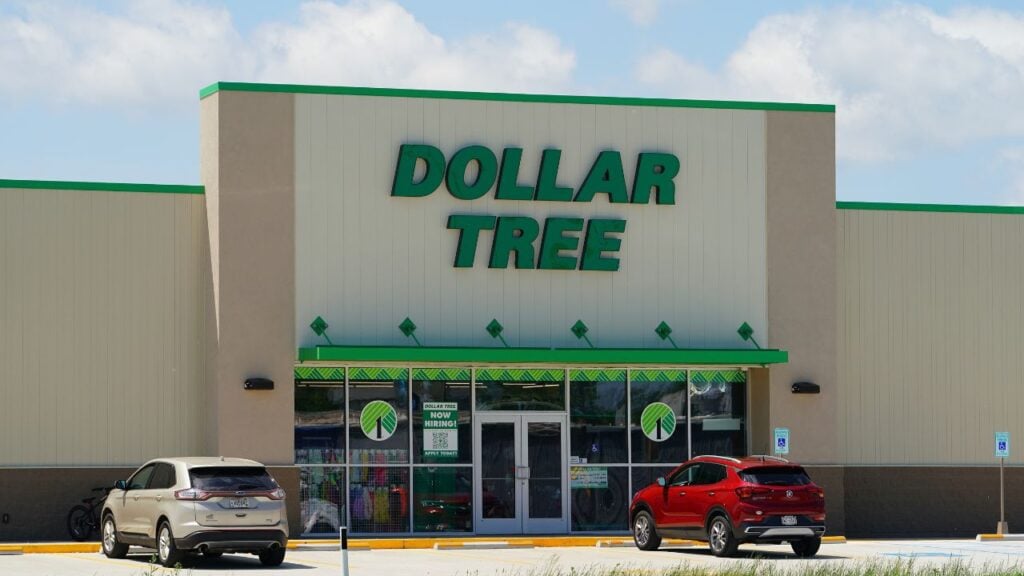
Shopping at Dollar Tree used to be easy because almost everything cost the same.
But Missourians who shop at Dollar Tree will find that's no longer the case.
Dollar Tree Held $1 for 35 Years, but Missourians Now See Items Up to $7
