
Debate Settled: 9 Kitchen Rules South Carolina Grandmothers Swore By, and What Food-Safety Experts Say Now

“It’ll keep,” your grandmother might have said, pushing the Thanksgiving leftovers to the back of the stove.
But not every one of her kitchen rules has held up as well as her biscuits.
Below are the kitchen rules many South Carolina grandmothers swore by, and what food-safety experts say now.
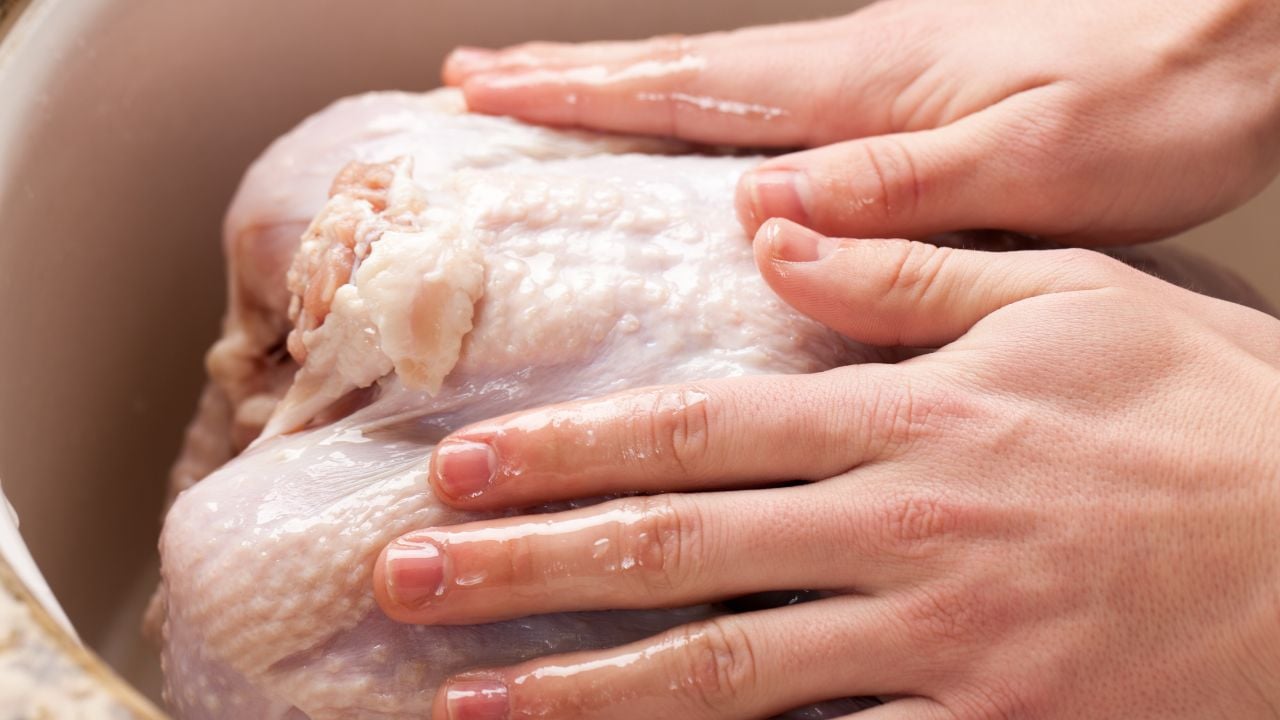
1. Washing the Turkey
The U.S. Department of Agriculture (USDA) says not to wash raw turkey, even though a quick rinse in the sink feels like part of the job.
Rinsing raw poultry raises the risk of cross-contamination, since water can splash some bacteria onto the surfaces of your kitchen.
Your faucet should stay off.
Cooking turkey to 165°F is what makes it safe to eat.
The rinse isn’t necessary for safety.
2. Counter Thawing
An overnight thaw on the counter is too long.
Frozen poultry left on the counter for more than 2 hours isn’t at a safe temperature, according to USDA’s thawing guidance.
The three safe ways to thaw a turkey are the refrigerator, cold water and the microwave oven.
Safe Turkey Thawing Times
A frozen turkey needs approximately 24 hours in a refrigerator set at 40°F or below for each 4 to 5 pounds.
In cold water, a turkey needs about 30 minutes per pound.
You change the water every 30 minutes until the turkey is thawed.
3. Cooling Leftovers
USDA says you must refrigerate leftovers within 2 hours of cooking, or of taking them off an appliance that keeps them warm.
A pot cooling on the stove has to reach the refrigerator inside that two-hour clock.
Start a timer.
The same page says to cool food rapidly, starting with dividing large amounts into shallow containers.
If you’re hosting, have shallow containers and refrigerator space ready before the meal starts.
4. Stuffing the Turkey
Many cooks still pack the stuffing inside the turkey, and USDA allows it.
The catch?
The temperature of the turkey and the center of the stuffing both must reach 165°F.
If you do stuff the turkey, check the center of the stuffing with a food thermometer, not just the turkey.
The Thanksgiving guide goes further and says to cook stuffing separately for optimal safety and uniform doneness.
It’s allowed, not preferred.
5. Pop-Up Timers
Many cooks trust the pop-up timer that comes in some turkeys.
If your turkey has a pop-up temperature indicator, USDA recommends you also check the internal temperature.
A whole turkey is safe when it reaches a minimum internal temperature of 165°F, as measured with a food thermometer.
Take a reading anyway.
Put a food thermometer by the oven before the turkey goes in.
6. Eggs on the Counter
Many kitchens keep a bowl of eggs on the counter.
The egg guide from Clemson Extension’s Home & Garden Information Center points to the refrigerator, not the counter.
The guide says to take eggs straight home and store them in the refrigerator at 40°F or slightly below.
The same guide puts the limit at two hours out of the refrigerator.
Check your counter.
7. Cracked Eggs
Many cooks keep a cracked egg rather than toss it, and Clemson’s egg guide spells out what to do with one.
If an egg cracks on the way home from the store, the guide says to break it into a clean container, cover it tightly and keep it refrigerated.
That covers the egg that cracks in your grocery bag on the drive home.
Use it within two days.
8. Open-Kettle Canning
Open-kettle canning means cooking food in an ordinary kettle, packing it into jars and sealing them without processing.
The temperatures in open-kettle canning are not high enough to destroy all spoilage and food poisoning organisms, according to Clemson’s canning FAQ.
The FAQ says oven canning can be dangerous because the temperature will vary.
Skip the oven.
Dry heat is slow to penetrate a jar of food.
If you’re canning jars this fall, they need processing, not just a hot fill and a lid.
9. Wax-Sealed Jelly
Many home canners remember sealing jelly with a layer of melted paraffin.
Not anymore.
Clemson’s jelly-making guide says paraffin or wax seals are no longer recommended for any sweet spread, jellies included.
Instead, the guide has you process jellied products in a boiling water bath to prevent mold growth.
The water should cover the jars by at least one inch, so you’ll need a pot deep enough for that.
Psst! How much do you know about kitchen food safety? Tap each card and see how many you can get right.
Botulism and Home Canning
Home canning is also where botulism comes up, a food poisoning caused by a toxin from the bacteria Clostridium botulinum.
Clemson’s botulism guide calls home-canned foods one of the most common culprits in foodborne botulism.
Then there’s the taste test.
Many home canners grew up checking a jar by tasting what’s inside.
If a jar you canned is swollen, foamy or smells bad, the guide says to skip the taste test.
8 South Carolina Islands That Are Harder to Visit Than Tourists Expect

You can see the island from the shoreline, and it looks like a short hop away.
Here’s a closer look at all eight.
8 South Carolina Islands That Are Harder to Visit Than Tourists Expect
4 Things South Carolina Shrimpers Do When the Season Starts Winding Down

The next time you order South Carolina shrimp, consider what the captain does when the nets come up light.
Here’s a closer look at all four.
4 Things South Carolina Shrimpers Do When the Season Starts Winding Down
