
6 Florida Fishing Rules Snowbirds Break Without Knowing It, Starting With the Shoreline License

A ruined morning on the water and an awkward talk with an officer are a rough trade for casting your line.
It can happen to even the most careful angler.
These are the Florida fishing rules that many snowbirds break without knowing it.
Note: This is general information, not legal advice. Fishing rules, fees and seasons are subject to change, so confirm the current requirements with the Florida Fish and Wildlife Conservation Commission (FWC).
1. Resident-Only Shoreline License
Florida residents who fish only from land can get a no-cost saltwater shoreline license.
Snowbirds who assume that covers them, too, should think again.
It doesn’t.
Nonresidents aren’t eligible for that license, so they buy a regular saltwater license instead.
That’s $17 for three days, $30 for seven days or $47 a year.
Plan to fish more than ten days and the annual license is the better deal.
FWC’s visitors page notes that out-of-state fishing licenses aren’t valid in Florida, so a license from home won’t cover you.
Casting a line counts as fishing, and so does catch-and-release, so tossing the fish back doesn’t get you out of it.
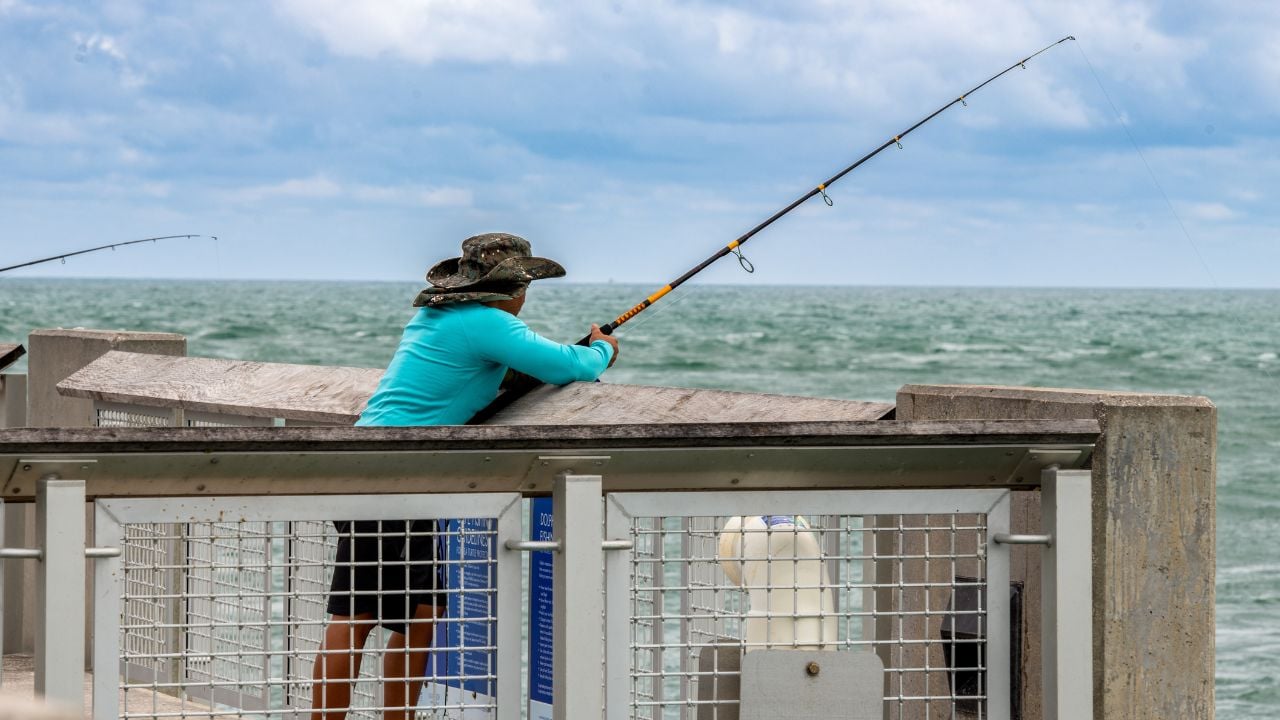
A pier with a valid saltwater pier license covers every angler on it, but only while you’re fishing from that pier.
FWC defines a resident as someone who has declared Florida as their only state of residence, shown by a valid Florida driver license or ID card.
What Counts as a Florida Resident for Fishing
Snowbirds who aren’t sure which side of the line they’re on can check their paperwork against this list.
Active-duty military personnel stationed in the state count as residents, along with spouses and dependent children in the household, with military orders.
A resident without a Florida driver license or ID card can show a voter registration card, a declaration of domicile or a Florida homestead exemption instead.
FWC’s residency page no longer accepts a landlord’s certification as proof.
2. Senior Exemption for Residents
Florida’s license exemption for anglers 65 or older covers residents only, with proof of age or residency.
Visitors aren’t covered.
If another state is home, you still need a Florida license, at 65 or at 85.
Kids under 16 don’t need a license.
An adult who baits a child’s hook does need a license because FWC says licenses and permits are required to help or assist in the take.
3. Shore-Based Shark Permit
Anglers 16 and older who fish for sharks from shore need a free permit on top of a saltwater license.
Getting it means finishing a shark fishing course, and the permit and course both have to be renewed every year.
It’s worth sorting out in your first week, before the rod comes out of the trunk.
The permit has no exemptions, not even for anglers who are exempt from the fishing license, including those 65 and older.
Natural bait for sharks means non-offset, non-stainless-steel circle hooks, so check the tackle box first.
If you hook a shark you can’t identify, FWC says to treat it as a prohibited species and release it.
That means the shark stays in the water with its gills submerged until it swims off.
8 Things Floridians Do When Northern Relatives Visit for the Holidays
Hosting relatives from up north over Thanksgiving weekend comes with some local traditions.
Some of them involve a rivalry game, and some involve a very full guest room.
8 Things Floridians Do When Northern Relatives Visit for the Holidays
4. Snook Permits and Closed Seasons
Keeping a snook takes a snook permit on top of a saltwater license, even for anglers fishing from shore.
The one-year permit costs $10, and FWC gives no refunds if snook is closed to harvest, so a permit bought for a closed season is money you can’t get back.
Snook season closes for part of the winter on both coasts.
Check before you pay.
The Gulf coast is closed from Dec. 1 through the end of February, and the Atlantic coast from Dec. 15 through Jan. 31.
The limit is one snook per person a day, so it pays to check your stretch of coast before you buy a permit.
5. Redfish Limits Beyond the Dock
Fishing for redfish means bag limits apply at the dock and in the parking lot, so a second redfish in the cooler at your car still puts you over.
The limit is one redfish per person, and the fish has to measure 18 to 27 inches in total length.
Snowbirds who spent last winter on the Gulf coast and are heading to the Atlantic side this year should check the Indian River Lagoon, where redfish are catch-and-release only.
A boat has a vessel limit, too, so three friends on a boat in a region with a two-fish limit can’t each take one home.
Rig a single hook with natural bait because multiple hooks with natural bait are prohibited.
Redfish have to stay whole until you land them ashore, so keep the fillet knife in the tackle box until then.
6. Tarpon Over 40 Inches
Snowbirds who hook a tarpon from a pier or bridge are fishing for a catch-and-release species, and any fish over 40 inches has to stay in the water.
Forty inches is just over three feet, so a tarpon that looks big enough to fill a cooler needs to stay wet.
That rules out hauling it onto the pier deck for a photo, so keep the camera ready and the fish in the water.
If you want to keep a tarpon, you need a tag bought before fishing begins.
FWC sells one tag per person per year, only to anglers in pursuit of a state or world record.
Keep it wet.
Snagging, snatch hooking and spearing are prohibited, too.
Psst! How much do you know about Florida’s outdoor rules? Take our quiz and see if you can ace it.
Quiz
Florida Outdoors IQ
Answer these questions on Florida’s rules for wildlife, roads and the great outdoors. We bet you can’t get them all right. Prove us wrong?
What’s the penalty for a first violation of Florida’s rule against feeding an alligator?
A License-Free Saturday
If you're in Florida for the holiday, you can fish saltwater without a license on the Saturday following Thanksgiving.
That's Nov. 28 this year.
FWC waives the license for all recreational anglers that day, residents and nonresidents alike.
That makes it a good day to take your visiting relatives out for a first cast.
Every other rule still applies, including seasons, bag limits and size limits.
After that, saltwater license-free days come the first Saturday and Sunday in June and the first Saturday in September, based on the current schedule.
8 Unofficial Holidays Only Floridians Celebrate

Some people in Florida observe unofficial holidays.
This is a look at a few of them.
