
3 Things That Are Illegal to Throw Away in Pennsylvania

One man’s trash is another man’s treasure, or so the saying goes.
State law has a third category: trash that isn’t allowed to be trash.
If you’re clearing out your garage before Thanksgiving company arrives, that’s worth knowing before you fill your bin.
Here are the things that are illegal to throw away in Pennsylvania.
Note: This is general information, not legal advice. Disposal rules and penalties are subject to change, so confirm the current requirements with the Pennsylvania Department of Environmental Protection (DEP).
1. Televisions and Computers
That flat-screen TV that quit working can’t go out with your regular trash.
Neither can the desktop computer nobody has touched in years.
Pennsylvania’s Covered Device Recycling Act has barred both from the trash since January 2013.
It covers laptops, monitors and printers too, so that old printer in your closet counts.
If you toss any of them anyway, a first violation can cost you up to $1,000, and each later violation up to $2,000.
What Counts as a Covered Device
Pennsylvania’s Covered Device Recycling Act counts any consumer television with a tuner as a covered device.
That includes direct-view and projection sets with a viewable screen of four inches or larger.
The law treats a computer peripheral as a covered device too, meaning a keyboard, a printer or any other device sold exclusively for external use with a computer.
Telephones of any type, including mobile phones, aren’t covered devices, and neither are personal digital assistants or global positioning system units.
A device contained inside a washer, dryer, refrigerator or dishwasher isn’t covered either.
2. Lead-Acid Batteries
Under Pennsylvania’s Act 101, a used car battery or any other lead-acid battery can’t go in your regular trash.
If you’re buying a new battery, the retailer has to take your old battery in exchange, so you can skip the hunt for a drop-off.
Retailers have to post a notice saying it’s illegal to discard these batteries.
If you toss the old battery in the trash anyway, DEP can assess a civil penalty of up to $10,000 per violation.
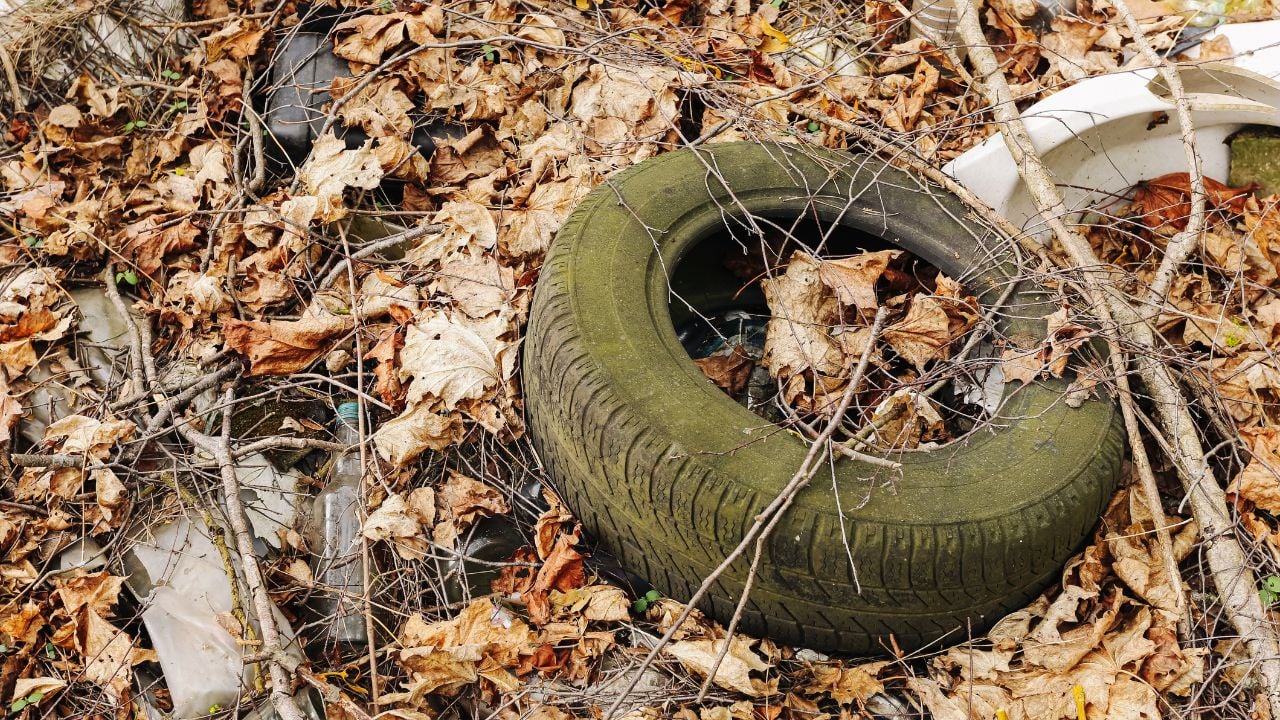
3. Whole Tires
Pennsylvania’s law on tires turns on two words, “whole” and “knowingly.”
Under the Waste Tire Recycling Act, you can’t knowingly mix a whole tire into trash headed for a landfill.
Landfills generally can’t accept whole tires either, unless they provide for shredding, chopping or splitting them first.
If you toss a tire in with your regular trash, you’ve likely crossed that line.
A first violation is a summary offense, with a fine of $100 to $1,000 and up to 30 days in jail.
Repeat violations become misdemeanors, with fines up to $5,000.
9 Pittsburgh Habits That Confuse the Rest of Pennsylvania
Ask a Philadelphian to repeat something a Pittsburgher just said, and watch the confusion set in.
Pittsburgh has different words, a different grammar, and firm opinions about how a sentence should sound.
9 Pittsburgh Habits That Confuse the Rest of Pennsylvania
Electronics Pickup and Drop-Off
Covered devices can’t go in your regular trash, so they need another way out of the house.
But some haulers and townships run a separate curbside pickup for special waste such as electronics.
DEP’s list of those programs includes Millcreek Township in Erie County and Moon Township in Allegheny County.
It doesn’t say what each program takes, so ask the hauler before you set a TV out.
If your town has no curbside program, you can drop covered devices off at a site or event.
Philadelphia’s six Sanitation Convenience Centers take computers and TVs.
The catch?
You’ll need proof that you live in the city to use them.
Most municipal programs have residency requirements too, and some require registration or charge nominal fees.
Some sites may not take TVs, so call before you load the car.
The law requires manufacturers to provide recycling programs for TVs, computers, monitors and peripherals sold to consumers in Pennsylvania.
Tire Piles and Local Limits
Whole tires can’t go out with your trash, and DEP warns that old tire piles collect rainwater and breed mosquitoes.
A tire fire under a major highway in Philadelphia cost millions of dollars in damage.
A drop-off site beats a pile, but the limits depend on where you live.
Pittsburgh’s program is limited to city residents, two tires per day.
In Philadelphia, a Sanitation Convenience Center takes four or fewer automotive tires.
A full set of four fits Philadelphia’s limit, but it takes two days in Pittsburgh.
Leaves in Your Trash
Whether leaves can go in your regular trash depends on where you live.
Act 101 requires municipalities with 10,000 or more people to run a recycling program.
The ordinance behind that program has to require residents to separate leaf waste from the rest of their trash until collection.
So in a town that size, a bag of leaves in your regular trash may break a local rule.
If you compost your leaf waste, that requirement doesn’t apply to you.
Philadelphia’s fall leaf program, which runs through December 19 in 2026, has you rake leaves to the curb’s edge for pickup.
You can bring leaves in biodegradable paper bags to any of the city’s six Sanitation Convenience Centers, too.
Alkaline and Other Batteries
Alkaline batteries can go in your household trash, even though lead-acid batteries can’t.
That’s because DEP no longer considers alkaline and zinc-carbon batteries hazardous.
Other batteries take more care.
Depending on the type, they may be accepted at a household hazardous waste collection event.
Call ahead to confirm that an outlet takes your type before you drive over.
Philadelphia’s Sanitation Convenience Centers have containers for batteries and fluorescent bulbs.
Non-rechargeable lithium batteries need extra care: Cover the terminals with non-conductive tape or seal each battery in a separate plastic bag.
Psst! How much do you know about Pennsylvania’s recycling and waste rules? Take our quiz and see if you can ace it.
Quiz
Pennsylvania Waste IQ
Answer these questions on Pennsylvania recycling, waste and landfills. We bet you can’t get them all right. Prove us wrong?
You’re cleaning up the yard in Pennsylvania. Which of these does Act 101 not count as leaf waste?
Household Hazardous Waste
Household hazardous waste, such as leftover paint, pesticides and drain cleaner, can go in your regular trash, but with conditions.
DEP says that's allowed if your community has no collection program or you must discard the waste before the next scheduled event.
Even then, you have to read the label, follow its disposal directions and package any residue so it can't leak.
Liquids take extra steps: Let water-based liquids evaporate, and soak up non-water-based liquids with something like cat litter or sawdust.
Then put the waste out in small amounts over several collection periods.
Counties and cities run sites and events where you can drop that waste off, with listings that include York County's ongoing program for county residents and Pittsburgh's ongoing program.
Call the program first, since not every site takes pesticides or flammable materials.
If you're unsure about an item, you can call the household hazardous waste hotline at 800-346-4242.
9 Things Pennsylvanians Miss the Moment They Move Away

You can take a person out of Pennsylvania, but good luck taking Pennsylvania out of the person.
Homesickness can hit at a gas station in another state, when the coffee tastes wrong.
