
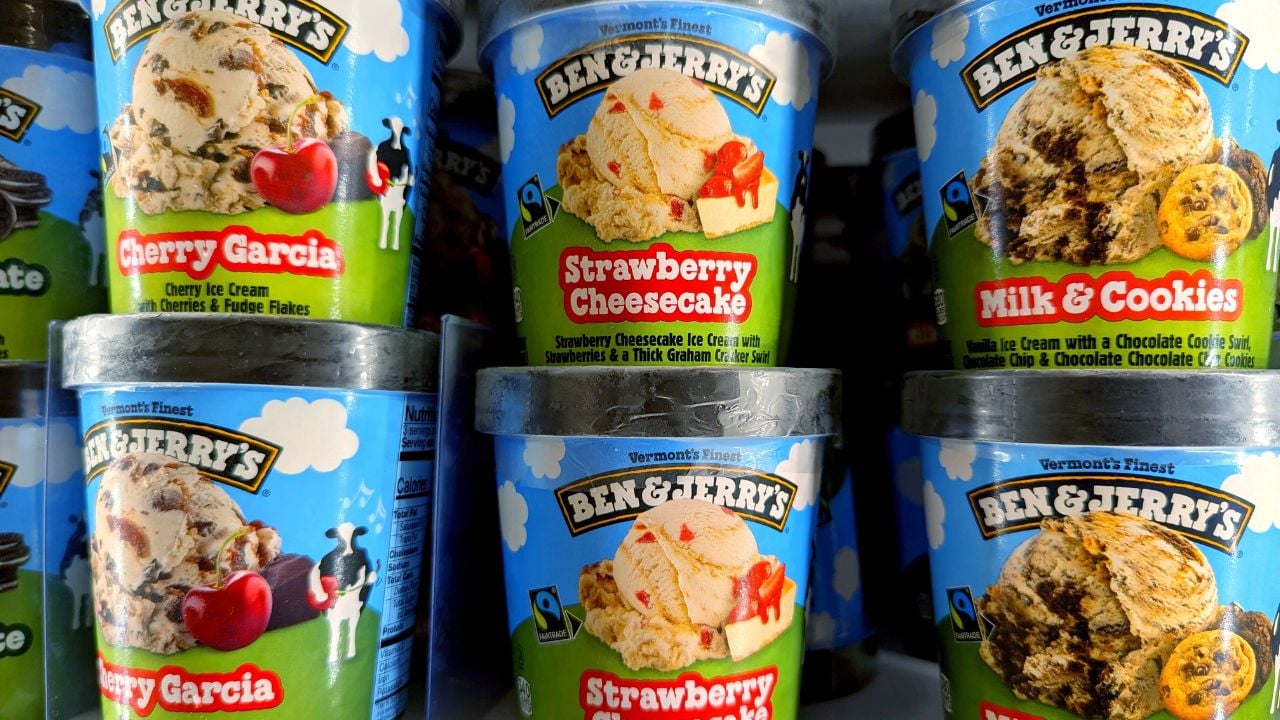
A Half Gallon of Ice Cream Hit a Record $6.51 in 2025, and Vermonters Are Only Paying a Little Less Now

Thanksgiving is Nov. 26, and someone at your table is going to ask for ice cream with their pie.
A news report this July pointed to one ingredient as the reason the price moved.
Here’s what’s happened to the price of a half gallon of ice cream since its 2025 record, and what it means for Vermonters.
The Record Month
A half gallon of ice cream averaged $6.505 in August 2025 in the BLS U.S. city average, which rounds to $6.51.
No month in that series, which starts in January 1980, is higher.
In January 1980, you’d have paid $1.755 for a half gallon of ice cream.
The 2025 record is more than three and a half times that, though both prices are in current dollars, before inflation.
The peak was no fluke.
Seven of the eight highest months in the series came in 2025.
In several months of 2025, you’d have paid close to the top: January averaged $6.459, May $6.466 and June $6.493.
Thirteen Months Later
As of BLS’s September 2026 release, the national average for a half gallon of ice cream stood at $5.931, which is 57 cents, or about 9%, under the August 2025 record.
Against September 2025’s $6.396, it’s about 47 cents lower, or 7% less on each half gallon you put in your cart.
Those changes come from subtracting average prices, so they’re rough.
If you buy one half gallon a month, you’d pay about $6.89 less over a year at the September 2026 average than at the record.
October 2025 is blank.
The federal shutdown kept BLS from collecting prices that month.
The average read $6.138 in November and $6.403 in December, still near the record, then $6.045 in May 2026 and $5.953 in June.
July’s $5.836 was the lowest monthly average in this BLS series since March 2024’s $5.733, and August and September have both risen since.
Septembers Since 2019
Back in September 2019, a half gallon of ice cream averaged $4.802 in the national BLS series, and you’d pay $1.129 more, or about 24%, in September 2026.
In between, Septembers sat at $4.944 in 2020 and $4.900 in 2021, then rose to $5.701 in 2022, $5.959 in 2023, $6.338 in 2024 and $6.396 in 2025.
Of the Septembers since 2019, the biggest one-year jump came from 2021 to 2022, when the average rose 80 cents.
September 2026 lands within 3 cents of 2023 and 23 cents above 2022.
What Moved the Price
Cream is the most expensive ingredient in ice cream, and a July 2026 news report said a growing supply of butterfat has pushed wholesale prices down.
If you bake your pie crust with stick butter, a pound averaged $3.959 in September 2026 in the national BLS series, about 17% below the $4.787 of a year earlier.
Farm-level milk prices were 10.2% lower in August 2026 than a year earlier, the U.S. Department of Agriculture’s Economic Research Service reported in its September update.
In stores, the national index for dairy and related products fell 0.9% from August to September 2026 and 0.7% from September 2025, as the milk index fell 2.0% in September.
What the BLS Ice Cream Price Counts
The BLS price for a half gallon of ice cream covers regular ice cream that BLS classes as prepackaged and bulk, sold in cardboard containers.
It counts any package size, any flavor, and both organic and non-organic ice cream.
The prices behind that U.S. city average are collected each month in 75 urban areas.
Average prices are meant to show the price level in one month, not change over time.
For change over time, the better tool is BLS’s separate index for ice cream and related products.
It fell 2.4% from September 2025 to September 2026, a smaller drop than the 7% in the average price.
Dairy Behind the Cone
The BLS average for a half gallon of ice cream covers the country and, where its sample allows, four regions, so it can’t tell you what any Vermont store charges.
What Vermont adds is a dairy industry with a $5.4 billion yearly economic impact, according to a 2025 report commissioned by the Vermont Dairy Promotion Council.
About 73% of the state’s dairy farms are small operations, with fewer than 200 cows.
Ben & Jerry’s opened its first ice cream shop in a renovated gas station in Burlington on May 5, 1978.
Psst! How much do you know about ice cream and dairy? Take our quiz and see if you can ace it.
Quiz
Ice Cream IQ
Answer these questions on ice cream, dairy and Vermont farm country. We bet you can’t get them all right. Prove us wrong?
Vermont law names which drink the official state beverage?
Cost of a Serving
Twelve servings come out of a half gallon of ice cream at the two-thirds-cup reference size the Food and Drug Administration uses for ice cream labels.
In the national average, a serving ran about 54 cents at the August 2025 record and about 49 cents at September 2026's price, roughly a nickel less.
A cup of ice cream works out to about 81 cents at the record and about 74 cents now.
A single fluid ounce runs about 9 cents at the September 2026 average, against about 10 cents at the record.
If you top eight slices of Thanksgiving pie with one serving of ice cream each, you'd pay about $3.95 now, against $4.34 at the August 2025 record.
5 Things a Vermont HOA Can't Stop You From Doing in Your Yard

Who gets the final say over your front yard, you or your homeowners association?
It depends, and a Vermont association can have strong opinions.
5 Things a Vermont HOA Can't Stop You From Doing in Your Yard
6 Signs the First Hard Freeze Is Close in a Vermont Orchard
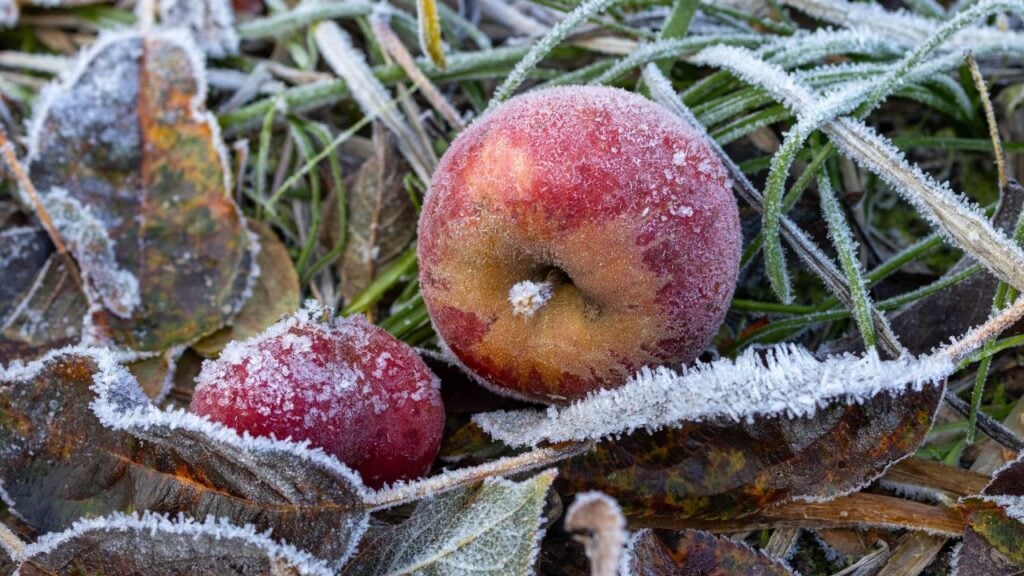
Vermont orchards have ways of showing that a hard freeze is near.
Here's what to watch for as the cold closes in.
