

12 Common Firearm Myths Debunked

Many Americans have opinions on whether the government should or shouldn’t restrict access to firearms. Regardless of where you stand, you’ve probably heard and perhaps even believed some of these common firearm myths.
1: Most Firearm Fatalities Are Homicides

Pew Research shows most firearm fatalities are from people taking their own lives, not homicides. In 2021, the number of people taking their own life accounted for 54% of firearm fatalities.
2: Assault Weapons Are a Legitimate Firearm Classification

Despite what you may have heard, there’s no formal definition for the term “assault rifle.” A report from the Campbell School of Law states so-called “assault rifle” bans usually target AR-15s. However, “AR” stands for “ArmaLite Rifle,” not “assault rifle.”
3: High Rates of Firearm Fatalities Are in Urban Areas

As John Hopkins School of Public Health notes, urban cities like Chicago have high rates of firearm violence. However, more firearm fatalities come from states with more permissive gun laws, like Louisiana and Alabama.
4: Mass Shootings Only Stem From Mental Health

Mental health plays a significant role in firearm fatalities, as many mass shooters have diagnosed mental health problems. However, according to the National Institute of Justice, a more reliable sign of imminent violence is a period of crisis.
5: AR-15s Are Military-Style Weapons
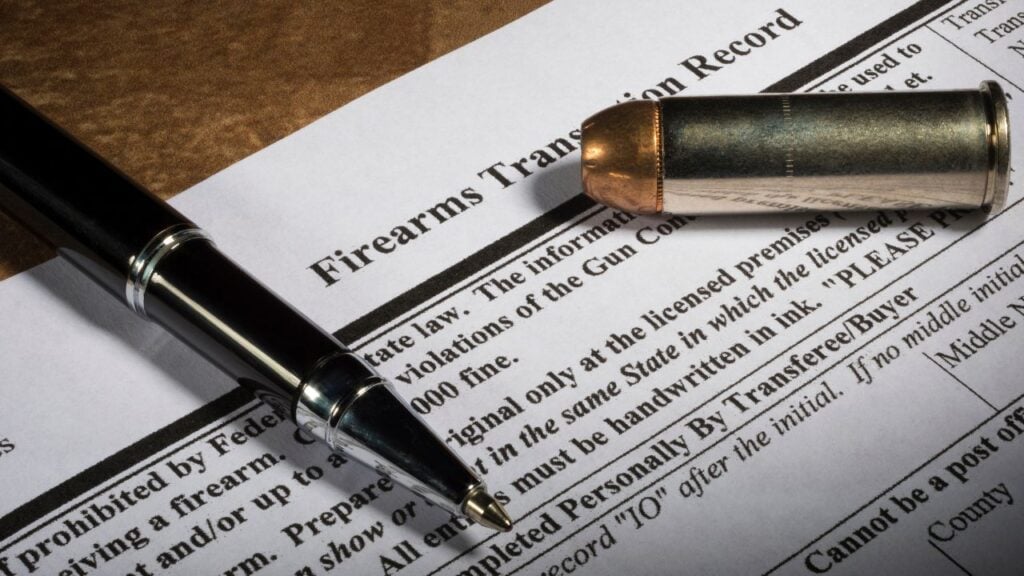
Though AR-15s look similar to fully automatic military rifles, they use semi-automatic firing systems, just like most modern handguns. Nevertheless, Campbell School of Law’s report shows multiple cases in which judges upheld the constitutionality of assault rifle bans because they felt banning these weapons could limit casualties.
6: Mass Shootings are Random

In more than two-thirds of mass shootings, the shooter knows their victims. These aren’t random acts in most cases, and restricting firearms for those with a violent history could help reduce them, according to one study.
7: Assault Rifles Are Responsible for More Fatalities

According to the National Institute of Justice, 77% of mass shooters used handguns, not assault rifles. Assault rifles also aren’t common in firearm fatalities overall. Statista data shows that in 2022, only 541 firearm deaths involved rifles, while 7,936 involved handguns.
8: America Is Violent

The United States doesn’t have more firearm deaths because it’s inherently a violent country. As the Johns Hopkins School of Public Health points out, America makes firearms more easily available than certain other countries, which is why they account for more deaths.
9: More Firearms Make Us Safer

The Johns Hopkins School of Public Health also notes that if more firearms made Americans safer from firearm deaths, we would be the safest country in the world. However, opponents to gun control point out that more firearms could protect from government overreach. Over half of Americans think the government has too much power, according to 2022 Gallup polling.
10: Americans Are Massively Divided on Firearm Restrictions

According to experts at Johns Hopkins, most Americans support some form of firearm restrictions, regardless of their political affiliation. In general, Americans support universal background checks, minimum age requirements, and license requirements for certain firearm types.
11: Studies Are Conclusive on Weapon Ban Effectiveness

Several studies have examined the effectiveness of weapon bans, many of which center around the 1994 assault weapon ban in the U.S. According to a report from the National Institute of Justice, weapons bans have mixed effects, and it is unclear whether or not they curb violence.
12: Many Citizens Use Firearms to Take Down Criminals

According to Harvard researchers, few criminals are shot by law-abiding citizens. If a firearm injures a criminal, it’s usually carried by another criminal.
America Wrestles With Firearm Violence

The Gun Violence Archive, a non-profit that tracks firearm incidents in the U.S., reported 656 mass shootings in 2023. Many Americans believe increasing firearm restrictions will reduce the number of shootings. However, many Americans also worry about government infringement on their constitutional rights if they don’t have the right to own a firearm.
The 2nd Amendment

The Second Amendment states, “A well-regulated Militia, being necessary to the security of a free State, the right of the people to keep and bear Arms, shall not be infringed.” While many legal scholars have debated what this means, the courts have made their stance clear.
Supreme Court Ruling

In the 2008 case District of Columbia v. Heller, the Supreme Court upheld the interpretation that the “Second Amendment protects an individual right to possess a firearm unconnected with service in a militia, and to use that arm for traditionally lawful purposes, such as self-defense within the home.”
Making Safer Schools

Politico journalists recently interviewed Fred Guttenberg, the father of a Parkland shooting victim and senior adviser to Brady United Against Gun Violence. He pointed out that the U.S. can use features like bullet-proof glass, self-locking doors, and mirrors, which prevent blind corners in hallways, to reduce the effects of mass shootings in schools. All of this can be implemented without any change to the law.
Common Sense Restrictions

Many Americans also support common sense firearm restrictions, including universal background checks. According to a 2023 Pew Research Center survey, 58% of Americans support stricter gun laws, and 61% say it’s currently too easy to obtain a firearm.
Firearm Ownership Rates by State Ranked From 1 to 50

Do you know which states have the highest and lowest rates of firearm ownership? Find out where your state stands.
Firearm Ownership Rates by State Ranked From 1 to 50
How US Firearm Violence Compares With 14 High-Income Nations

The United States takes center stage in many of the wrong ways when it comes to global firearm violence. Data reveals stark differences in firearm trends in fellow high-income countries.
How US Firearm Violence Compares With 14 High-Income Nations
