
17 Common Sense Rules Everyone Knew in the 1940s That No One Follows Today

Americans in the 1940s didn’t need a million rules posted on walls to know how to behave. They just got it.
Common sense wasn’t something you had to study; it was baked right into everyday life, like apple pie or ironing your best shirt for Sunday church.
It didn’t matter if you were a kid riding bikes until dark or a grown-up chatting on the front porch—you just knew the right thing to do.
Fast-forward to today, and a lot of that simple, good-hearted wisdom feels like it’s gathering dust right next to Grandpa’s old record player.
These are some of those everyday rules everybody knew—and too many people forget now.
Respect Your Elders
In the 1940s, you didn’t need a sign at the diner reminding you to offer your seat to an older person—you just did it. Kids were taught from the time they could talk that elders deserved automatic respect, whether that meant a polite “Yes, ma’am” or helping carry a heavy bag without being asked.
It wasn’t about being forced; it was just understood as the right thing to do.
Today, that kind of automatic respect is a lot harder to find. Sure, there are still plenty of polite kids out there, but it’s not the universal rule it once was.
Now you’re just as likely to see someone glued to their phone while an elderly person stands nearby, struggling with a cane. Somewhere along the line, helping others became optional instead of expected.
In the ’40s, respecting elders wasn’t just about politeness—it built a sense of community. Older folks weren’t just tolerated; they were seen as libraries of wisdom and experience.
They were the ones who had survived the Great Depression, fought in wars, and built towns from scratch. They had earned every bit of that respect, and everyone knew it.
Keep Your Front Yard (and Yourself) Presentable
Back in the 1940s, appearances mattered—not in a snobby way, but in a prideful, “we care about our home and ourselves” kind of way.
You didn’t let your front yard turn into a jungle, and you certainly didn’t wander into town wearing pajamas. Even if you were just running a quick errand, you’d fix your hair, shine your shoes, and maybe even throw on a hat.
Today, it’s not unusual to see front yards littered with random junk, or people shopping for groceries in fuzzy slippers and bedhead.
Sure, comfort is important, but a little effort went a long way in the ’40s. People believed that how you presented yourself was a reflection of how you respected others around you.
The front porch wasn’t just for looks either—it was a symbol.
Neat porches with rocking chairs and a few flowers sent a message that the family inside cared about their neighbors and their town. It was all tied together: personal appearance, home upkeep, and community pride.
If You Borrowed Something, You Gave It Back (In Better Shape)
Borrowing was serious business in the 1940s. If you needed to borrow a neighbor’s lawnmower, bike, or casserole dish, you were expected to return it quickly—and in better shape than when you got it.
You might even throw in a little extra, like a plate of cookies, just to say thank you.
Today, borrowing can sometimes feel like a gamble. Will you ever see that book again? Will the power tool come back with more missing parts than it had before?
People in the ’40s treated borrowed items with kid gloves because reputation meant everything. If you were careless, word spread fast, and good luck getting help next time you needed it.
The unwritten rule was simple: treat other people’s stuff better than your own. It wasn’t about fear of getting scolded; it was about genuine respect for the person who trusted you.
Breaking that trust was seen as a big deal, and nobody wanted to be “that neighbor” everyone avoided.
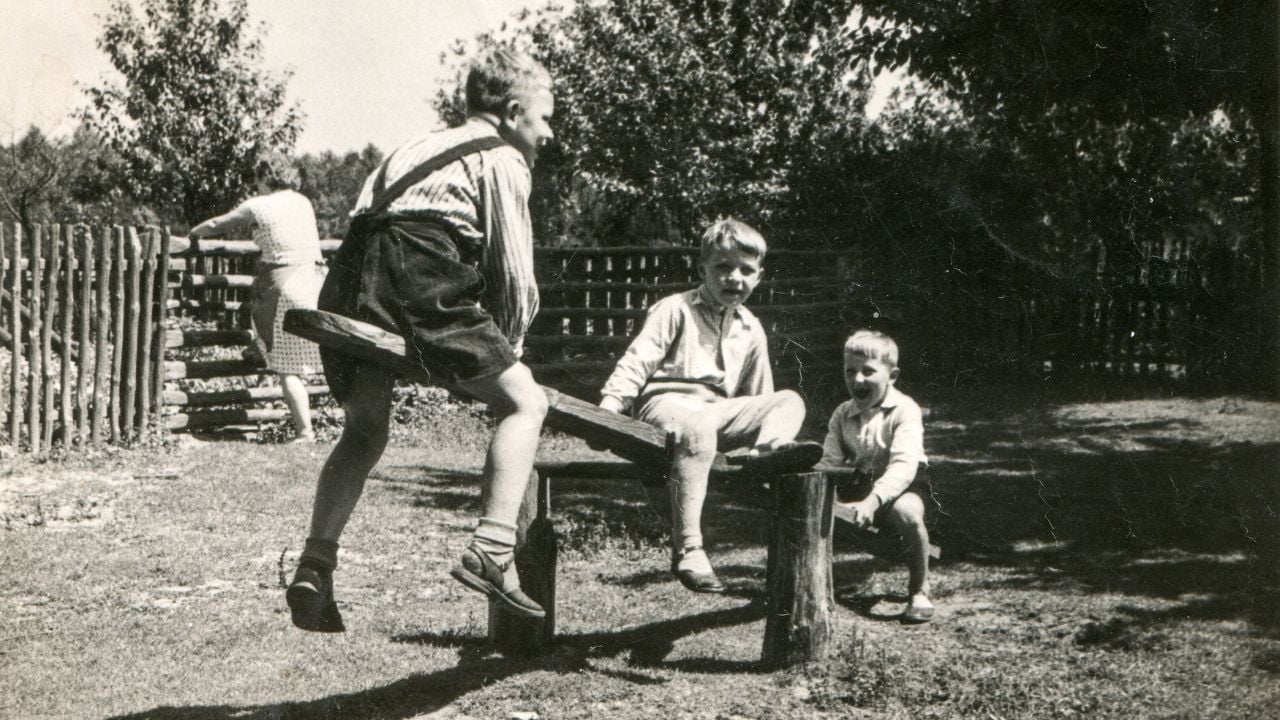
Kids Played Outside All Day—and Knew to Come Home by Dinner
In the 1940s, the phrase “Go outside and play” wasn’t just a suggestion; it was practically a law of childhood.
Kids knew to stay out of trouble, stick together, and most importantly, be home when the streetlights came on—or when they heard their mom’s voice carrying across the neighborhood.
Today, organized activities, screen time, and constant supervision have replaced a lot of that free-range childhood. It’s rare to see kids roaming in packs on bikes, inventing games, or building forts in empty lots.
Sure, times have changed, and there are new worries today. But back then, freedom came with personal responsibility.
Part of that responsibility meant using common sense: don’t talk to strangers, don’t play near the railroad tracks, and if someone gets hurt, run and get help.
Kids learned to solve problems on their own because they had to. It was a crash course in growing up that you can’t get from a smartphone.
You Never Showed Up to Someone’s Home Empty-Handed
In the 1940s, if you were invited to someone’s home—even just for a coffee—you didn’t walk in empty-handed. You might bring a pie, a jar of homemade jam, or even just a bunch of flowers from your garden.
It wasn’t about impressing anyone; it was about showing appreciation for the hospitality.
Today, it’s not uncommon for guests to breeze into a party or gathering without so much as a thank-you. Of course, not everyone expects a gift. But back then, bringing a little something was a sign that you valued the effort your host put into having you over.
The items didn’t have to be fancy, either. It was the thought that mattered.
A fresh loaf of bread wrapped in a towel, a basket of tomatoes in summer—it was these simple gestures that built lasting bonds between people.
You Didn’t Air Your Dirty Laundry in Public
People in the 1940s were masters of keeping private matters, well, private.
If you were having a family argument or dealing with tough times, you didn’t broadcast it to the world. You handled it quietly at home or with a trusted friend, not over the backyard fence or in the middle of the grocery store.
Today, thanks to social media and a culture that rewards oversharing, it’s easy to forget that not everything needs an audience.
Airing every frustration, heartbreak, or minor inconvenience used to be seen as undignified. There was a sense of pride in being able to weather storms quietly and with grace.
That didn’t mean people didn’t talk about problems—they did. But there was an understanding that dignity mattered.
Not because anyone was pretending life was perfect, but because it showed respect for your family and yourself.
You Held the Door Open for the Next Person
Holding the door open for others wasn’t just polite in the 1940s; it was automatic. It didn’t matter if the next person was your neighbor, a stranger, a young child, or a frazzled mom with her hands full.
You saw someone coming, you held the door. Simple.
Today, you’ll still find kind souls who do this, but it’s far from guaranteed. Too often, doors slam in people’s faces because someone was too busy looking at their phone or just didn’t think about it.
In the ’40s, not noticing someone behind you would’ve been unthinkable—it was drilled into everyone’s sense of right and wrong.
Holding the door wasn’t about showing off. It was one small way of saying, “You matter, even if I don’t know you.”
You Wrote Thank-You Notes for Everything
If you got a birthday gift, a wedding present, or even a favor from a neighbor in the 1940s, you knew what came next: a handwritten thank-you note.
And not just a generic “Thanks!” either. People took the time to say what the gift or gesture meant to them, even if it was just a few sentences on a simple card.
Today, a text message—if anything—seems to be the norm. Handwritten notes have become a bit of a lost art.
Sure, life moves faster now, but the 1940s way of doing things wasn’t about speed; it was about meaning. Taking five minutes to write a thoughtful note showed real gratitude and stayed with people longer than a quick emoji ever could.
It wasn’t just for big occasions, either. Even small kindnesses were often acknowledged with a note.
You Listened More Than You Talked
In the 1940s, conversation was an art—and listening was a big part of it. You didn’t interrupt. You didn’t steer every story back to yourself. You let people speak, even if you disagreed, because listening showed respect.
People understood that there’s a difference between hearing someone and actually listening to them.
Today’s world is full of noise, and real listening seems to get lost in the shuffle. Conversations often feel like competitions: who can talk louder, argue better, or get the last word.
In the ’40s, having good manners meant being a good listener, especially when someone needed advice, support, or just a friendly ear.
Being a good listener wasn’t just polite; it was practical. It helped keep communities tight and neighbors close.
When you listened carefully, you learned about people’s needs, joys, and struggles—and that made it easier to help when the time came.
You Didn’t Leave a Mess for Someone Else to Clean Up
In the 1940s, one of the biggest unspoken rules was simple: if you made a mess, you cleaned it up.
Whether it was at home, at school, or in a public place like the soda shop, you didn’t leave your trash, spills, or muddy footprints for someone else to deal with. It didn’t take a lecture—everyone just knew that you left a place better than you found it.
Fast-forward to today, and it’s not unusual to see people leave their fast-food trays on tables, shopping carts abandoned across parking lots, or movie theater seats littered with popcorn.
Somewhere along the way, the idea of personal responsibility got fuzzy. The mindset today is often “Someone gets paid to clean it,” which completely misses the point.
In the 1940s, cleaning up after yourself was about respect—not just for the person who owned the place, but for the next person coming after you. It wasn’t about fear of getting in trouble; it was a pride thing.
You showed your character by how you treated spaces that didn’t belong to you.
You Looked People in the Eye When You Spoke
Eye contact was a big deal in the 1940s. When you talked to someone, you looked them straight in the eye. It showed you were honest, confident, and paying attention.
You didn’t mumble into your shoes or stare off into the distance while someone was telling you something important. If anything, breaking eye contact too much made you seem suspicious—or at the very least, rude.
These days, between phones buzzing, watches pinging, and screens everywhere, a lot of people don’t even notice when they’re barely making eye contact.
Conversations can feel rushed or distracted, like the person talking to you is only half there. And when someone does make strong eye contact now, it almost feels weird—like it’s too intense.
But back then, it was the norm. Whether you were shaking hands with a new neighbor, thanking a teacher, or apologizing for messing up, you did it with a steady gaze.
Eye contact wasn’t about intimidating anyone; it was about showing you were present and sincere.
You Didn’t Talk About Politics at the Dinner Table
During the 1940s, dinnertime was sacred. It was a chance for families to come together, share a meal, and hear about each other’s day without getting into heated arguments.
Sure, people had strong opinions about the war, about Roosevelt, about everything—but there was an unspoken understanding that the dinner table wasn’t the place for political battles.
Today, it can feel like every family gathering is one wrong comment away from an all-out verbal brawl.
Politics has gotten so tangled into everyday conversation that it’s sometimes hard to find neutral ground. But back then, common sense dictated that dinnertime was about connection, not division.
Families prioritized kindness and curiosity over winning arguments. They talked about schoolwork, town news, recipes, hopes for the weekend—anything that built people up instead of tearing them down.
You Didn’t Overstay Your Welcome
Another 1940s common-sense rule was knowing when it was time to leave.
Whether you were visiting neighbors for a cup of coffee or dropping by to say hello after church, you didn’t hang around until your hosts started yawning and checking their watches.
Today, it’s a little trickier. Some guests camp out for hours without picking up on the fact that their hosts are fading fast. Or they wait until the host has to practically shove them out the door with, “Well, it’s getting late!”
In the ’40s, people understood that visits were like good songs: better to end while everyone’s still smiling.
Leaving at the right time wasn’t just about politeness—it showed you respected your hosts’ time and their needs.
You Didn’t Brag About Your Good Deeds
In the 1940s, if you helped someone, you didn’t rush to tell the whole town about it. You didn’t post about it, you didn’t announce it from a rooftop—you just quietly did the right thing because it was the right thing.
Helping a neighbor fix a fence or slipping extra groceries into someone’s cart was done with humility, not hashtags.
These days, it feels like every random act of kindness has to come with a selfie or a viral post. While it’s great to spread positivity, the ’40s way was more about keeping it humble.
The idea was simple: if you bragged about your good deed, it wasn’t really about the deed anymore—it was about you.
The beauty of that era was how much kindness happened behind the scenes. Most good deeds were invisible to anyone except the people who benefited from them.
And in many cases, that made the gesture feel even more genuine and heartfelt.
You Didn’t Interrupt Adults When They Were Talking
If you grew up in the 1940s, you knew that when adults were speaking, you waited your turn.
You didn’t barrel into the conversation with your story about what happened at the candy store. You didn’t shout over adults to get attention. Interrupting wasn’t just frowned upon—it was one of the quickest ways to get a sharp look from your parents.
Today, conversations can be a free-for-all. Kids and even adults sometimes blurt things out mid-sentence, derail discussions, or dominate the room.
Patience and polite timing aren’t as ingrained as they once were. Some see it as confidence, but in the 1940s, barging into someone else’s words was seen as selfish and disrespectful.
Teaching kids to wait their turn to talk wasn’t just about being polite; it was about teaching self-control, empathy, and respect.
You Didn’t Waste Food—Ever
Rationing during World War II shaped a whole generation’s relationship with food. In the 1940s, wasting food wasn’t just frowned upon—it was almost unthinkable.
Leftovers were saved, bones were boiled for soup, and stale bread was turned into bread pudding or croutons. Every scrap had a purpose because food wasn’t guaranteed.
Today, massive amounts of food get tossed daily without a second thought. Perfectly good produce gets trashed because of a bruise, or leftovers go uneaten because people just “aren’t in the mood” for them anymore.
The idea of making the most out of every bite feels foreign to a lot of folks now.
In the 1940s, thriftiness wasn’t seen as stingy—it was seen as smart and responsible. People understood that food was a gift, not a given.
You Always Sent Birthday Cards (On Time!)
In the 1940s, forgetting someone’s birthday wasn’t an option. Even if you were terrible with dates, you made sure to send a card—handwritten, heartfelt, and usually mailed early to make sure it arrived on time.
Remembering birthdays showed that you cared enough to make the effort.
Nowadays, a birthday text with a few balloons and cake emojis is often the best someone gets. And sure, life is busier now, but there’s something about opening a real card that still hits differently.
It says, “I thought about you before today,” not just, “Facebook reminded me.”
Sending a birthday card in the ’40s wasn’t about spending a lot of money or choosing the fanciest design. It was about thoughtfulness.
19 Historical U.S. Myths That Annoy History Buffs to the Core

If your teacher taught it in history class, it’s normal to assume it’s true. Ask any historian, though, and you might be surprised to learn the stuff of school history lessons is often riddled with inaccuracies.
19 Historical U.S. Myths That Annoy History Buffs to the Core
25 Things From the Past We Took for Granted

Do our modern gadgets truly simplify our lives, or do they add unnecessary complexity? These are the things about the old days that Americans long to have back.
25 Things From the Past We Took for Granted. Now We Want Them Back
