
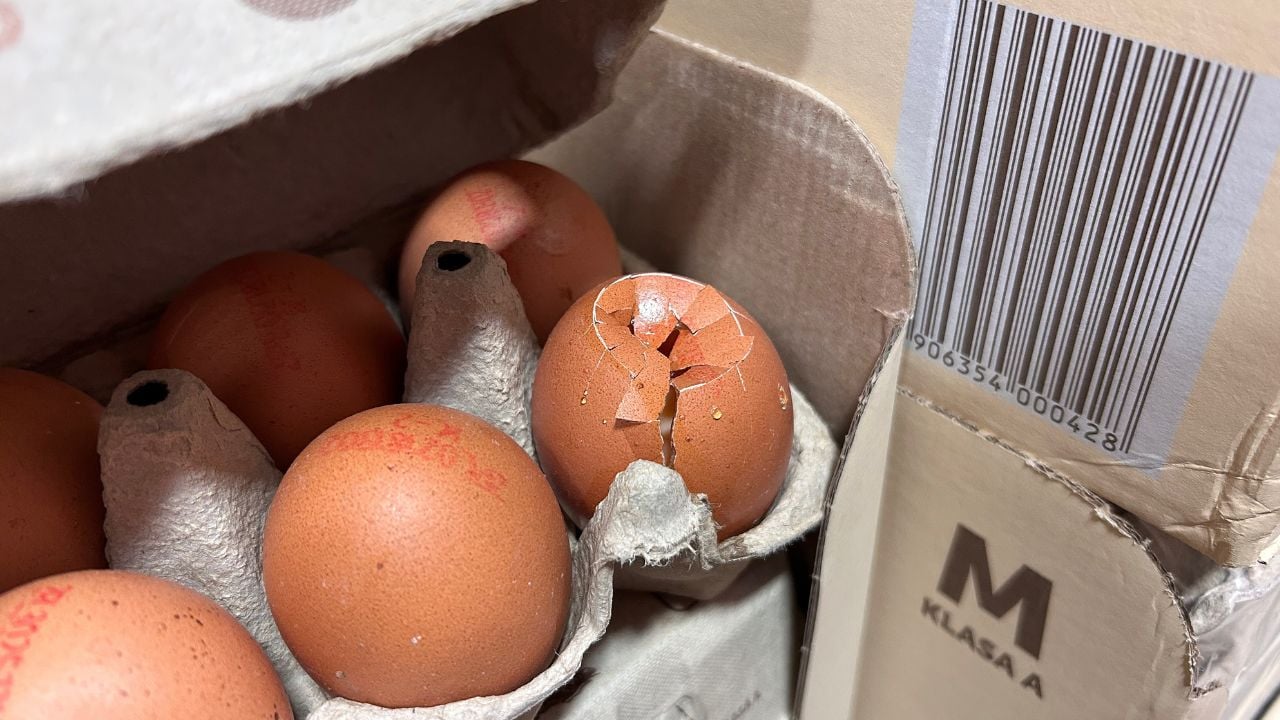
Eggs Are Down Almost Two-Thirds From Their 2025 Record, but Kentuckians Still Pay About 68% More Than in 2019

Two dozen eggs cost about $4.64 now.
At the March 2025 peak, you’d have paid over double that.
Here’s how far eggs have fallen from their 2025 record, and how much more Kentuckians still pay than in 2019.
The 2019 Dozen
Eggs averaged $1.383 a dozen across the country in September 2019, the baseline for the 2019 comparisons below.
Keep that number handy.
That’s the U.S. city average BLS tracks for Grade A large eggs, and every comparison below uses it.
If you shopped for eggs that month, a dozen cost you less than $1.40, and two dozen cost about $2.77.
Every September Since 2019
Eggs have cost more than their September 2019 price in six of the seven Septembers since, and BLS has since published October 2026 at $2.320.
The U.S. average was $1.353 in September 2020, $1.835 in 2021 and $2.902 in 2022.
It dropped to $2.065 in 2023, then stood at $3.821 in 2024 and $3.488 in 2025.
This September came in at $2.272, the lowest September since 2023.
September 2022’s $2.902 was more than double September 2019’s $1.383.
If you’ve bought eggs every September since 2019, only the 2020 dozen cost you less.
Cheaper isn’t cheap.
The First Spike
Eggs had already risen once before the 2025 record.
A dozen averaged $2.046 in March 2022 and $2.520 in April 2022, then reached $4.823 in January 2023.
The average topped $4 from December 2022 through February 2023, so if you remember paying that much, your memory is right.
Then it fell.
By June 2023, the average had dropped 54% to $2.219.
March 2025
Eggs peaked in March 2025, when a dozen cost 4.5 times what it did in September 2019.
The BLS series topped out at $6.227 that month, its highest monthly average since the series began in 1980.
The old record, $4.823 in January 2023, fell in January 2025, when the average reached $4.953.
It then rose to $5.897 in February and to the record in March, up $1.27 a dozen since January.
April brought the first drop.
The average fell to $5.122.
If you were shopping that month, the gap with September 2019 was $4.84 a dozen.
If you winced at the egg aisle that spring, you weren’t imagining it.
Bird Flu Behind the Spike
Eggs got expensive in 2025 because bird flu reduced the flocks that lay them.
The Economic Research Service (ERS) at the U.S. Department of Agriculture (USDA) says an outbreak of highly pathogenic avian influenza began in 2022.
It says the outbreak raised egg prices by cutting egg-layer flocks and egg production.
ERS calls the outbreak ongoing.
ERS says retail egg prices averaged 21.9% more across 2025 than in 2024.
If you wondered why prices moved so fast, the answer is supply, with fewer laying hens producing fewer eggs.
Psst! How much do you know about Kentucky’s farms and chickens? Take our quiz and see if you can ace it.
Quiz
Kentucky Farm IQ
Answer these questions on Kentucky farms, chickens, and eggs. We bet you can’t get them all right. Prove us wrong?
Which of these is Kentucky’s official state drink?
The Drop Since the Peak
If you tracked a dozen from the March 2025 record, you'd have watched it fall to $2.141 by June 2026.
Along the way, the average dropped below $4 in June 2025 and below $3 by November 2025, then reached $2.348 in March 2026.
September's average is $2.272 a dozen, unchanged from August and 34.9% below September 2025.
Measured from the record, that's a 63.5% drop, almost two-thirds.
June 2026's $2.141 was the lowest average since November 2023, when it was $2.138.
Prices have risen since June, from $2.141 to $2.320 in October.
October's $2.320 is 62.7% below the record.
USDA's October egg market outlook cites growing layer inventory as the reason it raised its 2026 production forecast.
At September's average, you'd pay nearly $4 less for a dozen than you would have at the March 2025 peak.
That adds up.
Still Above 2019
Eggs still cost 64.3% more nationally in September 2026 than in September 2019.
October's $2.320 is 67.8% above the September 2019 price.
At the national averages, that's 89 cents more for a dozen, or $1.78 more if you buy two dozen.
Overall prices rose 31.2% over the same stretch, based on the all-items Consumer Price Index.
Eggs rose twice as much.
If eggs had only kept pace with overall prices, a September 2019 dozen would cost about $1.81 in September 2026.
At $2.272, the actual average is about 46 cents above that.
A year earlier, in September 2025, eggs cost 152.2% more than they did in September 2019.
Why the Egg Percentages Differ
A dozen eggs would need to fall 39.1% from September 2026's $2.272 to return to September 2019's $1.383.
You might expect that to match the 64.3% rise, but the two percentages start from different prices.
The same $0.889 gap is 64.3% of $1.383 but only 39.1% of $2.272.
What a Dozen Costs Now
Eggs at the September average cost $2.272 a dozen, so two dozen run $4.54.
At the March 2025 record, you'd have paid $12.45 for those same two dozen.
Even at the June 2026 low of $2.141 a dozen, you'd have paid $4.28 for two dozen, still more than the $2.77 in September 2019.
If you bake for the holidays and need four dozen, September's average makes that $9.09, compared with $5.53 at September 2019's price.
A dozen a week for a year comes to about $118 at September's average and about $72 at the 2019 price.
That's $46 a year.
The USDA Forecast
USDA's October 2026 outlook forecasts a 29.3% decrease in egg prices for 2026 compared with 2025.
That's an annual figure.
The forecast interval runs from a 31.6% decrease to a 26.7% decrease.
That compares average prices across all of 2026 with all of 2025, so you can't line it up against a single month's dollar average.
4 Kroger Store Brands Kentucky Shoppers Choose Over Name Brands
You reach for the name brand out of habit.
But some Kroger store brands on the lower shelf end up in Kentucky carts instead.
4 Kroger Store Brands Kentucky Shoppers Choose Over Name Brands
8 Storm-Chaser Roofing Scams Kentucky Homeowners Need to Recognize

A stranger knocks on your Kentucky door and offers to look at your roof.
The pitch sounds friendly, but some of it could be a setup.
8 Storm-Chaser Roofing Scams Kentucky Homeowners Need to Recognize
