
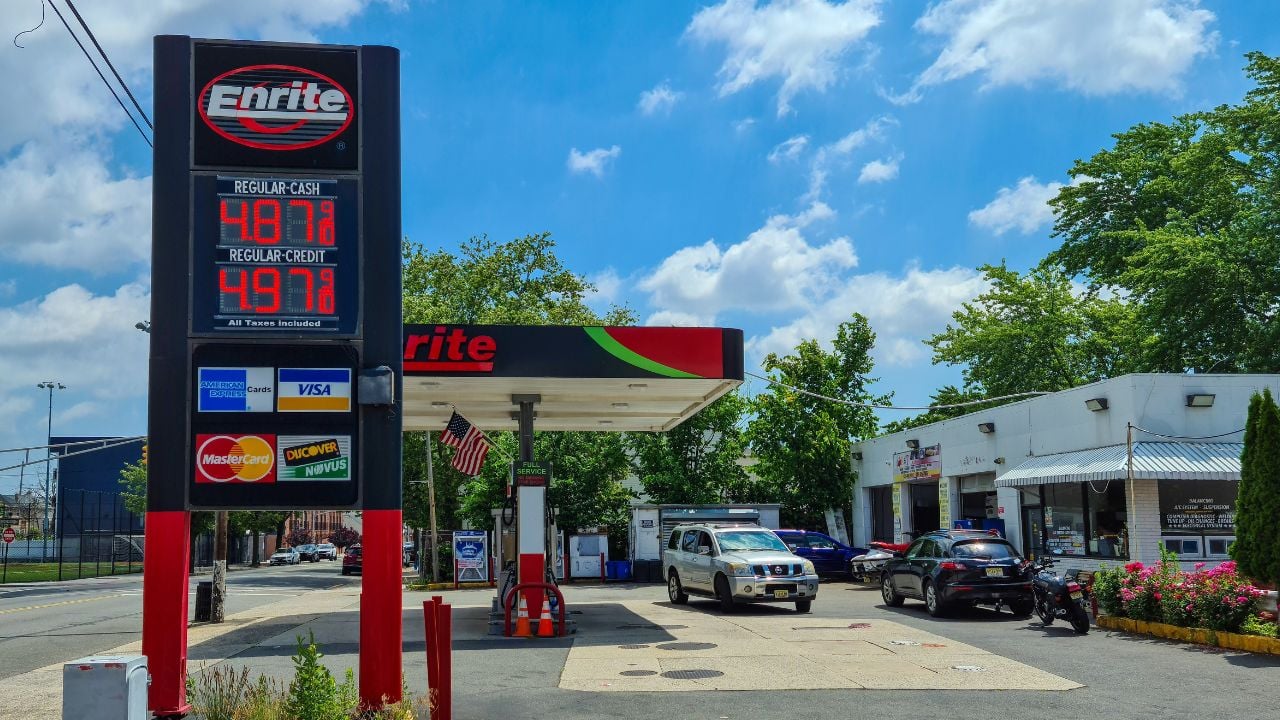
Gas Leads the 7 Everyday Costs That Climbed for New Jersey Households

Your wallet already knows prices went up.
But some everyday costs jumped far more than others, and many New Jersey households may feel them differently.
Here’s where the biggest price jumps showed up this past year.
Note: This is general information, not financial advice. Price figures are from August 2026 and subject to change, so check the Bureau of Labor Statistics for newer releases.
Where These Numbers Come From
All the numbers below come from the Bureau of Labor Statistics (BLS) report.
It found area prices up 4.3% when August 2026 is compared with August 2025.
Here’s what that means.
Something that cost $100 a year ago costs about $104.30 now, on average.
The BLS area spans 25 counties across three states.
It includes 12 New Jersey counties: Bergen, Essex, Hudson, Hunterdon, Middlesex, Monmouth, Morris, Ocean, Passaic, Somerset, Sussex and Union.
If you live in Mercer County, your county isn’t in the area.
A cost above 4.3% rose faster than prices overall.
BLS’s monthly figures aren’t seasonally adjusted. So a July-to-August change can reflect seasonal swings.
Some costs below rose faster than that average, and some rose slower. But every one of them rose.
Here’s the list.
1. Gasoline
Gasoline rose 31.0% over the 12 months ending in August, according to BLS.
That’s more than seven times the 4.3% average for all items.
Say a fill-up cost $50 a year ago. At that pace, the same fill-up runs about $65.50 now.
Regular unleaded went up even more, by 31.8%.
Premium went up 26.9%.
Separately, New Jersey’s gas tax went up 4.2 cents a gallon in January 2026.
It’s now 49.1 cents for gasoline.
2. Owners’ Equivalent Rent
Owners’ equivalent rent rose 4.9% over the 12 months ending in August.
That’s a mouthful.
BLS describes it as the implicit rent owner occupants would have to pay if they were renting their homes.
If you own your home, this is how your housing cost gets measured.
That matters in New Jersey.
About six in ten housing units are owner-occupied. That’s 63.8%, per the Census Bureau’s 2020-2024 estimate.
So this number counts owners too.
3. Apparel
Apparel, which means clothing, rose 4.7% over the 12 months ending in August.
A $100 coat from a year ago now costs about $104.70.
New Jersey doesn’t charge sales tax on clothing and footwear, according to the state Division of Taxation’s sales tax guide.
The exemption skips fur clothing, accessories, and sport or recreational equipment.
Buy a winter coat, and you pay no sales tax on it, even as prices rise.
The tax break helps.
4. Rent
Rent rose 4.0% over the 12 months ending in August.
Renters got the smaller increase.
Owners’ equivalent rent rose 4.9%.
New Jersey’s median gross rent was $1,720 in the same 2020-2024 estimate.
That figure is from before the 12 months BLS measured.
When your lease renews, your landlord’s number may differ from the 4.0% average for the whole area.
Illustration: What a 4.0% Rent Increase Costs
Here’s what a 4.0% rent increase costs on a $2,000 monthly rent.
A 4.0% increase turns a $2,000 rent into $2,080. That’s $80 more each month, or $960 more over a year.
Your lease may land above or below the area average.
5. Tuition and Childcare
Tuition, school fees and childcare rose 3.8% over the 12 months ending in August.
At Rutgers University, the Board of Governors approved a 3% tuition increase for 2026-27 on July 9, 2026.
It’s the school’s smallest in four years.
For a typical in-state arts and sciences student, that adds $448 for the academic year, from $14,933 to $15,381.
That’s a separate figure for the 2026-27 school year, not part of the 3.8%.
If you pay for daycare or another school’s tuition, your increase may be higher or lower.
Your bill may differ.
6. Eating Out
Eating out rose 3.6% over the 12 months ending in August.
So $100 of restaurant meals from a year ago now costs about $103.60.
Then there’s tax.
New Jersey charges a 6.625% sales tax on most goods, and prepared food isn’t exempt.
Food sold hot counts as prepared food. So does food the seller combines into a single item.
So if you grab lunch at a deli counter, you pay the tax on a hot sandwich.
7. Groceries
Groceries rose 3.1% over the 12 months ending in August.
Put another way, a $500 grocery month from a year ago now runs about $515.50.
Inside that index, nonalcoholic beverages rose 6.1% and fruits and vegetables rose 4.2%, while dairy fell 1.0%.
If drinks fill a big part of your cart, you saw a bigger increase than the 3.1% grocery average.
Groceries fell 0.2% from July to August, and monthly figures aren’t seasonally adjusted.
That made them the only cost among these seven to fall that month.
Groceries bucked the trend.
The state’s sales tax guide says New Jersey doesn’t tax most food and drink bought in a food store.
Costs That Barely Moved
Not every everyday cost rose fast over those 12 months.
Medical care rose 0.9% and recreation rose 1.1%, according to BLS.
Used cars got cheaper.
Used cars and trucks fell 2.0% over the same 12 months.
Shopping for a used car?
On average, you faced lower prices than a year earlier.
Psst! How much do you know about gas in New Jersey? Take our quiz and see how many you can get right.
Quiz
Jersey Gas and Cost IQ
Answer these questions on New Jersey gas and everyday prices. We bet you can’t get them all right. Prove us wrong?
Under New Jersey’s full-service gasoline law, what is the penalty range for a first offense?
Energy and Food Overall
BLS also groups the same prices into bigger buckets.
Energy rose 15.4% and food rose 3.3% over the 12 months ending in August 2026.
Energy includes gasoline.
Food includes groceries and eating out.
Leave out food and energy, and everything else rose 3.8%. That's below the 4.3% all-items average.
One more quirk. From July to August, the energy index fell 2.5% even as gasoline rose 1.3%.
Those two moved apart.
8 Property Tax Freeze Rules New Jersey Retirees Miss Out On

Is your paperwork up to date?
Details are easy to overlook.
8 Property Tax Freeze Rules New Jersey Retirees Miss Out On
9 Things New Jersey Locksmiths Wish Homeowners Knew

Do you know who you'd call if you got locked out tonight?
A few things locksmiths wish you knew could save you a headache.
