
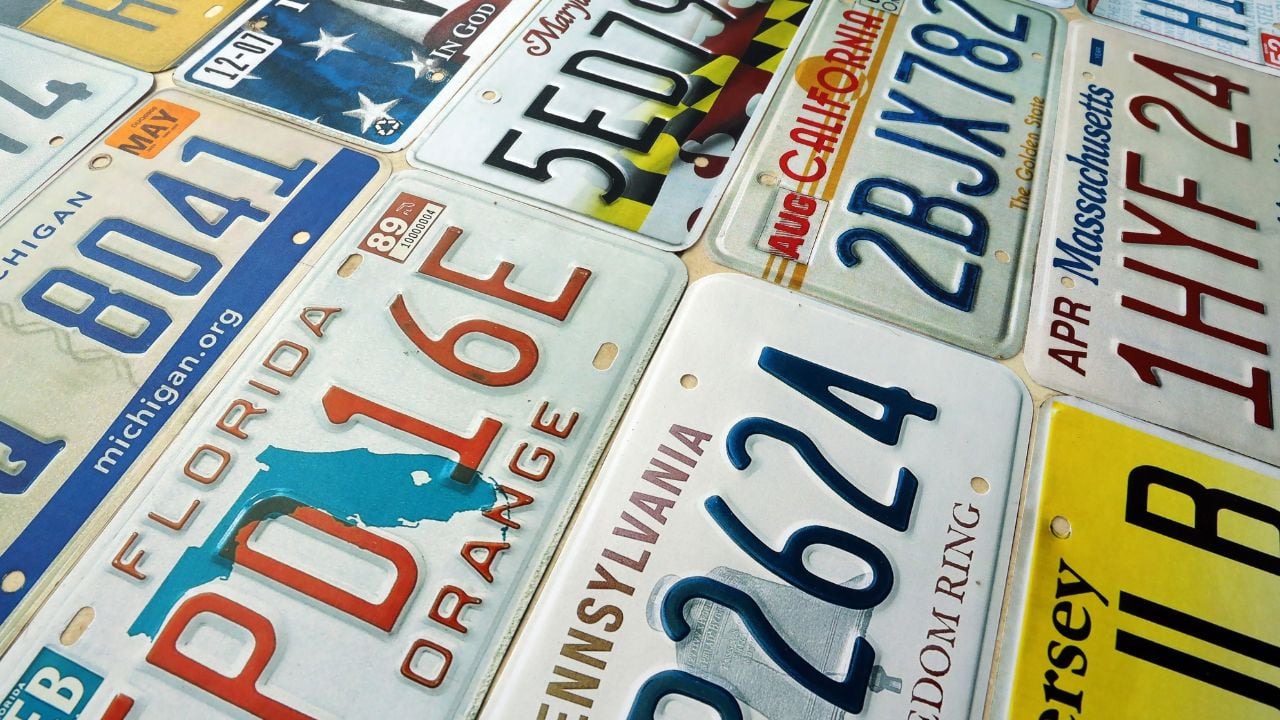
6 Costs of Registering an Out-of-State Car in Indiana

Moving a car into Indiana from another state costs at least $51.35 in flat state fees.
That’s before Indiana adds a dollar of vehicle excise tax.
These are the costs of registering an out-of-state car in Indiana.
Note: This is general information, not legal or tax advice. Registration fees and tax amounts are subject to change, so confirm the current requirements with the Indiana Bureau of Motor Vehicles.
1. Title Fee
The Indiana Bureau of Motor Vehicles (BMV) charges a flat $15 fee to issue your new Indiana title during registration.
That’s true whether you bought the car out of state or you’re simply moving one in.
That fee doesn’t change with your vehicle’s value or age.
Same $15, every time.
You pay it once, at a BMV branch, when you apply for your Indiana certificate of title.
2. Registration Fee
Indiana’s BMV also charges a separate $21.35 registration fee for a standard passenger vehicle, on top of the title fee.
This fee doesn’t prorate, so it’s the same $21.35 whether you register in January or December.
Combined with the title fee, that’s $36.35 before Indiana touches your car’s value at all.
That’s two flat fees, no surprises.
3. Vehicle Excise Tax
Indiana’s BMV also collects an annual vehicle excise tax on every registered car, sized by the vehicle’s value and age.
The scale runs from $12 on an older or lower-value car up to $532 on a brand-new car in the top value class.
A car worth $10,000 to $12,499 in its third year owes $98 in excise tax that year.
Older cars settle low.
Once a car reaches age 9 or later, most of the 17 value classes drop to a flat $12.
Any car from model year 1980 or earlier pays that same flat $12, no matter its class.
Psst! How much do you know about Indiana’s BMV beyond the fee chart? Take our quiz and see if you can ace it.
Quiz
Indiana BMV IQ
Answer these questions on Indiana’s BMV, plates, and fees. We bet you can’t get them all right. Prove us wrong?
What official slogan did the Indiana General Assembly adopt in 1937, later printed on the state’s license plates?
4. Local Vehicle Excise Surtax
Some Indiana counties and cities add a vehicle tax on top of the state's, but only where local officials have adopted one by ordinance.
On a passenger car, that's technically a county or municipal vehicle excise surtax, a separate charge from the heavier wheel tax that mostly hits trucks, buses, and trailers.
Where it applies, Indiana Code sets a $7.50 floor on the surtax in every county that charges one.
The cap depends on the county, not one number statewide.
Many counties top out at $50 a vehicle.
The ceiling drops to $25 in a county without an approved transportation asset management plan.
It rises to $150 in Marion County, the only county that pairs one of those plans with a consolidated city.
Not every county charges it.
Check your county or city's rate before you budget for registration day.
5. Transportation Infrastructure Improvement Fee
Indiana's BMV tacks on a flat $15 Transportation Infrastructure Improvement Fee (TIIF) at every registration, first-time and renewal alike.
Lawmakers created it as part of the state's 2017 road-funding package.
Fifteen dollars, no exceptions.
Every driver pays it, so an out-of-state car isn't singled out.
6. Late-Transfer Penalty
Indiana's BMV gives new residents 60 days to title and register a car after the move, and missing that window costs money.
A title applied for after the deadline picks up an administrative penalty of $30, on top of the standard $15 title fee.
Registration carries a separate late fee, too.
The state treats those as two separate penalties, not one.
If you miss both, the extra cost lands before you've paid a cent of excise tax.
Two Penalties, Not One
Indiana's BMV assesses the late-title penalty and the late-registration penalty separately, not as one combined charge.
A late title adds $30 on top of the $15 title fee.
A late registration tacks $15 onto the $21.35 you already owe.
If you miss both deadlines at once, the BMV can add $45 to your base costs before a dollar of excise tax.
What the Costs Add up To
Add the flat pieces together, the $15 title fee, the $21.35 registration fee, and the $15 TIIF, and an out-of-state mover owes $51.35 in state fees before excise tax and any local surtax.
Six costs, one total.
Vehicle excise tax and a possible county or city surtax are what turn that $51.35 into a full total, and they depend on your car and your address.
States handle new-resident fees differently, and California's list of them stretches to nine separate line items.
Psst! Here's every cost from this article lined up in one table. Tap a column to sort it your way.
The Start of Indiana's 60-Day Clock
Indiana's 60-day window starts the day you become an Indiana resident, not the day you drive your car across the state line.
The BMV doesn't publish one single legal test for the exact moment residency begins.
In practice, that's usually the day you start living in Indiana with a permanent address.
Many new residents update a driver's license or enroll kids in school around the same time.
A driver who misjudges that starting point can still owe Indiana's $30 late-title penalty and $15 late-registration fee.
Sixty days, no grace period.
The 60 days start whether you notice or not.
If you're unsure when your 60 days started, the safest move is to title and register as soon as you've settled into your new address.
VIN Inspection Requirement
Indiana's BMV requires a vehicle inspection of the vehicle identification number (VIN) on every out-of-state car before it can get an Indiana title.
The inspection is free when a BMV branch or a certified service provider does it.
A law enforcement officer can also do it, and they're allowed to charge up to $5.
Bring the car, not paperwork.
If the car can't make it to a branch, a completed Physical Inspection of a Vehicle or Watercraft form from law enforcement stands in for it.
Two Indiana counties, Lake and Porter, also require an emissions test before registration.
Getting Credit for Tax Already Paid
Indiana's BMV lets you apply for a partial credit or refund of the vehicle excise tax if your car was already registered in another state during the same year.
That credit applies against the same vehicle excise tax you already paid, and on a pricier car, it can claw back a meaningful amount.
You'll need Form 55296, plus a copy of your out-of-state registration or your new Indiana registration.
It's not automatic.
You have to file for it yourself, and the refund has to total at least $4 before the BMV cuts a check.
FAQ
Here's what movers ask most about registering a car in Indiana.
How much does it cost to register an out-of-state car in Indiana?
The flat pieces alone add up to $51.35, and vehicle excise tax or a local surtax can push the total well past that.
How long do you have to register a car after moving to Indiana?
You have 60 days from becoming an Indiana resident to title and register your car.
That's it.
If you miss it, the BMV adds a late penalty on top of the standard fees.
Does Indiana charge sales tax on a car you move in from another state?
No, Indiana doesn't charge sales tax when a new resident transfers their vehicle's title from a previous state.
Buying a car out of state and then moving it works differently.
Does a lien on your out-of-state car complicate an Indiana title transfer?
Yes, if your lienholder still holds your out-of-state title, you'll file a Request for Title, State Form 1014, at a BMV branch.
The branch then mails that request to your lienholder before the BMV can issue your title.
Do you need proof of insurance to register a car in Indiana?
Indiana's BMV doesn't require proof of insurance as a routine step at the registration counter.
It only asks for proof in a few situations, like a crash or certain moving violations.
21 Hilarious Indiana Laws You'd Never Believe Existed

Ask someone from out of state to guess Indiana's weirdest law, and they'll probably throw out something silly.
No amount of guessing gets them anywhere close to what's on the books.
21 Hilarious Indiana Laws You'd Never Believe Existed
15 High-Paying Careers in Indiana

One profession sits well ahead of the rest of the nation's pay scale, and it's probably not the job many people guess first.
See how the country's highest-paying careers compare to what the same jobs pay an Indiana resident.
