
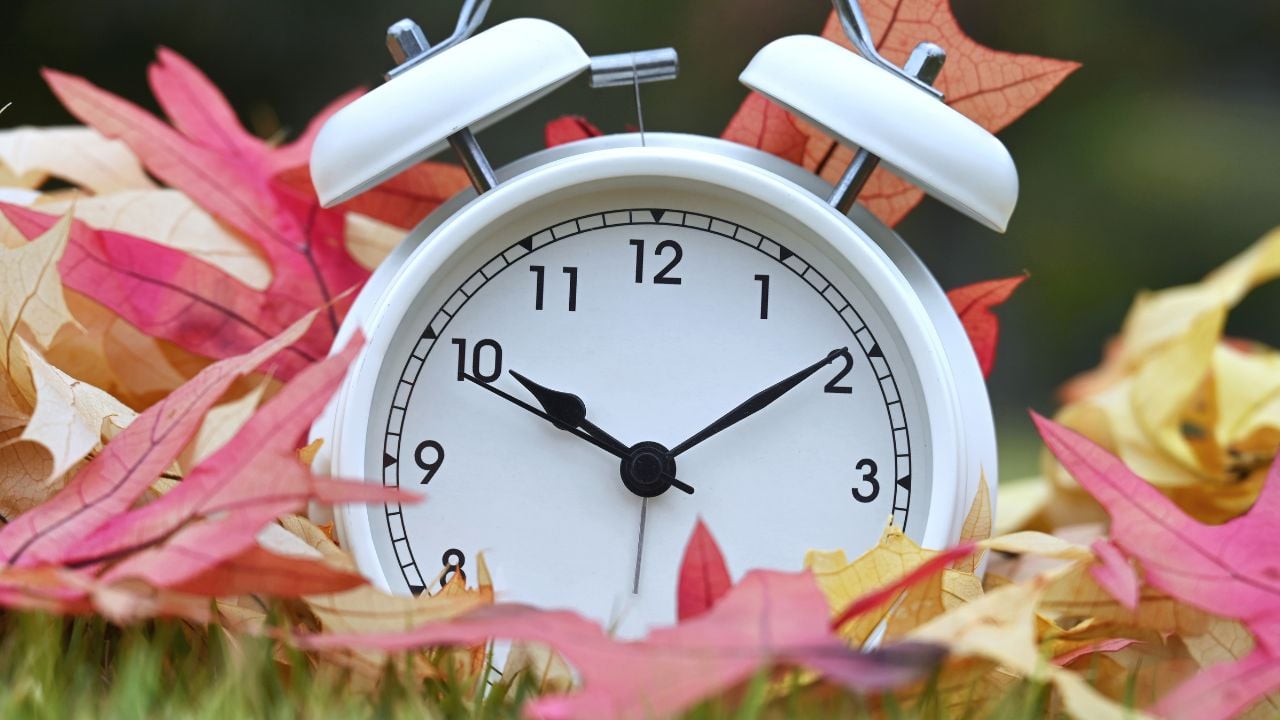
Only 23% of North Carolinians Want to Keep Changing the Clocks, a Poll Found

The clocks fell back last Sunday, and if you’re still adjusting, you’re not alone.
A 2026 High Point University poll asked North Carolinians how they’d rather handle it, and a clock that never changes won.
Here’s what North Carolinians said about changing the clocks, and why.
Who Asked and How
High Point University’s Survey Research Center ran the poll.
It asked adults who live in North Carolina to answer an online survey between Feb. 6 and Feb. 20, 2026.
In all, 1,115 adults took part.
The university then adjusted the results so the group of people who answered better matches the state’s population.
It published the results on March 5, 2026.
These are the poll’s answers, starting with the choice that drew the biggest share.
Daylight Saving Time All Year
Daylight saving time all year led the poll, with 46% of North Carolinians picking it.
It beat keeping the current system by two to one.
Making that choice happen would need Congress’s approval, according to a University of North Carolina School of Government summary of a North Carolina bill that proposes it.
On July 14, 2026, the U.S. House passed the Sunshine Protection Act, which would make daylight saving time permanent.
As of Oct. 6, 2026, Senate Majority Leader John Thune told Politico there was “no clear path forward” for it.
Keeping the Current System
Nearly a quarter of North Carolinians, 23%, picked keeping the current system.
It finished second, behind daylight saving time all year.
That system moves clocks forward on the second Sunday in March and back on the first Sunday in November.
In 2026, those dates were March 8 and Nov. 1, both at 2 a.m. local time.
Those Sundays are the routine the 23% wanted to keep.
The Poll’s Question Wording
The poll asked, “Which of these do you prefer,” and listed three choices.
Those choices were year-round daylight saving time, year-round standard time and keeping the current system.
Another 11% of people said they were unsure.
Standard Time All Year
Standard time all year drew 21% of North Carolinians, or about one in five.
Standard time is what your clocks show from November to March.
Federal law lets a state that sits in one time zone exempt itself from daylight saving time by passing a law.
That route skips Congress.
Psst! How much do you know about the history of changing the clocks? Take our quiz and see if you can ace it.
Quiz
Clock Change Quiz
Answer these questions on the history and rules of changing the clocks. We bet you can’t get them all right. Prove us wrong?
Year-round daylight saving time began in January 1974 as a trial. How long was the trial meant to last?
Raleigh Daylight in Winter and Summer
The poll’s question described year-round daylight saving time as later sunrise with more daylight in the evening.
On standard time on Dec. 21, 2026, the U.S. Naval Observatory lists Raleigh’s sunrise at 7:21 a.m. and its sunset at 5:05 p.m.
Under daylight saving time all year, the same day would have sunrise at 8:21 a.m. and sunset at 6:05 p.m.
The trade is an hour more daylight at the end of the day for an hour less at the start.
Summer flips it.
On June 21, 2026, with clocks on daylight saving time, Raleigh’s sunrise was at 5:59 a.m. and its sunset was at 8:34 p.m.
Under standard time all year, that day would have had sunrise at 4:59 a.m. and sunset at 7:34 p.m.
Your June sunsets would come an hour sooner.
Both Year-Round Answers Together
If you add the two year-round answers together, 67% of North Carolinians picked a clock that never changes, or about two in three.
Year-round daylight saving time topped out at 46%, so no single clock reached a majority.
A fixed clock won.
Respondents split on which clock to hold all year, yet both answers end the twice-a-year change.
Together, those two answers outnumber the 23% who picked keeping the current system by nearly three to one.
Two High Point University Experts on Time Changes
The university’s write-up of the poll also quoted two of its faculty members about the time change.
Dr. Racquel Ingram, founding dean of the Teresa B. Caine School of Nursing, said “the time change increases the risk of sleep disturbances.”
These effects are typically “most pronounced during the first few weeks after the shift.”
That may sound familiar if you’ve ever felt off for a few days after a clock change.
Dr. Christopher de Bodisco, an associate professor of economics in the Phillips School of Business, said the benefits of time changes aren't as easy to measure.
North Carolina’s Senate Bill 81
North Carolina’s Senate Bill 81 would put the state on daylight saving time all year.
Senators Hise and Sawyer filed it on Feb. 11, 2025.
It passed its first reading the next day and went to the Senate Rules and Operations Committee.
As of Oct. 12, 2026, the bill’s page on the legislature’s website lists no action after that.
Three Polls Compared
The university listed two earlier polls for comparison, one from March 2023 and one from March 2025.
Keeping the current system crept up one point each time, from 21% in 2023 to 22% in 2025 and 23% in 2026.
Daylight saving time all year stayed close to half in every poll, at 46%, 48% and 46%.
Standard time all year stayed near one in five, at 20%, 23% and 21%.
None of those three answers moved more than 3 points across the polls.
Only the unsure share swung more, from 13% in 2023 to 7% in 2025 and back up to 11% in 2026.
14 Things Only a North Carolina Childhood Teaches You

A North Carolina kid learns a few things the rest of the country never does.
Some of them stick for life.
14 Things Only a North Carolina Childhood Teaches You
4 Regional BBQ Styles That Divide North Carolina Neighbors

North Carolina lawmakers once sidestepped a barbecue fight with a bill.
Ask two neighbors where to find the best plate, and you’ll hear two different answers.
