

Paper Bags Cost 5 Cents in Some New York Counties and Nothing in Others. 6 Bag Ban Rules New Yorkers Still Get Wrong

Picking up turkey and produce for Thanksgiving this week?
You might be surprised which of those bags can still be plastic.
Here’s why paper bags cost 5 cents in some New York counties and nothing in others, and the other bag ban rules New Yorkers still get wrong.
Note: This is general information, not legal advice. Fee rules and the list of participating localities are subject to change.
1. Statewide Plastic Ban
New York has banned plastic carryout bags at every store that has to collect sales tax since March 1, 2020, according to the state Department of Environmental Conservation (DEC).
A shop in Buffalo can’t hand you a plastic carryout bag, and neither can a shop in the Bronx.
The law doesn’t exempt plastic bags used for grocery delivery.
Stores aren’t required by law to have paper bags available, so you may need to bring a bag.
Pack one just in case.
2. Local-Only Fee
The 5-cent paper bag fee exists only where a local government adopted it.
State law lets cities and counties impose the fee through their local legislative bodies.
Publication 718-B from the state Department of Taxation and Finance (the Tax Department) lists seven places that charge it.
They’re Albany County, New Rochelle, New York City, Suffolk County, Tompkins County, Troy and White Plains.
That’s the whole list.
Expect that list to change as localities enact or repeal the fee.
If your county or city isn’t on that list, you shouldn’t see the local fee on your receipt.
3. Exempt Bags
The bag ban skips a list of exempt bags, so some plastic bags are still legal at the register.
The list covers bags that hold uncooked meat, fish or poultry, bulk items such as fruits, vegetables, grains or candy, and deli food sliced or prepared to order.
Pharmacy bags for prescription drugs and plastic takeout bags from restaurants are exempt too.
So are trash bags, food storage bags and garment bags.
That means the plastic bag around your pork chops is legal, and so is the bag holding your prescription.
Some plastic survives.
Psst! How much do you know about New York’s bag law? Take our quiz and see how many you can get right.
Quiz
New York Bag Law IQ
Answer eight questions on New York’s bag law. We bet you can’t get them all right. Prove us wrong?
A store hands one customer five plastic carryout bags in a single sale. At most, how many violations can that sale count as?
4. SNAP and WIC Exemption
You pay no paper bag fee when you use Supplemental Nutrition Assistance Program (SNAP) or Special Supplemental Nutrition Program for Women, Infants, and Children (WIC) benefits.
If you use those benefits for only part of your total, the fee still doesn't apply.
The exemption applies in every locality that charges the fee.
Location doesn't matter.
In New York City, the 311 service lists SNAP and WIC customers as exempt.
Who Else Skips the Fee
The paper bag fee doesn't apply when the buyer is the State of New York, the United States or the United Nations, or a state or federal agency.
Religious and charitable organizations that are exempt from sales tax still owe the 5-cent paper bag fee.
5. Fee Without a Purchase
Where the paper bag fee applies, each bag a store hands you costs 5 cents, even if you buy nothing else, so two bags mean 10 cents.
It applies even when everything you buy is exempt from sales tax.
No loophole there.
6. Bags From Home
The bag ban covers the bags a store hands out, not the bags you carry in.
Stores can't prevent you from using a bag of any kind that you've brought.
The 5-cent fee covers only paper bags a store provides.
Bring a bag from home.
Store-Priced Paper Bags
In places without the fee, no state or local charge applies, but a store can still set a price on the paper bag you ask for.
Retailers can sell paper carryout bags at a price of their choosing.
Free isn't guaranteed.
That sale is taxable, so the store has to list the price and the tax on separate lines of your receipt.
Where the fee applies, any amount a store charges above 5 cents is a taxable sale of the bag.
In New York City, a SNAP or WIC customer still pays the remaining taxable charge when a bag costs more than 5 cents.
Where the 5 Cents You Pay Goes
Under state law, 40% of the paper bag fee money collected in your locality goes back to it.
The locality is supposed to use that money to buy and distribute reusable bags, with priority going to low- and fixed-income communities.
It doesn't all stay local.
Any remaining money goes to the state's Environmental Protection Fund.
Stores report the 5 cents you pay for a paper bag on their sales tax returns.
What Stores Risk
A store that hands out plastic carryout bags gets a warning notice for its first violation.
Then the fines start.
A store then owes $250 for its next violation and $500 for any later violation in the same calendar year.
If you see a store handing out plastic carryout bags, you can report it through DEC's online form.
The same form takes complaints about stores that won't let you use a bag you brought.
What Counts as Reusable
Not every bag a store sells counts as reusable.
To be compliant, a reusable bag has to be non-plastic, DEC says.
It has to be made of cloth or other machine-washable fabric, or of another durable material with handles designed for repeated use.
Your tote needs at least one strap or handle that doesn't stretch.
Then comes the durability test.
A reusable bag needs a minimum lifespan of 125 uses.
One use equals the ability to carry at least 22 pounds over a distance of at least 175 feet.
If you're shopping for a tote, a cotton-poly blend won't qualify, since bags that blend plastic with non-plastic materials don't count.
Film Plastic Take-Back
Large stores still have to collect plastic bags and other film plastics for recycling.
That covers stores with more than 10,000 square feet of retail space.
The same goes for chains with five or more New York stores that are each over 5,000 square feet.
Film plastics include garment bags and pallet wrap.
DEC says you don't need to be a customer of the store to return your film plastics.
No purchase required.
They have to be clean, dry and free of residue.
6 Paper Products That Frustratingly Shrank on New Yorkers
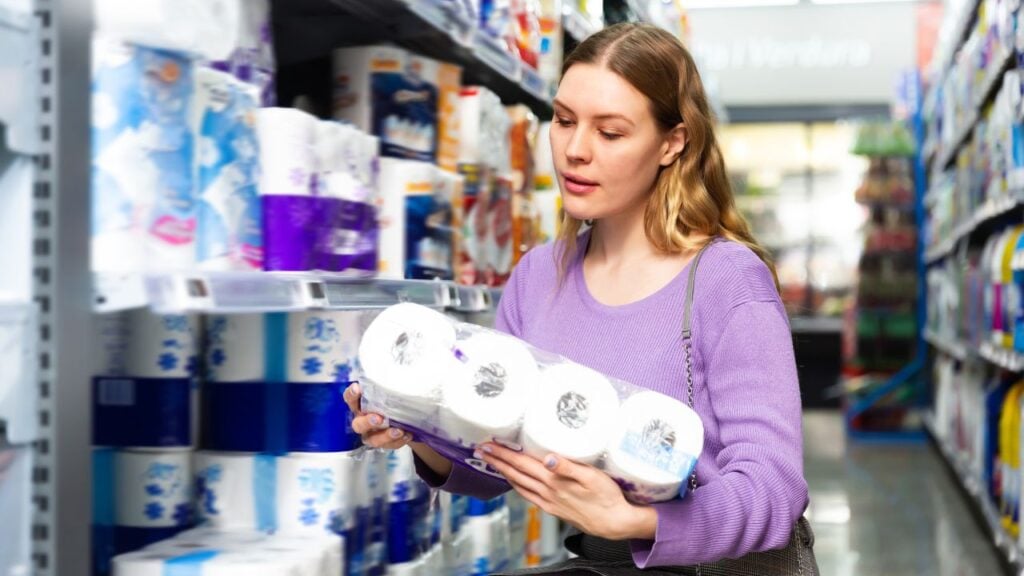
The package looks the same, but some brands now put fewer sheets on the roll.
Here are the paper products that got smaller, and how to spot them before you buy.
6 Paper Products That Frustratingly Shrank on New Yorkers
6 Long Island Quirks That Confuse Everyone Else in New York

Ask a Long Islander for directions, and you might get an answer that wasn't what you expected.
Here's what to know before you visit, so you're not the one asking for a translation.
