
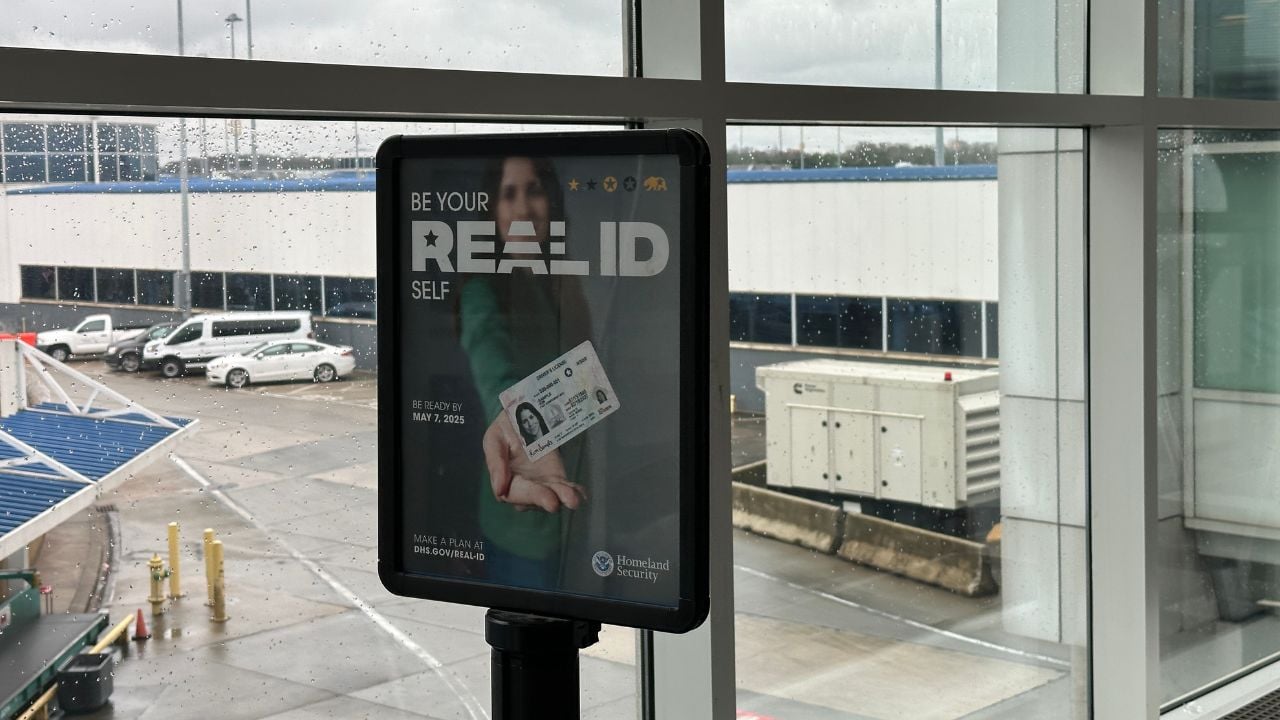
REAL ID North Carolina Requirements: 5 Documents You Need in 2026

North Carolina’s REAL ID sign-off comes down to five documents, and missing even one sends you home empty-handed: Two proving where you live, one confirming your Social Security number, one showing car insurance if you want the driver’s license version, and one confirming who you are.
Show up to a Raleigh, Charlotte, or Asheville office of the North Carolina Division of Motor Vehicles (NCDMV) without every piece, and the clerk sends you home with nothing new.
That’s the easy mistake.
Here’s the part that catches North Carolinians off guard: Every document has to be an original, and federal agents have already started enforcing REAL ID at the airport.
Note: This is general information about North Carolina’s REAL ID requirements, not legal advice. Fees, deadlines, and accepted documents are subject to change, so confirm the current list with NCDMV before your appointment.
North Carolina’s REAL ID Requirements
Every one of these five documents has to be an original, and NCDMV checks each one before it approves your card.
No shortcuts.
1. Proof of Identity and Date of Birth
Every REAL ID application in North Carolina starts with one document proving who you are and when you were born.
A valid, unexpired U.S. passport covers this on its own.
So does a certified birth certificate from the county Register of Deeds or North Carolina’s Vital Records Office, or a REAL ID already issued by another compliant state.
Photocopies don’t count.
NCDMV’s official checklist only accepts a birth certificate carrying the seal of the agency that issued it.
2. Proof of Your Social Security Number
A second document has to confirm the Social Security number on your REAL ID application.
It has to match exactly.
A Social Security card is the simplest proof, as long as it’s the original.
A W-2, a 1099, or a pay stub can substitute, but only when the full nine digits show, not just the last four.
NCDMV won’t accept a stub showing only the last four digits, no matter how official the rest of the paperwork looks.
NCDMV verifies that number electronically with the Social Security Administration before it issues your card.
3. Two Documents Proving Your North Carolina Address
North Carolina’s REAL ID rule requires two separate documents proving where you live, not just one.
They have to come from different sources, and both need to show the same physical address.
A utility bill works.
So does a lease, a mortgage statement, a property tax bill, or a North Carolina voter precinct card.
A P.O. box doesn’t.
Neither does a mail-forwarding address, and NCDMV keeps a longer residency list for anyone still missing a second document.
4. Proof of Liability Insurance
A North Carolina REAL ID driver’s license adds a fourth document that a REAL ID card alone doesn’t need: Proof you carry car insurance.
That insurance has to come from a company licensed to do business in North Carolina.
A photo doesn’t cut it.
NCDMV’s own instructions are clear on this: Applicants need a printed page in hand, not anything pulled up on a screen.
Skip a vehicle entirely, and this document drops off the list, along with anyone applying for just a learner permit.
Name Changes and Legal Presence
Two more documents only apply to some applicants, not everyone.
Non-U.S. citizens need one document proving legal presence, a valid visa with an I-94 record, a green card, or a naturalization certificate.
Anyone whose name has changed since their birth certificate needs a certified marriage license, a divorce decree, or a court document tracing every change.
One document per name change.
A maiden name and a later remarriage mean two separate documents, one for each change along the way.
Psst! How much do you know about the history behind REAL ID? Take our quiz and see if you can ace it.
Quiz
REAL ID History IQ
Answer nine questions on the law behind REAL ID and North Carolina’s own NCDMV. We bet you can’t get them all right. Prove us wrong?
The push for a federal ID law like REAL ID grew out of a government investigation into what event?
Do You Need a REAL ID to Fly in North Carolina?
REAL ID enforcement is no longer a future deadline in North Carolina or anywhere else.
Federal agents began enforcing REAL ID-compliant identification at every domestic security checkpoint since May 2025, though a flexible grace period for travelers still catching up has continued in some cases.
A passport, a military ID, a permanent resident card, or a Global Entry card all still work instead.
The Canada-U.S. trusted-traveler program (NEXUS) counts too.
Show up at Charlotte Douglas or Raleigh-Durham with only a standard license, and the Transportation Security Administration (TSA)'s ConfirmID system now offers a workaround.
Since February 2026, that system lets a traveler pay $45 and verify their identity another way, though it can add up to thirty minutes to the security line.
Bring your passport instead.
Booking Your NCDMV Appointment
North Carolina's driver license offices run on the state's Skip the Line portal, not a phone call.
New appointment slots open only seven days out, released each weekday the office is open.
Confirm the text or email link within fifteen minutes, or the system cancels the slot automatically.
Arrive early too.
Show up more than fifteen minutes late, and NCDMV cancels that appointment as well, so a walk-in becomes the backup plan.
What a North Carolina REAL ID Costs
A North Carolina REAL ID costs the same as a standard driver's license or ID card renewal, generally in the mid-$40 range.
There's no separate REAL ID surcharge tacked on, so a standard license and a REAL ID cost North Carolina drivers exactly the same amount at the counter.
Drivers 18 to 65 get an eight-year card, while drivers 66 and older renew every five years, per NCDMV.
Five years, not eight.
Apply more than six months before your current license expires, and it processes as a replacement rather than a renewal, which changes the fee.
FAQ
Quick answers to what North Carolinians ask most about REAL ID requirements.
What documents do you need for a REAL ID in North Carolina?
One document proving your identity and date of birth, one confirming your Social Security number, two proving your North Carolina address, and proof of insurance if you want the driver's license version rather than an ID card.
Do you need a REAL ID to fly out of North Carolina?
You need a REAL ID or an accepted alternative like a passport to pass through airport security. Since February 2026, travelers without either can pay a $45 TSA fee to verify their identity another way.
How much does a REAL ID cost in North Carolina?
A REAL ID costs the same as a standard North Carolina driver's license or ID card, generally in the mid-$40 range, with no separate REAL ID surcharge.
Can you apply for a North Carolina REAL ID online?
No. Federal law requires a one-time, in-person visit to an NCDMV office so a clerk can verify your documents, though you can book that visit online.
How do you know if your North Carolina license is already a REAL ID?
Check the upper right corner of the card for a star. A standard North Carolina license without that star still works for driving, just not at TSA checkpoints or federal buildings.
That star isn't the card's only marking.
Federal rules also require a non-compliant license to flag itself somewhere on its face, so a TSA officer or a border agent can tell which card they're holding without asking twice.
What North Carolina Drivers Save Now That Emissions Inspections Are Ending in 2026
Nineteen North Carolina counties dropped a yearly test that used to be the price of keeping a car street-legal.
The savings aren't sitting in anyone's pocket yet because one federal agency still has to sign off first.
What North Carolina Drivers Save Now That Emissions Inspections Are Ending in 2026
9 North Carolina HOA Rules That Cost Homeowners Who Ignore Them

A North Carolina homeowners association (HOA) can take a house without a single day in court.
No judge and no lawsuit with your name on it, just a posted notice and a trustee running the sale.
9 North Carolina HOA Rules That Cost Homeowners Who Ignore Them
