
5 Things That Raise a Tennessee Property Assessment Before the Next Reappraisal

Your county’s next reappraisal may be a few years off, so your assessment should hold steady until then, right?
Not always.
Tennessee has situations that can change it sooner.
Here’s what can raise it before your county’s next reappraisal comes around.
Note: This is general information, not legal or tax advice. Assessment rules and exemption amounts are subject to change, so confirm the current details with your county Assessor of Property.
Why Would a Tennessee Property Assessment Rise Between Reappraisals?
Tennessee assesses homes at 25% of appraised value, according to the Comptroller’s office.
In a reappraisal year, your assessor revalues parcels to reflect market value as of January 1 of that year.
In Davidson County, the assessor FAQ says a value typically doesn’t change between cycles, and it names an alteration or an appeal as the exceptions.
Typically doesn’t mean always.
Reappraisal cycles have historically spanned four to six years, and recent legislative changes let counties update values more often.
Davidson County lists 2025 as its last countywide reappraisal and 2028 as its next, a shorter gap than the old cycles.
Tennessee’s Attorney General said in a March 2025 opinion that state law doesn’t authorize reappraising a whole property between scheduled years over a remodel.
Five things can raise your assessment before your county’s next reappraisal.
1. A Completed Addition or New Building
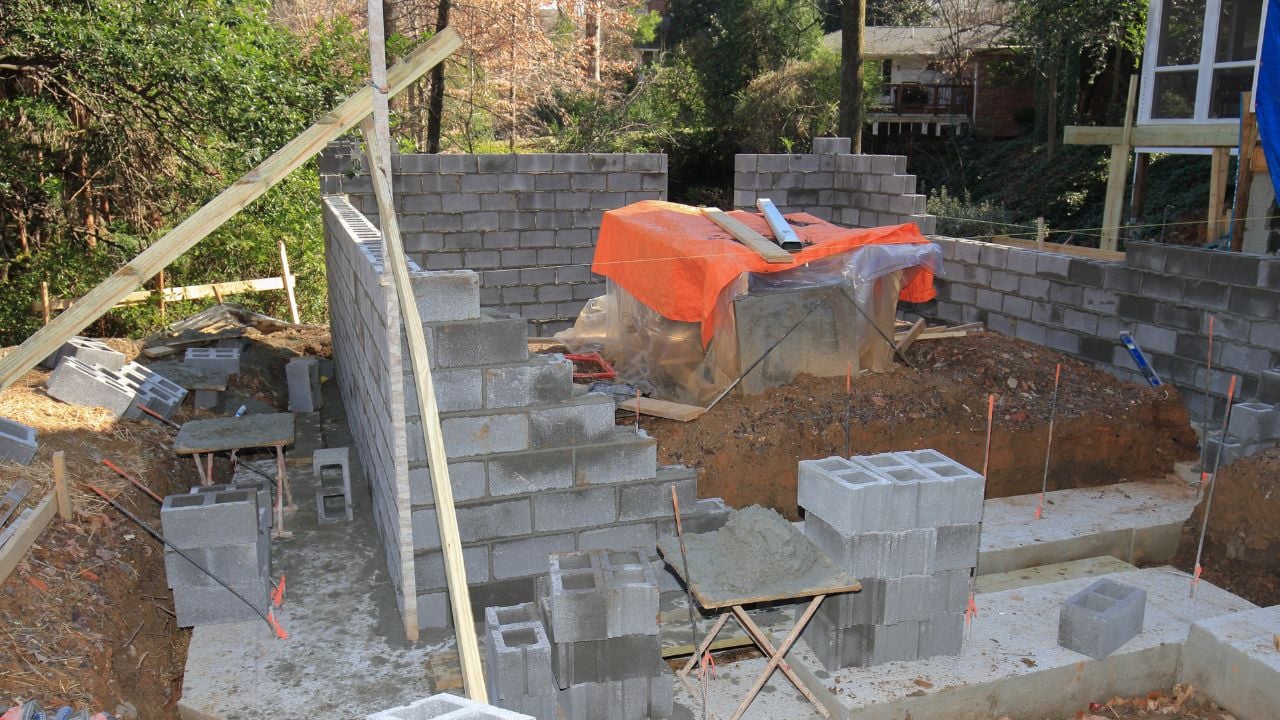
Your property assessment can rise when you finish an addition or a new building, even in a county that isn’t reappraising.
The trigger is work completed and ready for use or occupancy after January 1 and before September 1.
If the property is sold or leased in that window, the same statute applies.
Your assessor then makes or corrects the assessment for that property.
The assessor values the new work the way similar improvements were valued in your county’s last revaluation.
The assessor prorates the increase for the part of the year after the completion date.
Completion day matters.
Davidson County’s assessor says construction substantially completed in that window gets a prorated assessment notice in September.
What Counts as an Improvement to Your Assessment
In a March 2025 opinion, Tennessee’s Attorney General said the nature of the work, not its cost, decides whether your assessment can change.
Repairing a roof or replacing a heating and cooling system with an equivalent system would likely count as a repair, regardless of cost.
Converting a carport to a garage would likely count as an improvement.
So would building an in-law apartment.
Both projects create new enclosed spaces with additional uses.
2. A Second Rental Unit
A second rental unit can raise your property assessment without changing your property’s appraised value.
Tennessee classifies property as residential when it’s used for dwelling purposes and has no more than one rental unit.
Generally, a property with two or more rental units is classified as industrial and commercial instead.
Commercial property is assessed at 40% of appraised value, compared with 25% for homes, the Comptroller’s office says.
Say your property is appraised at $400,000: At 25%, its assessed value is $100,000, and at 40%, it’s $160,000.
That’s a 60% jump.
Renting out a single-family home for stays longer than 30 days generally still counts as residential, according to Attorney General Opinion 25-016 from August 2025.
An owner-occupied duplex generally counts as residential when you lease the other half.
Your assessor should weigh all the facts and circumstances of the rental property.
Psst! How much do you know about Tennessee property taxes? Take our quiz and see if you can ace it.
Quiz
Tennessee Property Tax IQ
Answer these questions on Tennessee property assessments and tax programs. We bet you can’t get them all right. Prove us wrong?
Davidson County’s 2025 reappraisal raised its median home value by about how much since the previous reappraisal?
3. Land Leaving Greenbelt
Land in Tennessee's greenbelt program is assessed on its current use instead of its market value.
If your land leaves the program, your assessment can rise.
Greenbelt covers agricultural land, forest land and open space land.
Land leaves the program when it ceases to qualify as agricultural land, forest land or open space land.
A recorded subdivision plat can also end greenbelt status once any part of the land is being developed.
In a phased development, Tennessee Code 67-5-1008 disqualifies only the phases being developed.
Leaving the program can also trigger a separate charge on your land, called rollback taxes.
On agricultural and forest land, rollback taxes cover the difference between the use-value and market-value assessments for the preceding three years.
For open space land, that's the preceding five years.
Those years add up.
4. A Corrected Assessor Error
When your assessor corrects a mistake in the records, your assessment can come out higher, even though your property didn't change.
Tennessee Code covers errors or omissions in the listing, description, classification or assessed value of property.
When your assessor discovers an error or omission, the trustee collects the tax on the corrected assessment.
Attorney General Opinion 25-003, issued in January 2025, says the trustee must collect additional taxes when an assessor timely corrects a square footage error that raises assessed value.
A correction has to be requested or started before March 1 of the second year following the tax year at issue.
Timing matters here.
If a correction increases your assessment, Tennessee Code 67-5-509 lets you appeal directly to the State Board of Equalization.
5. A Mid-Cycle Value Update
Your county can update values in the middle of its reappraisal cycle, and your assessment can rise with them.
The trigger is your county's overall level of appraisal, which the Comptroller's office measures with an appraisal ratio.
That ratio compares appraised values with recent sales or expert appraisals.
In the third year of a six-year reappraisal cycle, state law calls for updating the values of all parcels if that level is below 90% of fair market value.
If the level is 90% or higher, state law calls for updating only the property subclasses outside 10% of the overall level.
Say homes in your county sell for $300,000 while appraisals average $240,000: The ratio is 80%.
That's under 90%.
Sequatchie County's assessor calls its update a Current Value Update and places it in the third year of a six-year reappraisal cycle.
Owners whose values changed would get assessment change notices by mail in May.
Tennessee Code also requires a certified tax rate after a value update.
That rate is designed to produce the same amount of revenue as the year before.
The county board of equalization would take appeals only until June 29, 2026.
When a Building Counts as Complete
Under Tennessee Code 67-5-603, the completion date decides when an increase in your property assessment starts.
A building is ready for use or occupancy once its structural portion is substantially completed.
That's true even when a buyer or tenant is still choosing the interior finish after a sale or lease.
Completion also happens when you sell to a bona fide purchaser.
It happens, too, when someone occupies or uses the building, or when it becomes suitable for occupancy or use.
Whichever comes first counts.
The law also caps the wait: No new building counts as incomplete for assessment purposes for more than one calendar year after construction begins.
How Your Assessor Finds New Work
Tennessee Code 67-5-1601 lets assessors value new improvements they discover by on-site review, photo or other means between revaluations.
The Comptroller's office says your assessor is responsible for keeping records on every structure, whether it was built new, recently modified or destroyed.
Assessors get help, too.
If your county doesn't require building permits, Tennessee Code 67-5-603 has the state director of fire prevention send your assessor a monthly list to help locate improvements.
The list names property owners and locations where electrical inspections took place.
Psst! How much do you know about Tennessee property assessments? Flip each card and see how many you can get right.
How to Find Out Why Your Tennessee Assessment Rose
Start with your notice.
Then ask your assessor's office which trigger applied, such as a completed improvement, a second rental unit, lost greenbelt status, a corrected error or a county value update.
You can also look up your parcel in the Comptroller's property assessment data, which covers 86 of Tennessee's 95 counties.
You can search by property address, owner name or parcel ID.
Tennessee taxpayers have appeal rights.
They range from an informal review to an appearance before an administrative law judge.
FAQ
These answers cover assessments that change between reappraisals.
Can a Tennessee property assessment go up without a reappraisal?
Yes.
A completed improvement, a second rental unit, lost greenbelt status, a corrected assessor error or a mid-cycle county update can each change your assessment between reappraisals.
How often does Tennessee reappraise property?
Counties have historically reappraised every four, five or six years, and recent legislative changes let them update values more often, according to the Comptroller's office.
Does a repair raise my Tennessee property assessment?
Probably not.
A March 2025 Attorney General opinion says a roof repair or an equivalent heating and cooling replacement would likely count as a repair.
Converting a carport into a garage would likely count as an improvement.
Does a second rental unit change a Tennessee property's class?
Generally, yes.
Tennessee Code classifies property used for dwelling purposes with two or more rental units as industrial and commercial, not residential.
What happens when land leaves Tennessee's greenbelt program?
The assessor can bill rollback taxes for the preceding three years on agricultural and forest land, or five years on open space land.
Rollback taxes become delinquent on March 1 of the following year.
6 Greenbelt Rules That Catch Tennessee Landowners Off Guard

Think Tennessee greenbelt land belongs only to small family farms?
Some of the landowner rules might surprise you.
6 Greenbelt Rules That Catch Tennessee Landowners Off Guard
6 Tennessee Family Recipes at Risk of Disappearing With Gen Z

Some Tennessee recipes live only in somebody's memory.
Many may not make it to the next generation.
6 Tennessee Family Recipes at Risk of Disappearing With Gen Z
