
The Flint Hills Hold Most of the Tallgrass Prairie Left in North America. 6 Things Kansans Get Wrong About Them

If you’ve driven through the Flint Hills, you’ve seen grass rolling for miles with hardly a crop field in sight.
There’s a reason the plow never took over, and it isn’t the one many Kansans would guess.
These are the things many Kansans get wrong about the Flint Hills.
1. How Little Tallgrass Remains
Tallgrass prairie once covered 170 million acres of North America, and today the Flint Hills hold most of what’s left.
The National Park Service says less than 4% of it remains intact, mostly in the Kansas Flint Hills.
That’s under 7 million of the original 170 million acres.
Many Kansans assume tallgrass is still easy to find across the plains.
Not anymore.
The Nature Conservancy puts the Flint Hills’ share at about two-thirds of what remains, counting the part of the hills in Oklahoma.
So the next time you drive through the hills, you’re looking at prairie that has disappeared across most of North America.
2. Who Owns the Preserve
Tallgrass Prairie National Preserve sits in the Flint Hills, but a nonprofit owns nearly all of it.
The Nature Conservancy is the primary owner, with 10,842 acres.
The National Park Service owns the other 35 acres, which include the ranch headquarters area and the Lower Fox Creek schoolhouse.
That makes the preserve about 10,877 acres, and the Conservancy owns more than 99% of it.
A cooperative agreement lets the two organizations manage the preserve together.
Beyond the preserve, the Interior Department announced a conservation area in 2010 with a goal of protecting up to 1.1 million acres of the hills through voluntary easements.
Land under those easements stays in private hands, and landowners keep their property rights.
3. Why the Plow Skipped It
The Flint Hills take their name from flint, a hard rock found embedded in the limestone that forms the hills.
Some Kansans figure the prairie survived because farmers just didn’t get around to plowing it.
Credit the rock.
Erosion of the softer shale between the layers leaves thin, gravelly soil.
Flint, also called chert, doesn’t erode as easily as the limestone around it.
Thin, rocky soil like that helps explain why wide-scale plowing never took hold in the region.
Cattle graze it instead.
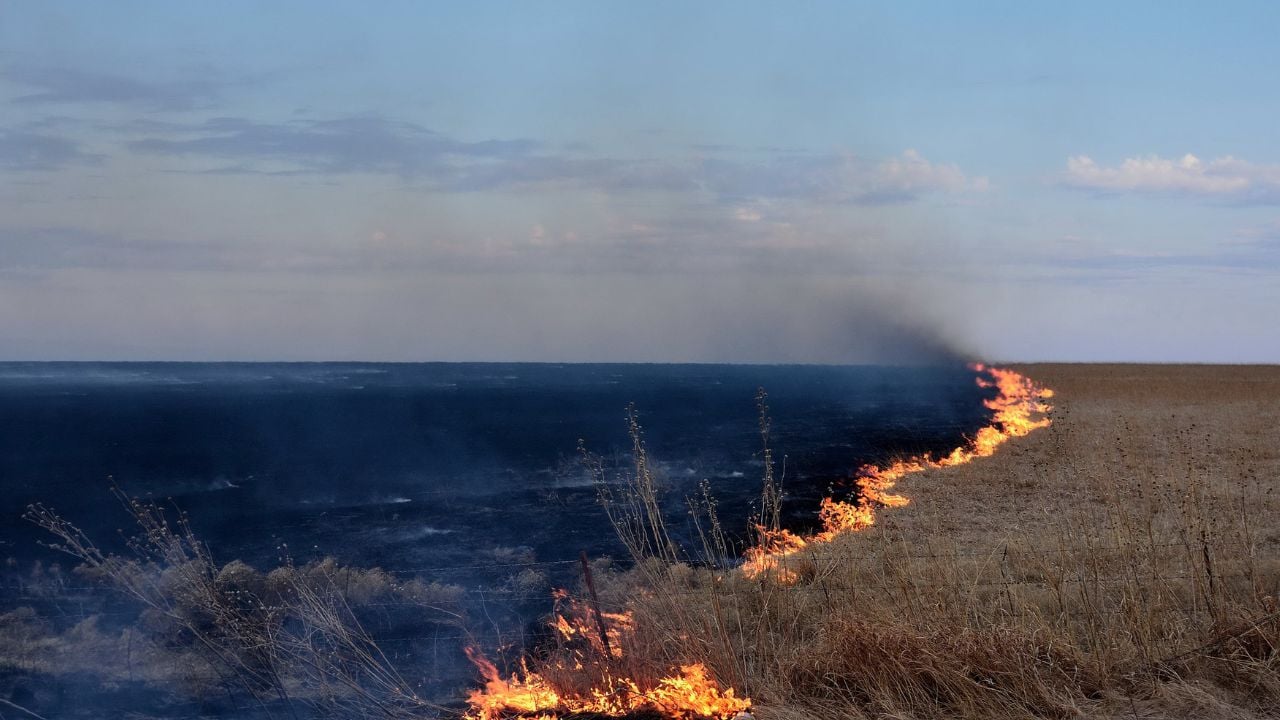
4. Spring Fires
Spring burning is a routine part of how the Flint Hills are managed.
The fires help preserve the tallgrass prairie, control invasive species and reduce woody plants such as eastern red cedar.
Burning also reduces wildfire risk and provides better forage for cattle.
Across the Flint Hills in Kansas and Oklahoma, approximately 2.1 million acres burn in an average year.
Flint Hills Burn Season
Burning in the Flint Hills peaks in March and April, when landowners burn large areas of the state’s rangelands.
The Kansas Department of Health and Environment switches on a smoke modeling tool before the widespread burning starts.
The tool uses fire data and weather conditions to estimate how smoke will affect air quality downwind.
For greater prairie-chicken habitat, the state wildlife agency calls for less frequent burning, ideally once in three years or twice in five.
5. More Than Grass
The Flint Hills look like grass from the highway, but the research preserve at Konza Prairie has around 600 plant species.
Kansas State University and The Nature Conservancy own the preserve, where researchers have compared watersheds under different fire and grazing treatments since 1977.
Wildflowers share the ground with the grasses, and most of them are forbs, a term for herbaceous plants other than grasses and grass-like plants.
6. Across the Oklahoma Line
The Flint Hills don’t stop at the state line, since they run south into northeastern Oklahoma.
Many Kansans think of the hills as belonging to one state.
Think again.
Across that line, The Nature Conservancy’s Tallgrass Prairie Preserve in Pawhuska, Oklahoma, covers 39,650 acres.
That’s more than three times the acreage of the national preserve in Kansas.
The Conservancy calls the Oklahoma site the largest protected piece of tallgrass prairie left on Earth.
More than 2,000 free-ranging bison roam it, too.
If you want to see it, you’ll need to head to Oklahoma.
Psst! How much do you know about Kansas prairie country? Take our quiz and see how many you can get right.
Quiz
Prairie Country Trivia
Answer nine questions on Kansas wildlife, geology, and geography. We bet you can’t get them all right. Prove us wrong?
On a greater prairie-chicken booming ground, the one or two most successful males typically perform about what share of the matings?
Visiting the Preserve
Tallgrass Prairie National Preserve in the Flint Hills is open year-round, 24 hours a day, except during prescribed fire.
Spring is when the Flint Hills burn, so if you visit then, you can run into a closure.
The preserve's trails are old gravel ranch roads and mowed paths, and the buildings have posted hours.
The grounds also have a historic ranch and one-room school with limestone buildings.
The Spring Hill Ranch house, an eleven-room French Second Empire style home, dates to 1881, and the ranch also has a three-story limestone barn.
7 Kansas Restaurants Kansans Will Drive Out of Their Way For
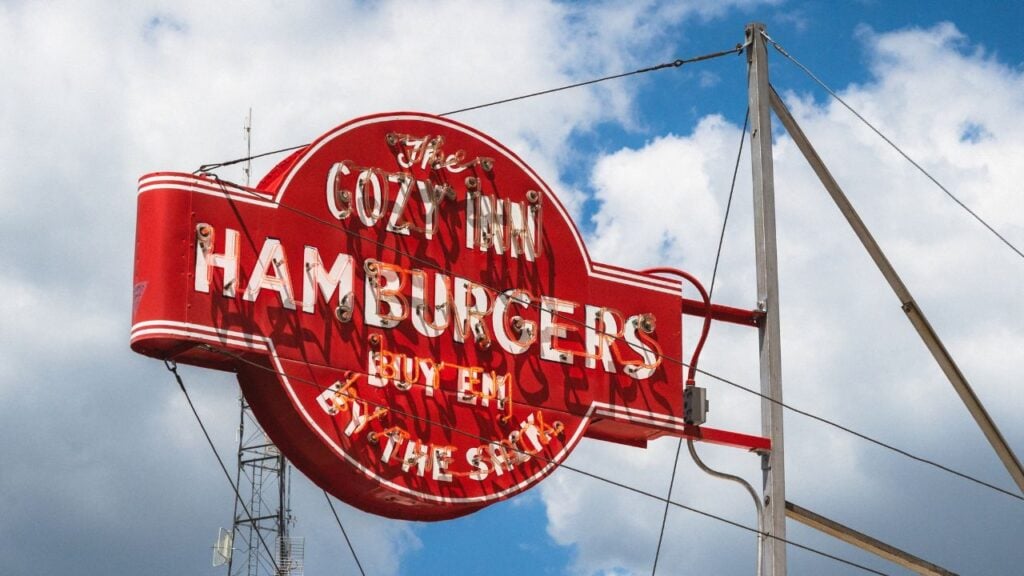
Some meals are worth a long drive.
Here are the Kansas restaurants worth going out of your way for.
7 Kansas Restaurants Kansans Will Drive Out of Their Way For
10 Kansas Phrases That Leave Out-of-Staters Completely Lost

Visitors to Manhattan, Kansas, often ask why the town goes by another name.
Locals have heard the question hundreds of times, and it's not the only phrase that needs explaining.
