
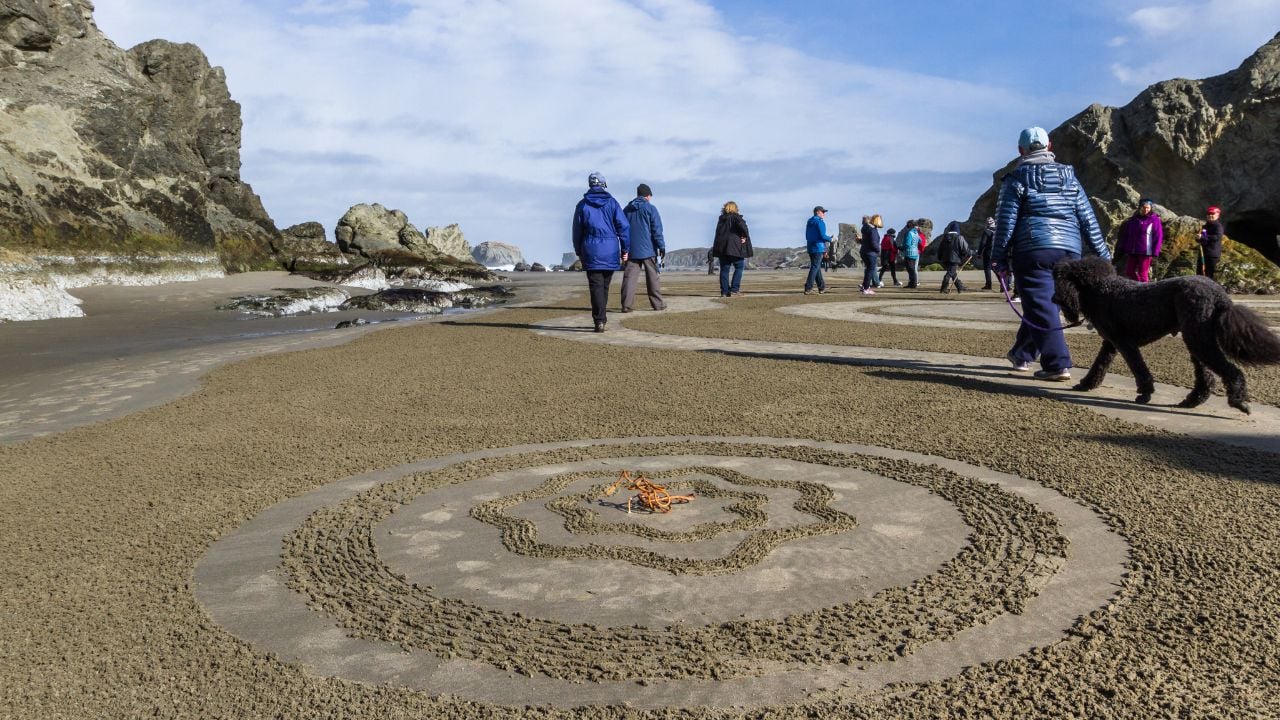
The Reason Oregon’s Beaches Are Open to Everyone, and Why Public Beach Access Is Harder in Other States

If you’re walking an Oregon beach over Thanksgiving weekend, you probably don’t stop to wonder who owns the sand under your feet.
That question once came down to a fight over a motel’s stretch of beach.
Here’s the reason Oregon’s beaches are open to everyone, and why public beach access is harder in other states.
Note: This is general information, not legal advice. Beach rules and property law are subject to change, so confirm the current rules with the Oregon Parks and Recreation Department.
1913 Beach Law
By 1901, the State Land Board had sold about 23 miles of tidelands to private upland owners.
The 1913 beach law then declared the Oregon shore a public highway, from low tide to high tide.
Gov. Oswald West later recalled pitching it to lawmakers as miles of highway at no cost to taxpayers.
But there was a catch.
The law technically protected only the wet sand.
If you walked up from the waterline onto the dry sand, you’d left the protected strip.
The Oregon Encyclopedia says many people thought they already had the right to use the beach.
Surfsand Motel Dispute
The Beach Bill grew out of a 1966 dispute at the Surfsand Motel in Cannon Beach.
Owner Bill Hay blocked off a stretch of dry sand with driftwood logs.
The Oregon Blue Book says Hay had his staff tell non-guests to leave.
A state legal analysis found that the 1913 law didn’t reach the dry sand where Hay had set up his private area.
That was the loophole.
On May 13, 1967, Gov. Tom McCall took Oregon State University scientists to the coast.
According to the Oregon Encyclopedia, they confirmed that the 16-foot level he favored roughly matched the vegetation line.
The Legislature passed the bill on June 7, and McCall signed it on July 6, 1967.
The state owns the shore between ordinary high tide and extreme low tide.
The signed Beach Bill also recognized public easements on the beach up to the vegetation line, the Blue Book says.
Today, the Oregon Parks and Recreation Department (OPRD) says the public’s use of the beaches was established by the 1967 Beach Bill.
For you, the Beach Bill means a recreation easement to use the dry sand up to the vegetation line.
Psst! How much do you know about the Oregon coast? Take our quiz and see if you can ace it.
Quiz
Oregon Coast IQ
Answer these questions on lighthouses, dunes, and earthquake risk along the coast. We bet you can’t get them all right. Prove us wrong?
After the Coast Guard closed Tillamook Rock Light in 1957, what did a developer later turn the lighthouse into?
Custom Doctrine
The dry sand got its legal answer in 1969, when the Oregon Supreme Court decided State ex rel. Thornton v. Hay.
The state had sued to stop owners of beachfront tourist businesses from building on their dry sand.
The court sided with the state and rested its decision on the English doctrine of custom, according to a 1994 opinion by Justice Scalia.
Under custom, a public right can grow from long use that went on without interruption, peacefully, and not at any one owner's say-so.
The court also said oceanfront land from the northern border to the southern border ought to be treated alike.
If you walk the dry sand past a beachfront home, that ruling is part of the reason you're allowed to.
State law backs it up.
The Legislature made it state policy to preserve the state's authority over the ocean shore from the Columbia River to the California line.
Custom depends on facts, though.
In McDonald v. Halvorson, decided in 1989, the Oregon Supreme Court found no public recreation right in the dry sand of one cove beach because the facts didn't support custom there.
The court added that other dry-sand areas might fall outside the doctrine, too.
Where the Public Beach Ends
The state's ocean shore is the land between extreme low tide and the statutory vegetation line, or the line of established upland shore vegetation, whichever is farther inland.
State law pins that line to survey points that run from the Columbia River to the Oregon-California boundary.
Estuaries don't count as ocean shore under that definition.
Open, With Limits
Open to everyone still comes with limits, and the first one is getting to the sand.
OPRD tells visitors to note the type of access, since not all access points lead to a beach.
Public doesn't mean drivable.
OPRD says only street-legal vehicles may drive on the beach, except in areas set aside for off-road vehicles.
Under state rules, you also can't drive on any stretch the department hasn't posted as open.
OPRD also says camping is allowed in many areas and asks that beach fires be put out completely with water instead of sand.
It calls dogs generally welcome when they stay under direct control.
Western snowy plovers nest on some Oregon beaches from March 15 to Sept. 15, according to OPRD.
On those designated beaches, the rules bar dogs even on a leash, along with bikes, vehicles, kites, drones, camping and beach fires.
The limits cover the entire dune area and the wet sand, not only the signed areas.
Obstacles Elsewhere
The Oregon Encyclopedia says the Beach Bill was modeled on a Texas law, so the idea didn't start in Oregon.
Who owns the sand under your feet can be one obstacle.
Maine shows how.
A colonial ordinance from between 1641 and 1647 gave shoreline owners private rights down to the low-water mark.
The public kept the right to fish, fowl and navigate there.
A Maine law that took effect in 1986 widened public recreation on that land.
Another hurdle came from the U.S. Supreme Court in Nollan v. California Coastal Commission, decided in 1987.
The commission had told beachfront owners to give the public an easement to walk along the beach in front of their homes in return for a building permit.
The Court said California would have to pay if it wanted that easement.
The case wasn't about custom, but it shows how takings law can limit what states ask of beachfront owners.
Maine's highest court later ruled, in 1989, that the 1986 law took private property for public use without payment.
Florida shows how heavy the proof burden can be.
Its 2018 law required a circuit court to affirm customary use for the parcels involved before a local government could rely on it.
The government bore the burden of proof, and no presumption of customary use applied.
Florida repealed that law in 2025.
The custom ruling faced a challenge in 1994, when two U.S. Supreme Court justices wrote that they would have taken up part of a Cannon Beach landowner's case, but the Court declined to hear it.
In some states, shoreline ownership, takings law and the burden of proof have made public beach access harder.
7 Things Oregon Won't Allow That Many Other States Do

Some everyday habits get tricky once you cross the Oregon line.
Here's where the Beaver State draws a line that other states don't.
Wegmans Dropped More Than Any Grocery Chain in a 2026 Satisfaction Ranking

Wegmans' satisfaction score fell 6% in the 2026 American Customer Satisfaction Index.
The scores show where the chain stands against its rivals.
Wegmans Dropped More Than Any Grocery Chain in a 2026 Satisfaction Ranking
