
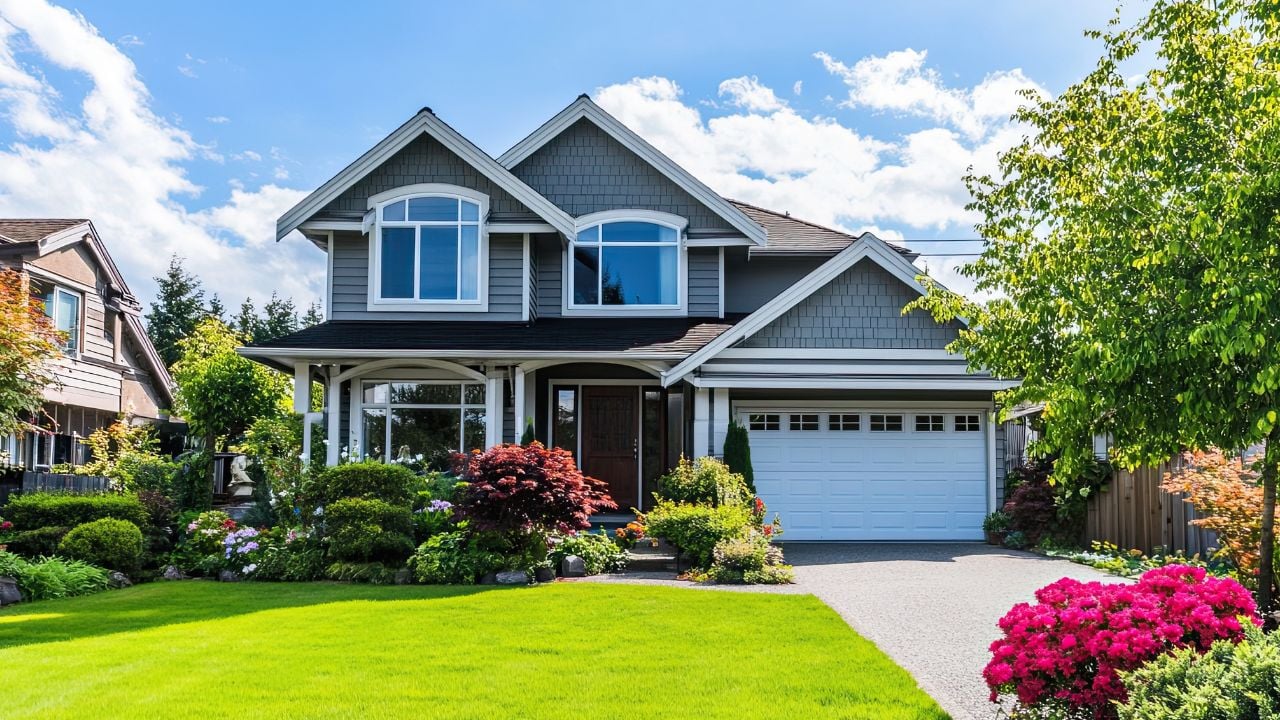
The States With the Highest Property Tax Bills, Ranked. See Where North Carolina Lands

The average American household pays $2,969 a year in property tax, according to WalletHub’s analysis of U.S. Census Bureau data.
In some states, that number barely covers a month’s bill.
In others, it wouldn’t cover half of one.
Here are the states charging homeowners the highest property tax bills, ranked with the priciest state first, and where North Carolina fits into the picture.
Note: This is general information, not legal or tax advice. Assessment rules and exemption amounts are subject to change.
How This Ranking Was Built
This ranking is based on WalletHub‘s property tax breakdown, which pulls straight from U.S. Census Bureau numbers.
WalletHub took the typical property tax bill in every state and divided it by the typical home price there, which gives a rate you can compare state to state.
Then it ran that same rate against a $303,400 home, the country’s median price, so every state lines up on the same scale.
These are the states with the highest property tax bills, starting with the most expensive.
1. New Jersey
New Jersey taxes homes harder than any other state in the country, at an effective rate of 2.23%, according to WalletHub’s analysis.
On a $303,400 home, the nation’s median price, that rate adds up to $6,770 a year.
On New Jersey’s own typical home, the bill rises to $9,541.
That’s nearly $800 a month.
A mortgage payment isn’t even added in yet.
New Jersey’s Tax Bill Over Time
New Jersey’s median-home property tax bill of $9,541 a year adds up fast over a typical 30-year mortgage.
Hold that rate for three decades.
A homeowner pays out more than $286,000 in property tax alone over that time, separate from principal, interest, or insurance.
2. Illinois
Illinois homeowners pay the second-highest effective property tax rate in the nation: 2.07% of a home’s value, every year.
On a $303,400 home, that works out to $6,285 a year.
On Illinois’s own typical home, priced a bit below the national median, the bill still lands at $5,189.
Location changes the math.
It matters more than the price tag does.
3. Connecticut
Only two states tax homes harder than Connecticut.
Its effective property tax rate comes in at 1.92%, third-highest in the nation.
A $303,400 home in Connecticut owes $5,813 a year.
Connecticut’s own typical home costs more than the national median.
The bill for a typical owner there rises to $6,575 a year.
That’s thousands more, every year.
4. New Hampshire
New Hampshire collects no state income tax and no state sales tax, so property owners cover more of the gap than homeowners in many other states.
The state’s effective property tax rate sits at 1.77%, the fourth-highest in the country.
A $303,400 home there owes $5,375 a year.
On New Hampshire’s own typical home, priced above the national median, the bill rises to $6,505 a year.
That’s about $542 a month.
5. Vermont
Vermont ranks fifth-highest on the list, rounding out the top five.
Its effective property tax rate comes in at 1.71%, the fifth-highest in the nation.
A $303,400 home in Vermont owes $5,176 a year.
Vermont’s own typical home costs less than the national median.
A typical owner’s bill there comes in lower, at $4,956 a year.
Only four states charge more.
Where North Carolina Falls on the List
North Carolina’s effective property tax rate lands at 0.70%, according to WalletHub’s analysis, good for 16th-lowest among the 50 states and Washington, D.C.
Flip that around.
North Carolina ranks 36th-highest out of 51, with 35 states charging a steeper rate and 15 states plus Washington, D.C. charging less.
On a $303,400 home, that rate works out to $2,123 a year, well under WalletHub’s $2,969 average U.S. household property tax figure.
That’s the good news.
Home prices have risen since WalletHub gathered its numbers.
Zillow now puts North Carolina’s typical home value at $338,359.
At the state’s own tax rate, that home owes closer to $2,369 a year.
That’s about $197 a month.
Wake County itself taxes property at 53.71 cents per $100 of value for the year that began in July 2026, below the state’s own average.
States Paying the Least
Hawaii charges the lowest effective property tax rate in the country: 0.27%, according to WalletHub’s data.
On a $303,400 home, that works out to $820 a year, a fraction of what New Jersey charges for the same house.
Alabama comes in second-lowest, at 0.38%, with the same $303,400 home owing just $1,148 a year.
The address decides almost everything.
Psst! Curious where your own state lands? Search or sort the full list below and find your row.
What Sets the Bill
A property tax bill comes from two numbers multiplied together: The local rate and the home’s assessed value.
Counties and towns often write that rate in mills.
One mill equals $1 in tax for every $1,000 of assessed value.
A home assessed at $300,000 at 10 mills owes $3,000.
Two towns, two different bills.
Raise the assessed value through a reassessment.
The bill rises even if the rate never moves.
Many states also offer some way to lower the bill, whether that’s a homestead exemption, a senior freeze, or a cap on how fast assessed value can rise.
None of those programs show up automatically.
A homeowner has to apply.
The deadline is often earlier in the year than anyone expects.
9 Back-to-School Costs Catching North Carolina Grandparents Off Guard in 2026

Wake County Public Schools raised student meal prices again this year, the fifth straight year in a row.
North Carolina grandparents helping cover the back-to-school bill get no discount on any of it, and a few of this year’s costs are brand new.
9 Back-to-School Costs Catching North Carolina Grandparents Off Guard in 2026
9 North Carolina HOA Rules Homeowners Wish They’d Read Before Signing
A couple signs the closing papers on a new build outside Cary and skims past the thick stack underneath the loan disclosures.
That stack is the homeowners association’s (HOA) declaration and bylaws, and North Carolina law backs every page of it, from the fines a board can charge to the limits stopping it from charging more.
9 North Carolina HOA Rules Homeowners Wish They’d Read Before Signing
