
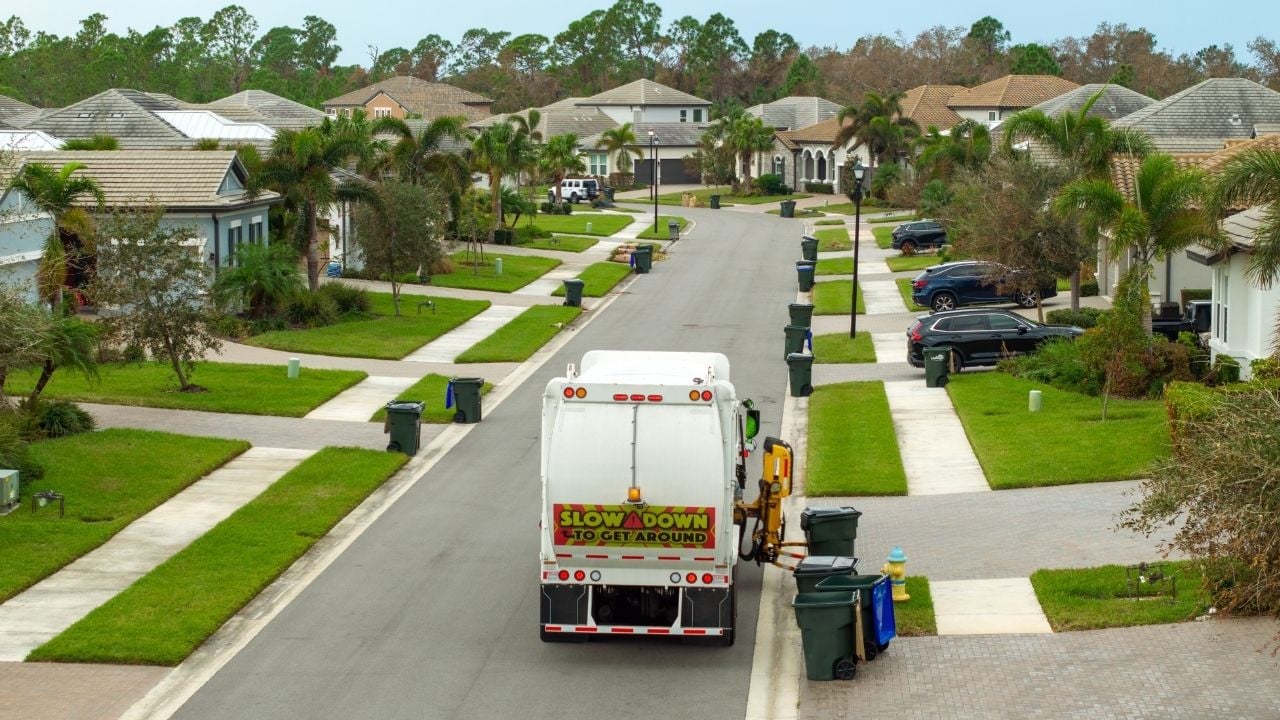
What Happens If You Don’t Pay a Municipal Trash Bill in Pennsylvania?

An unpaid municipal trash bill in Pennsylvania becomes a formal claim, then a lien on your house, and it can reach your credit report on the way.
How far it goes depends on your borough.
Uniontown put a seven-page list online in December 2024 naming 606 residents who owed a combined $569,000 in overdue trash bills, Pittsburgh station CBS News Pittsburgh reported.
Some towns collect the money, and some collect it in public.
Note: This is general information, not legal advice. Municipal billing, lien, and collection practices vary by borough, township, and city, and they’re subject to change, so confirm the details with your municipality’s tax collector or solicitor.
The Balance Becomes a Municipal Claim
A Pennsylvania municipality doesn’t need a lawsuit to start collecting on a trash bill you never paid.
State law lets a city, borough, or township turn almost any unpaid charge for a service it supplies, trash pickup included, into a formal municipal claim.
That claim is the same legal tool that backs an unpaid water or sewer bill.
That claim can carry interest.
Pennsylvania caps that interest at 10% a year, and a municipality’s ordinance can add penalties, costs, and attorney fees on top of the balance.
The Math Behind Pennsylvania’s 10% Interest Cap
A $300 unpaid trash balance in Pennsylvania grows by $30 over a full year at the state’s 10% interest ceiling.
A local ordinance can still add a penalty on top of that $30.
The ordinance can also tack on costs or an attorney fee.
Some Boroughs Publish the Delinquent List
Some Pennsylvania boroughs make an unpaid trash bill public instead of keeping it private.
Uniontown took the opposite approach in December 2024, posting a seven-page list online that named 606 residents who together owed $569,000 in overdue trash bills.
That’s more than 600 neighbors, coworkers, and fellow churchgoers with their names attached to a public balance.
Nobody wants that.
The city didn’t say whether liens or collections would follow, so the posted list itself was the consequence residents saw first.
The Claim Can Turn Into a Lien on Your Property
Filing the claim is only the first move for a Pennsylvania municipality.
Under the state’s lien law, the claim becomes a lien against the property as soon as the county prothonotary dockets it.
That lien ranks ahead of nearly every other debt against the home, except the sale’s costs and the property taxes.
It even outranks the mortgage.
Getting from that lien to an actual sale still takes one more step for nearly every Pennsylvania municipality.
State law generally requires the municipality to serve a writ of scire facias, a court notice that lets the property owner contest the debt before a judge enters judgment.
Only cities of the first or second class and counties of the second class can skip that step and move straight to a writ of execution.
That shortcut covers Philadelphia, Pittsburgh, and Allegheny County, not the boroughs and third-class cities named here.
Can Pennsylvania Sell Your Home Over a Trash Bill?
Pennsylvania can sell a home over an unpaid trash bill, and Harrisburg’s numbers show how a balance gets that far.
The city was sitting on more than $12 million in outstanding trash fees in 2024.
Its treasurer proposed folding the trash charge onto the real estate tax bill instead of billing it separately.
That’s one bill, one deadline.
Once that combined bill goes to the county for collection and stays unpaid for about a year, the county has the authority to sell the property.
That’s the same process it already uses for delinquent property taxes.
Roughly 70% of Harrisburg’s unpaid accounts belonged to rental properties.
A landlord who ignores the bill can put a tenant’s address on a county sale list without the tenant ever missing a payment.
Psst! How much do you know about trash and recycling rules across Pennsylvania? Take our quiz and see how many you can get right.
Quiz
Pennsylvania Trash & Recycling IQ
Answer these questions on Pennsylvania trash and recycling rules. We bet you can’t get them all right. Prove us wrong?
Under a 1988 state law, which Pennsylvania municipalities have to offer curbside recycling?
Will a Collection Agency Come After You?
Many Pennsylvania municipalities eventually hand a stalled account to a private collection agency instead of chasing it themselves.
Philadelphia's Water Revenue Bureau refers any residential account with more than $250 in unpaid charges to one of three outside collection agencies.
The same escalation is available for other municipal claims under state law, trash included.
A collection agency can also limit your options, since some of a municipality's payment plans stop being available once an account is out of its hands.
Does an Unpaid Trash Bill Hurt Your Credit?
An unpaid trash bill in Pennsylvania can eventually show up on your credit report, once it moves from the municipality to a collection agency.
That collection account can sit on the report for up to seven years from the date of the first missed payment, not from whenever the account changed hands.
Paying it off before then won't make it disappear early.
Newer FICO scoring models do ignore collection debts under $100.
A small trash balance might weigh less than a hospital bill or a credit card charge-off, though it can still appear on the report.
Does Nonpayment Ever Shut off Your Water?
There's no single Pennsylvania law that ties a trash bill to your water service.
Whether the two connect comes down to how your municipality bills for both.
Middletown Borough's water ordinance, for one, allows a shutoff only for nonpayment of water bills themselves, with no mention of trash or sewer charges riding along.
Other towns bill differently.
Downingtown Borough, for instance, bundles sewer and refuse onto one combined bill.
In a municipality billed that way, the balance that triggers a water shutoff can carry the trash charge right along with it.
Check your bill before you assume either way.
FAQ
Quick answers to what residents ask most about an unpaid municipal trash bill in Pennsylvania.
Here's the short version.
Can Pennsylvania put a lien on your house for an unpaid trash bill?
Yes. Under the state's Municipal Claim and Tax Lien Law, an unpaid trash charge can become a formal municipal claim.
That claim becomes a lien against the property once the county prothonotary dockets it.
Does an unpaid trash bill affect your credit score in Pennsylvania?
It can, once the account moves to a private collection agency. The collection account can stay on a credit report for up to seven years from the original missed payment.
Can a Pennsylvania municipality shut off your water for an unpaid trash bill?
Only if the water and trash charges are billed together on the same account. Municipalities that bill trash separately generally shut off water only for unpaid water charges.
How long does a Pennsylvania municipality have to file a lien for an unpaid trash bill?
Under the Municipal Claim and Tax Lien Law, a municipality generally has six months from when the service was provided to file the claim in court.
What happens if a Pennsylvania trash bill gets sent to collections?
A private collection agency can add fees, contact you directly, and report the account to the credit bureaus, the same escalation Philadelphia already uses for unpaid water accounts over $250.
Every filed municipal claim in Pennsylvania becomes part of the public record at the county prothonotary's office, the same office that dockets it as a lien in the first place.
A quick search of a property's judgment index there shows whether a trash bill ever escalated that far, and it takes far less time than letting another billing cycle pass.
9 Pennsylvania Utility Fees That Have Skyrocketed Since 2020
A Pennsylvania utility bill can rise for reasons that have nothing to do with how much water, gas, or power you used.
See which charges have grown the fastest across the state since 2020, and why one of them keeps catching people off guard.
9 Pennsylvania Utility Fees That Have Skyrocketed Since 2020
9 Pennsylvania Amish Country Stops Locals Recommend

Pennsylvania's Amish Country hides more than the roadside stands many visitors stick to.
These are the stops locals send each other, tucked past the routes a tour bus ever takes.
