
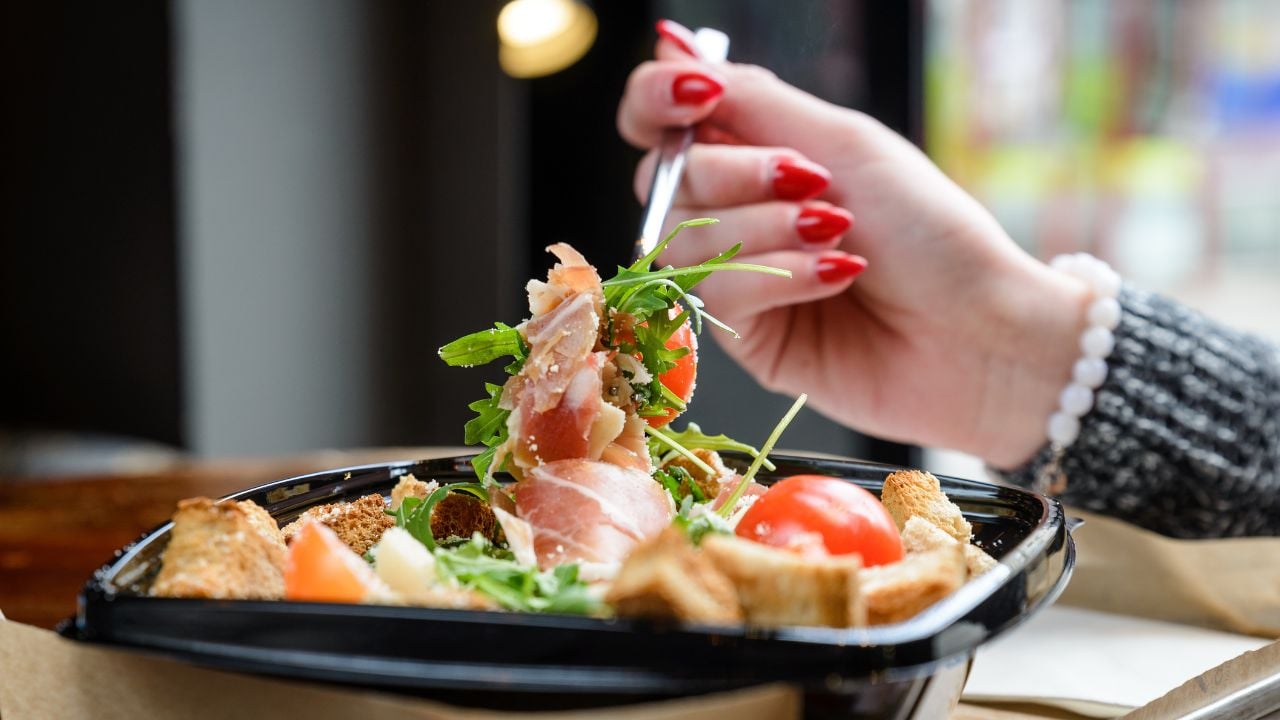
Which Salad Ingredients Cost More and Which Cost Less? USDA’s Forecast Gives Bay Staters a Starting Point

A pound of field-grown tomatoes averaged $2.55 across the Northeast in August.
A national USDA forecast says fresh vegetables will keep climbing faster than groceries overall, though Bay Staters’ prices could land differently.
Here’s what that forecast and the latest prices could mean for your salads this fall and winter.
Fresh Vegetables Versus Groceries
USDA forecasts fresh vegetables to rise faster than groceries overall.
The 5.7% comes with a forecast interval of 4.3% to 7.2%.
Food at home, the agency’s term for groceries, is forecast to rise just 2.4%, so the fresh vegetable forecast is more than twice as high.
All food, restaurant meals included, is forecast to rise 2.9%.
Fresh vegetables are among seven grocery categories forecast to rise faster than their 20-year historical average.
The catch?
The forecast is national, and it covers all of 2026, not a single season.
Your salad bowl is part of that average, but the price at your store can differ.
August Prices Versus the Forecast
Fresh vegetable prices were 2.6% higher in August 2026 than a year earlier, according to the consumer price index (CPI) that the Bureau of Labor Statistics (BLS) publishes each month.
Prices fell 0.8% from July to August, though they stayed above their level a year earlier.
Inside that index, tomatoes rose 5.8% from a year earlier, potatoes rose 3.6%, and lettuce fell 2.2%.
By form, canned vegetables rose 4.0% from a year earlier, ahead of fresh vegetables at 2.6%.
Those are national readings, so the tomatoes, potatoes, and lettuce in your cart can move your total differently.
A full-year forecast and a single month are different measures, and August’s reading came in below the forecast.
What USDA’s 5.7% Forecast Means
The 5.7% forecast applies to fresh vegetables as a group across 2026, not to the price of any one item.
Here’s a round-number example: A vegetable that averaged $2.00 a pound in 2025 would average about $2.11 in 2026 at a 5.7% increase.
At the low and high ends of the forecast interval, that same vegetable would average about $2.09 and $2.14.
ERS bases its forecasts on the most recent BLS consumer price index data and updates them monthly, so the number you read today can change.
Tomatoes and Lettuce by the Pound
Field-grown tomatoes, a salad staple, averaged $2.55 a pound across the Northeast in August 2026.
Romaine lettuce averaged $3.05 a pound in the Northeast that month, 1.5% below July, though BLS lists no August 2025 price for it.
Iceberg lettuce averaged $1.47 a pound nationwide, down 12.1% from $1.67 a year earlier, or about 20 cents less per pound.
Here’s the arithmetic for one pound of iceberg lettuce and one pound of field-grown tomatoes, using national average prices per pound.
In August 2025, $1.673 plus $1.925 comes to $3.598, or about $3.60.
In August 2026, $1.471 plus $1.977 comes to $3.448, or about $3.45.
Together they cost 4.2% less since the iceberg savings outweighed the tomato increase.
The tomato increase there, 2.7%, is an average price per pound, which BLS publishes in a different table from the 5.8% consumer price index reading above.
So August gives you a mixed picture for your salad, while USDA forecasts a rise for 2026 as a whole.
Northeast Prices
The Northeast salad prices above cover nine states: Massachusetts, Connecticut, Maine, New Hampshire, New Jersey, New York, Pennsylvania, Rhode Island, and Vermont.
They’re regional averages, not Massachusetts prices.
Northeast tomatoes, at $2.55 a pound, were up 13.3% from $2.25 a year earlier, nearly five times the 2.7% national rise in the average price per pound.
Food at home rose 2.6% across the region from August 2025 to August 2026, against 2.2% nationwide.
If you order your salad out, restaurant prices across the region rose 3.5% over the year, faster than the 2.6% for groceries.
Treat the Northeast reading as a rough guide, since the tomato price at your store may sit higher or lower.
Farm-Level Prices
The prices on your store’s shelves aren’t the only ones ERS forecasts, since it also covers farm-level and wholesale food markets through the Producer Price Index (PPI).
For farm-level vegetables, the forecast is a 16.0% increase in 2026, with an interval of 7.7% to 26.8%.
That’s nearly three times the 5.7% retail forecast, but it measures farm-level prices, not what you pay at the register.
A Small Slice of the Budget
Fresh vegetables make up a small share of grocery spending, even when their prices rise.
The consumer price index weights fresh vegetables at 0.484% of the total and food at home at 8.232%, as of July 2026.
That works out to about 6% of what the index counts as grocery spending.
At that weight, a 5.7% rise in fresh vegetable prices would add roughly 0.3% to your grocery bill, if nothing else changed.
That comes to about 33 cents on every $100 of groceries, or about 50 cents in a week if you spend $150.
Psst! How much do you know about what your groceries cost? Take our quiz and see how many you can get right.
Quiz
Food Price IQ
Answer these questions on grocery prices, USDA forecasts, and government price data. We bet you can’t get them all right. Prove us wrong?
How much did retail egg prices rise in 2025, according to USDA’s Economic Research Service?
Salad Toppings
If you add egg or beef to your salad, each has a separate forecast.
National egg prices were 23.0% lower in August 2026 than a year earlier.
USDA forecasts egg prices to fall 29.4% in 2026, within a forecast interval of a 25.2% to 32.9% decline.
National beef and veal prices were 5.9% higher in August 2026 than a year earlier, according to BLS.
Beef and veal are forecast to rise 9.4% in 2026, faster than the 5.7% for fresh vegetables, with a forecast interval of 7.4% to 11.6%.
Fresh fruit prices, which matter for salads that include fruit, were 3.8% higher in August 2026 than a year earlier.
Fresh fruits are forecast to rise only 2.5% in 2026, with an interval of 1.5% to 3.7%, less than half the pace of fresh vegetables.
7 Stop & Shop Habits That Cost Massachusetts Shoppers More Than They Save
Groceries are expensive enough without some innocent habits making your bill worse.
If you shop at Stop & Shop, you might be doing one or two of them right now.
7 Stop & Shop Habits That Cost Massachusetts Shoppers More Than They Save
8 Highway Habits That Instantly Tell a Massachusetts Driver From a New Hampshire One
Could you tell a Massachusetts driver from a New Hampshire driver in under a minute?
A few highway habits make the answer easy.
8 Highway Habits That Instantly Tell a Massachusetts Driver From a New Hampshire One
