
Why Are People Leaving Virginia? 9 Reasons They’re Giving in 2026

A moving truck idles outside a rowhouse in Alexandria while a mover carries a box marked kitchen down the steps.
Two doors down, another family just pulled up with a moving truck of their own, headed the opposite direction.
Virginia’s population is growing again.
It just isn’t growing for everyone who used to call it home. These are the reasons some Virginians give for leaving.
Note: This is general information, not financial or tax advice. Tax rules and dollar amounts are subject to change.
Federal Layoffs Hit Home
Virginians who work for the federal government got a rough wake-up call in 2025.
Job cuts tied to the Department of Government Efficiency (DOGE) wiped out six years of Virginia’s federal hiring gains in about eleven months, and the state ended the year with a net loss of about 23,500 federal civilian jobs.
Northern Virginia took the biggest hit.
That’s not a rounding error.
About 350,000 federal employees call Virginia home, per the same report, and over half of them live in the suburbs closest to Washington.
So when Washington freezes hiring, those families feel it first.
Home Prices Keep Rising
Buying a house near Washington gets harder for Virginians every year.
Arlington’s median sale price hit $928,000 this year, up close to 15% from 2025.
That’s not a typo.
Fairfax County isn’t far behind, and prices across Northern Virginia now run well above the national median.
Renters feel the squeeze too, since landlords price leases off the same market.
Many house hunters just look south instead.
That Yearly Car Tax
Virginia is one of the few states that taxes a car every single year just for owning it.
Counties and cities set their own rate, and Fairfax County, the state’s most populous, charges $4.57 per $100 of a vehicle’s assessed value.
The state’s Personal Property Tax Relief Act knocks a chunk off that bill, but only on the first $20,000 of a car’s value.
It barely helps.
Localities tax everything above that line at the full rate, and new appraisal rules in 2026 pushed some vehicle values even higher.
A paid-off truck still costs money every spring.
Retirement Money Still Taxed
Social Security is the one part of retirement Virginia leaves alone, and retirees hear about it first.
What they hear less about is the rest of their retirement income.
Pensions, 401(k) withdrawals, and traditional individual retirement account (IRA) distributions all count as ordinary income, taxed at Virginia’s regular rates.
Virginia taxes income above just $17,000 at its top rate of 5.75%, a bracket that hasn’t moved in decades.
That catches almost everyone.
Retirees 65 and older can claim an Age Deduction of up to $12,000, but it shrinks as income rises.
Compare that to Pennsylvania, which exempts retirement income entirely, or Florida, which charges no income tax at all.
The math looks different the day you retire.
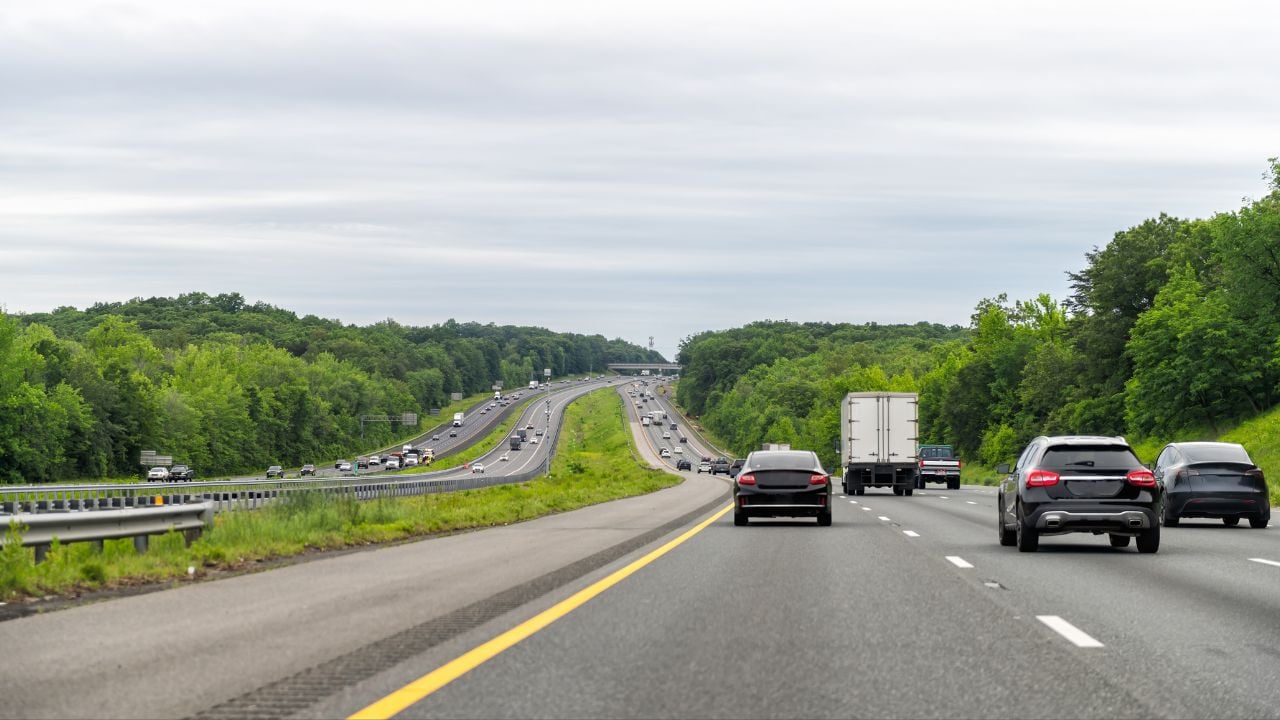
Traffic That Never Clears
Ask any Virginian near Washington how their commute is going, and settle in for a long answer.
The Washington region ranked among the most congested metro areas in the country again in 2025, landing 8th in the nation and 19th in the world.
The average driver there lost about 70 hours sitting in traffic last year, worth roughly $1,289 in wasted time.
That’s almost two full workweeks.
Interstate 95 through Northern Virginia has carried a reputation for years as one of the country’s worst traffic bottlenecks, and the daily backups haven’t done much to shake it.
Some commuters just stop fighting it and move.
Psst! How much do you know about Virginia’s history? Take our quiz and see if you can ace it.
Quiz
Virginia History IQ
Answer these questions on Virginia’s founding, geography, and firsts. We bet you can’t get them all right. Prove us wrong?
Local legend says the wild ponies on Assateague Island descend from survivors of what kind of 1750s shipwreck?
Tolls That Spike Without Warning
Northern Virginia added express toll lanes on I-95 and I-495 to ease the region's traffic.
The price for using them moves by the minute.
Rates on the Express Lanes typically run $8 to $18 during rush hour, since the software raises the price automatically whenever traffic backs up, aiming to keep cars moving at least 45 mph.
A crash or a stalled car in the lanes can send that price far higher within minutes.
That's for one ride.
Drivers with three or more people in the car skip the toll entirely with the right E-ZPass setting.
But a solo commuter pays full price every time.
Electric Bills Go Up
Data centers keep multiplying across Northern Virginia, and Virginians are picking up part of the tab.
Virginia's State Corporation Commission approved a Dominion Energy rate increase for 2026 that adds about $16 a month to a typical residential bill.
That adds up fast.
Some of that money covers grid upgrades needed to handle the power demand from data centers, which keep asking to connect more new electricity load than the grid has ever had to carry at once.
Regulators did carve out a separate rate class for the largest data center customers, set to start in 2027.
Until then, households cover more of the gap.
Home Insurance Costs More
Virginians' home insurance isn't the bargain it used to be.
The average Virginia policy now runs about $1,788 a year, and Northern Virginia homeowners are bracing for another increase of 6% to 14% in 2026.
Insurers point to a few reasons.
Reinsurance costs have risen nationally, tariffs on building materials are pushing up replacement costs, and storms and flooding keep changing how carriers price risk in the region.
None of that shows up until the renewal notice lands.
The number never gets smaller.
Rising Water in Hampton Roads
Coastal Virginia deals with a kind of cost most of the state never has to think about.
Sea level along the Hampton Roads coastline has risen more than a foot over the past 80 years, about three times the global average pace, and tidal flooding now hits Norfolk roughly once a month.
Norfolk is building a massive floodwall to try to hold the water back.
That's not cheap.
The cost estimate has more than doubled since 2023, from $2.66 billion to about $6.1 billion, with completion now pushed back to 2037.
Homeowners near the water end up paying for a flood policy, higher property taxes to fund the wall, and a yard that still floods at high tide anyway.
9 Scams Hitting Virginia Retirees Hardest in 2026

A stranger idles in a parked car outside a Roanoke home, waiting for an elderly resident to walk out with an envelope of cash.
The caller who arranged it swore it was the only way to protect his savings, and Virginia retirees fall for that line more often than anyone expects.
9 Scams Hitting Virginia Retirees Hardest in 2026
9 Virginia Squatter Rules That Leave Homeowners Powerless

An inherited house sits empty on Virginia's Eastern Shore, checked once a season if that.
By the next visit, there's a mattress in the back bedroom and a stranger's name on the mail, and the key in your pocket doesn't change what the law lets you do about it.
