

Why North Carolina Power Bills Keep Climbing in 2026, and 8 Ways Retirees Can Push Back

Think your Duke Energy bill would level off after the rate hike that hit in June?
It didn’t.
A bigger increase is already moving through regulators, stacked on top of whatever bill your air conditioner is running you this summer.
These are the reasons North Carolina’s power bills keep rising in 2026, and how retirees are pushing back before the next increase lands.
Note: This is general information, not financial advice. Rate figures, rebate amounts, and program eligibility are subject to change.
Why Your Duke Energy Bill Keeps Rising
Two separate cost increases already stacked up on North Carolina electric bills this year.
A third is pending a regulator’s signature.
The first hit June 1.
Duke Energy Carolinas and Duke Energy Progress both raised a fuel-cost charge to cover $809 million in fuel and power costs the companies ran up between September 2025 and February 2026, much of it during Winter Storm Gianna and the deep cold that followed.
Duke Energy Carolinas customers, centered around Charlotte and Guilford County, paid about $6.90 more a month.
Wake County and coastal customers under Duke Energy Progress took a bigger hit, at roughly $7.88 more.
North Carolina regulators approved both increases before the ink on your June bill dried.
The bigger fight is the base rate case that sparked packed public hearings at the Durham County Courthouse.
Duke Energy Carolinas opened by asking for close to 18% more over two years, then settled with the state’s Public Staff on a smaller deal in July: About 5.9% in 2027 and 3.6% in 2028.
North Carolina Attorney General Jeff Jackson still rejected the settlement, arguing the profit margin baked in for Duke Energy runs too high.
Duke Energy Progress customers face a separate case still working through the North Carolina Utilities Commission (NCUC), the state agency that sets what utilities can charge.
The company is seeking about a 15% increase over two years, and Attorney General Jackson has filed testimony pushing regulators to cut that request further.
It’s still pending.
Hearings start in August, and the commission votes this fall.
Any approved increase takes effect Jan. 1, 2027.
Duke Energy points to a state growing faster than its grid was built for: New substations, new transmission lines, and storm-hardened poles after Hurricane Helene tore through western North Carolina.
Over the past five years, the company converted more than 13,400 wood poles on the Carolinas transmission system to steel and concrete.
Not one of the upgraded poles needed replacing after Helene.
That work isn’t free, and North Carolina ratepayers are footing the bill.
1. Let Duke Energy Adjust Your Thermostat
Duke Energy runs a smart thermostat program in both territories, Power Manager for Duke Energy Carolinas customers and EnergyWise Home for Duke Energy Progress customers.
Joining pays cash.
Connect a compatible smart thermostat, a Google Nest or an ecobee among them, and Duke Energy earns the right to nudge your setting by a couple of degrees during the highest-demand summer afternoons, usually 3 to 9 p.m. on weekdays.
You still control the thermostat the rest of the time, and the company skips holidays outside a true emergency.
The payout: A $150 bill credit for enrolling, then another $50 every year you stay enrolled.
Money for a few degrees.
2. Book a Free Weatherization Checkup
North Carolina’s Weatherization Assistance Program (WAP), run through the state’s Department of Environmental Quality, sends a crew to your door for a full home energy assessment.
Qualify with household income under 200% of the federal poverty guidelines, and the program prioritizes elderly and disabled applicants.
The audit itself is free, and so is whatever it recommends.
Insulation, air sealing, a broken heating or cooling system repaired or replaced outright.
No cost, ever.
A drafty 1970s ranch house outside Fayetteville can lose more cool air through gaps around the attic hatch than through every window combined.
A weatherization crew is trained to find exactly that kind of leak.
3. Ask About the Customer Assistance Program
Duke Energy’s Customer Assistance Program (CAP) credits up to $42 a month straight to your bill for a full year, automatically, with no extra paperwork beyond what you already filed.
The catch is you have to qualify first through the state’s Low-Income Energy Assistance Program (LIEAP) or Crisis Intervention Program.
CAP follows on top of that approval.
Last year, more than 114,000 North Carolina households split close to $90 million in combined help through CAP, Share the Light, and the federal Low Income Home Energy Assistance Program (LIHEAP).
Many never applied directly.
It found them once the state paperwork was already on file.
4. Apply for Summer Cooling Help
Most people picture heating aid when they think of energy assistance, but North Carolina’s Crisis Intervention Program pays out for air conditioning too.
The cooling season runs June through October, with up to $600 available to households at or under 150% of the federal poverty level.
You apply through your county’s Department of Social Services, not through Duke Energy.
A retiree running a window unit around the clock in a Wilmington heat wave can burn through that $600 fast.
File before the account falls behind.
Not after the notice arrives.
5. Switch to Time-of-Use Pricing
Duke Energy’s residential Time-of-Use plan charges less for electricity used outside the 3-to-9-p.m. summer weekday window and more for electricity used inside it.
Run your dishwasher after dinner instead of before.
Dry a load of towels on a Saturday morning instead of a Tuesday evening.
Either move already shifts load off the priciest hours.
Nobody has to buy new equipment to try it.
Not a dollar spent.
Switching takes a call or a few clicks in your Duke Energy account.
You can switch back to the standard rate anytime it isn’t working out for your household’s routine.
6. Level Out Bills With Budget Billing
Budget billing averages your last 12 months of usage into one flat monthly number.
That means a brutal July doesn’t land as a $260 gut punch.
Duke Energy reviews the account every quarter and adjusts the flat amount if your actual usage has drifted.
So you’re never settling up a giant balance at year’s end.
It doesn’t lower what you pay over a full year.
Not a discount.
What it does is take the summer spike off a fixed monthly retirement budget.
That predictability is worth something on its own.
7. Grab a Heat Pump Rebate While It Lasts
Many retirees still think a federal tax credit will cover part of a new heat pump.
It won’t.
The federal Energy Efficient Home Improvement Credit expired at the end of 2025 under the One Big Beautiful Bill Act.
So a heat pump installed in 2026 doesn’t qualify anymore.
Duke Energy’s own Smart $aver program still stands in, offering $500 to $1,000 toward a qualifying heat pump and $500 to $800 toward a heat pump water heater, for customers of both Duke Energy Carolinas and Duke Energy Progress.
Both units have to be replaced together, the condenser and the air handler.
So ask your contractor to itemize the rebate before signing anything.
Psst! How much do you know about the power grid running through North Carolina? Take our quiz and see if you can ace it.
Quiz
NC Power Grid IQ
Answer these questions on Duke Energy’s history and North Carolina’s power grid. We bet you can’t get them all right. Prove us wrong?
Which tobacco industrialist poured his fortune into the hydroelectric dam project that grew into Duke Energy?
8. Call 211 Before You Fall Behind
Duke Energy's Share the Light Fund routes one-time emergency money through more than 100 local agencies across North Carolina, covering a bill, a deposit, or a reconnection charge.
Dial 211, North Carolina's free helpline, and an operator connects you to the community action agency covering your county the same day, no waiting on a callback.
Call before a disconnection notice, not after.
A retiree who calls in July, before the balance snowballs, gets more options on the phone than a retiree who calls in October holding a past-due notice.
Agencies can only stretch a grant so far once a case turns into an active disconnection.
8 Food Lion Mistakes North Carolina Shoppers Make Every Week
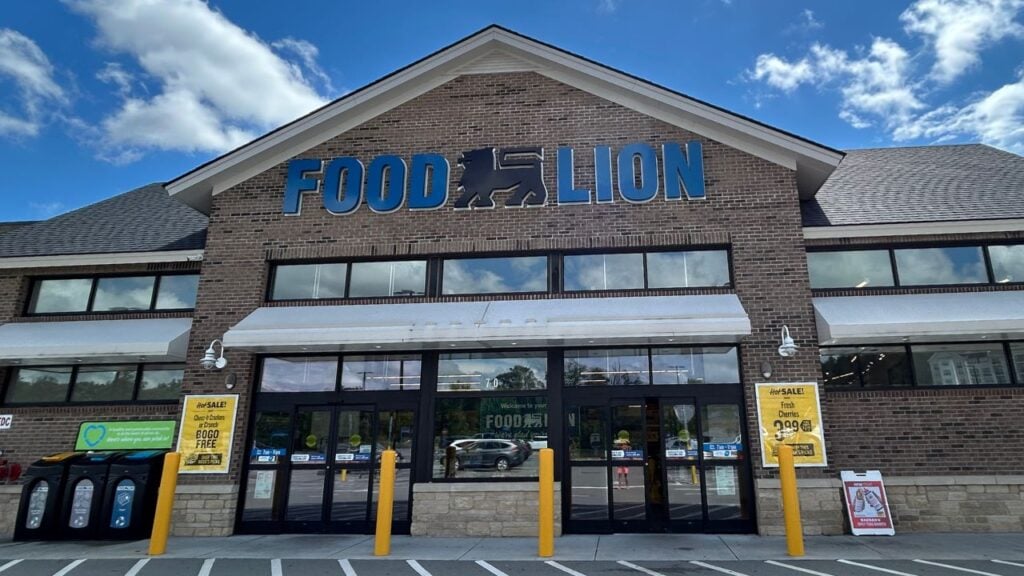
The cashier scans your loyalty card, and a "you saved" line prints at the bottom of the receipt.
That number is usually a fraction of what a sharper trip through the same store could have saved instead.
8 Food Lion Mistakes North Carolina Shoppers Make Every Week
9 Things a North Carolina HOA Can Do That Homeowners Never See Coming

Think the worst a homeowners association can do is mail a snippy letter about your yard?
Buried in the covenants you signed at closing sits a list of powers with a much bigger reach.
9 Things a North Carolina HOA Can Do That Homeowners Never See Coming
