
Why You’ll Never See a Billboard in Vermont

On a lot of highways, signs for fast food and motels line the road for miles.
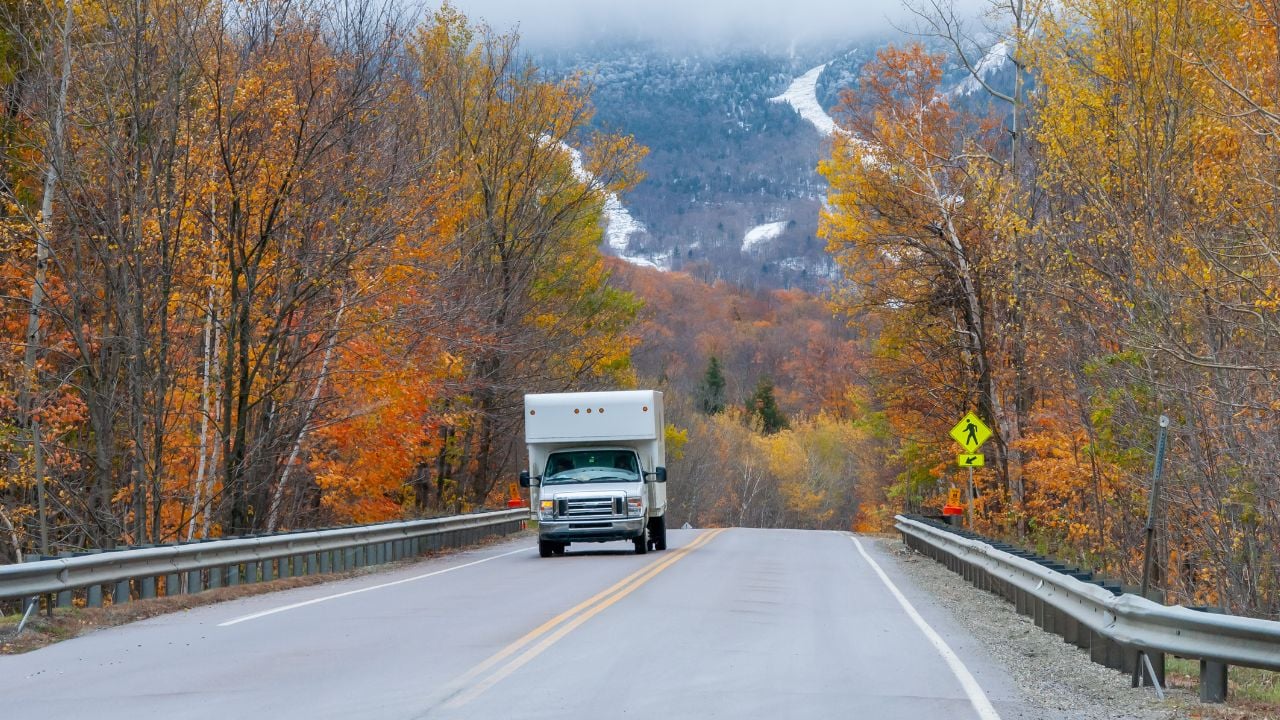
Vermonters get open roadsides instead, and that didn’t happen by accident.
Here’s the story behind the state’s billboard-free roads.
Note: This is general information, not legal advice. Sign rules and fees are subject to change, so confirm the current requirements with the Travel Information Council.
Roadsides Before the Ban
VTDigger’s history of the ban says roughly 750 full-sized billboards and thousands of smaller advertising signs lined the state’s roadsides by 1936.
The first limits came in 1939, when Rep. Horace Brown of Springfield championed a bill that limited the size and location of billboards but kept them legal.
Roadside signs fell roughly 50 percent between 1938 and 1943, but hundreds of billboards still lined the state’s roads.
You’d still have driven past billboards in 1943.
You needed a lawmaker willing to push for a full ban, and the history points to Ted Riehle.
Riehle was a Republican who represented South Burlington and joined the Legislature in 1965.
He told state Sen. Jim Jeffords he planned to introduce a bill banning billboards.
Jeffords replied that if Riehle could get the bill through the House, he would work to get it through the Senate.
The 1968 Law
Billboards became illegal in Vermont on March 23, 1968, when Act 333 of the Legislature’s 1967 adjourned session took effect.
VTDigger reports the bill passed both chambers with strong Republican support.
Gov. Phil Hoff, a Democrat, signed it, although many of his fellow Democrats hadn’t backed it.
If you owned an off-premises billboard, you had five years to take it down.
Section 488 now bars you from putting up or keeping outdoor advertising that travelers can see, except where the chapter allows it.
What Counts as Outdoor Advertising
Outdoor advertising under the ban covers far more than the billboards you picture.
The definition in the sign law takes in any sign visible from a highway or other public right-of-way that points you to a business, product, service, activity or place.
An on-premises sign, one on the same property as the business it advertises, falls in a separate category, with size limits listed on the Agency of Transportation’s sign page.
The Legislature’s Reasons
Tourism tops the Legislature’s reasons for banning billboards, according to the findings in Vermont’s sign law.
A large and increasing number of tourists had been coming to Vermont, making the tourist industry one of the largest sources of income for Vermonters.
Scattered outdoor advertising harms the scenic resources that attract visitors and, with them, the state’s economic base.
The findings also call the proliferation of outdoor advertising hazardous to highway users, a group that includes you whenever you drive.
According to the Vermont Department of Tourism and Marketing, the 16 million people who visited Vermont in 2024 spent a record $4.2 billion on goods and services.
Opposition to the Ban
Some billboard companies and advertisers pushed back, VTDigger reports, and labeled the effort to ban the signs communist.
They also asked who would compensate them for removing the signs and giving up an inexpensive means of advertising.
They argued that tourists would get lost and confused without signs to direct them, a worry you can picture on any unfamiliar road.
Business owners weren’t united, though, and you can see the split in the Vermont State Chamber of Commerce.
The chamber found itself stuck between competing business interests but ended up opposing billboards.
Official Directional Signs
A trade came with the ban: VTDigger reports the state would pay to post more discreet signs for local businesses.
Under state law, an official business directional sign shows the travelling public the route and distance to a business or point of interest.
The Agency of Transportation puts the signs up under the direction of the Travel Information Council.
The agency’s sign page lists them at 16 inches high by 72 inches long, a strip six feet across.
Want one for your business?
The fee statute sets $175 per sign to apply and $100 per sign a year to renew.
Once you have one, the Travel Information Council still regulates its size, shape, color, lighting and lettering under Section 490.
The Hay Wagon Case
Hay wagons gave the billboard ban a modern test over the winter of 2024 to 2025, Seven Days reported.
The banners advertised a tire shop in Westport, New York, and they appeared in six Vermont towns.
Those towns were Charlotte, St. George, Ferrisburgh, West Addison, Bridport and Orwell.
State officials ordered the owner to cover up or remove the banners or face fines of $50 a day for each sign, which the paper put at $300 a day.
The Agency of Transportation’s letter gave him 14 days to comply.
He argued the wagons were mobile and therefore legal.
An Agency of Commerce and Community Development attorney told the paper the law’s foundation was to keep signs out of every place except where the business operates.
When you passed one of those wagons that winter, you were looking at an ad that state officials said broke the law.
The owner took them down in February 2025.
Psst! How much do you know about roadside signs? Take our quiz and see if you can ace it.
Quiz
Roadside Sign IQ
Answer eight questions on roadside signs and the laws behind them. We bet you can’t get them all right. Prove us wrong?
Burma-Shave’s rhyming roadside signs started on Minnesota highways in 1925. How many states did they eventually reach?
Three Other States
Vermont is one of only four states with a statewide billboard ban, the Portland Press Herald reports.
If you're driving in Alaska, Hawaii or Maine, you're in one of the other three.
Hawaii's territorial legislature banned billboards in 1927 after The Outdoor Circle pushed for the law, according to a 2004 state House resolution.
If you cross into Maine, that state's ban took effect in 1978, a decade after Vermont's.
7 Things That Still Happen at Vermont Town Meetings That Out-of-Staters Can't Believe Are Real

Town meeting day looks nothing like a typical local election.
Here are the customs that surprise people who see one for the first time.
7 Things That Still Happen at Vermont Town Meetings That Out-of-Staters Can't Believe Are Real
9 Things That Confuse Everyone Who Moves to Vermont
Some parts of living in Vermont make sense only after a local explains them.
Until then, newcomers are left wondering why familiar parts of everyday life suddenly work so differently.
