
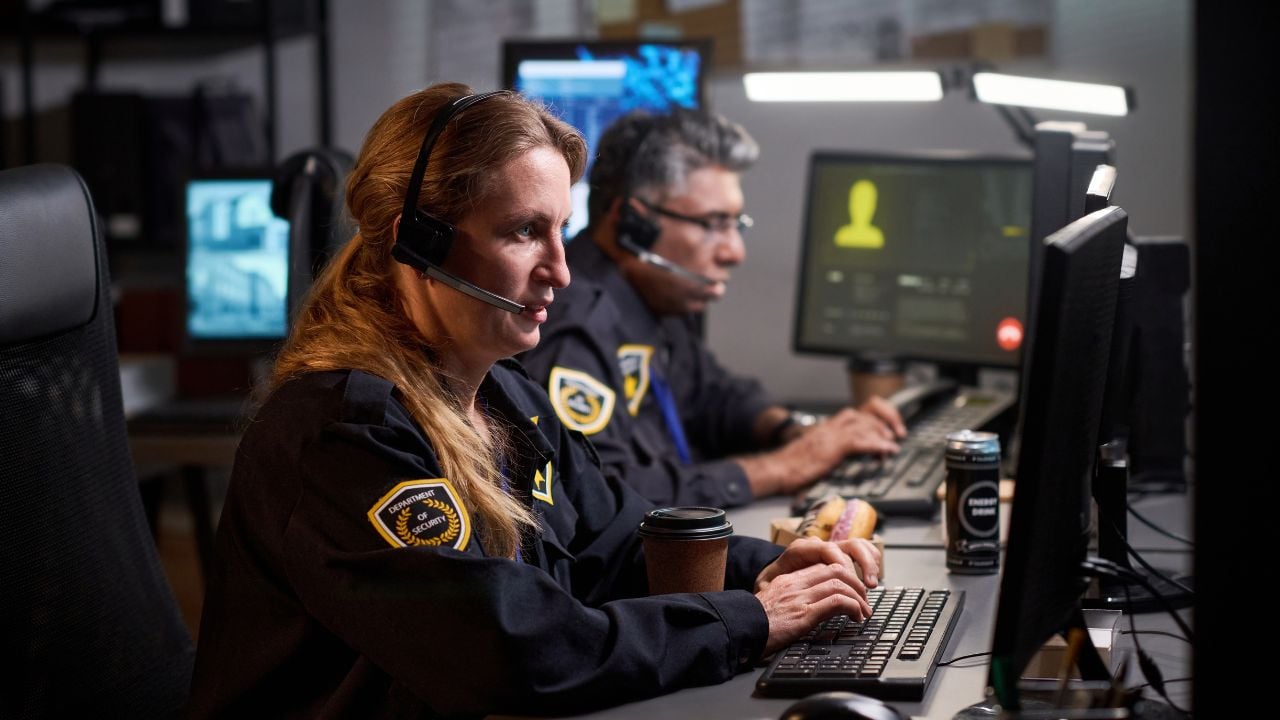
10 Details Pennsylvania 911 Dispatchers Need Callers to Say First

Pennsylvania’s 911 centers field more than 14.5 million calls a year, according to the Commonwealth’s emergency management agency.
At that volume, every word costs precious seconds.
These are the details Pennsylvania 911 dispatchers need callers to say first.
1. Your Township or Borough
A Pennsylvania 911 address, the term county centers use for where your call routes, isn’t always the one printed on your mail.
Not the same thing.
Lancaster County’s 911 center uses Dutch Wonderland as an example: The mailing address reads Lancaster, Pennsylvania.
But the 911 address swaps that city for East Lampeter Township.
Say your township, borough, or city before the street number, and the call routes straight to the right corner of the county’s map.
Skip it, and the dispatcher has to ask anyway.
2. Nature of the Emergency
Naming the emergency comes right alongside your location and phone number on a Pennsylvania 911 call, according to the Commonwealth’s guidance for callers.
Fire, a crash, a break-in, a medical collapse.
Each type of emergency sends the call down a different path.
That path matters.
Name the actual emergency in a few words, and the dispatcher can start routing help before you finish the sentence.
3. Callback Number
A callback number is one of the first things a Pennsylvania 911 call-taker asks for, per that same state guidance on what to say.
That’s not a formality.
If the call drops, cuts out, or the caller goes silent, that callback number is how a dispatcher tries again before sending help on an address alone.
Give the number you’re calling from, not a house line nobody’s near.
4. Cross Streets and Landmarks
A cell caller should give cross streets and landmarks in the very first breath, right alongside the address.
A cell phone’s location signal can be off by a few houses, and that gap is exactly why the detail belongs up front.
Erie County’s 911 center tells cell callers to study their surroundings first: A nearby business, a water tower, the cross streets at the last intersection.
That habit pays off fast.
Rattle off what you see around you, and a dispatcher can find you even when the address itself is wrong or missing.
What Shows Up on the Map
Pennsylvania county 911 centers pull a landline’s exact registered address onto the dispatcher’s screen the moment the call connects.
A cell phone call works differently.
The system leans on the nearest cell tower instead of a fixed address, and the estimate can be off by a few houses.
That gap is why cross streets and landmarks carry so much weight on a wireless call.
A dispatcher keeps asking questions even after an address shows up on the screen, just to be sure.
5. Names and Descriptions
Names and physical descriptions belong right after those first three essentials, location, emergency type, callback number, whenever another person is part of the call.
Pennsylvania requires every county 911 center to run structured, protocol-based call-taking.
Lancaster County’s guide shows what that looks like: Names and descriptions get listed alongside the address and the nature of the call.
Responders arrive already knowing who they’re looking for.
A name helps paramedics confirm who they’re treating.
A description helps police find the right person in a crowd.
6. Vehicle and Suspect Descriptions
On a police call, vehicle and suspect details are worth volunteering the moment you describe the emergency, before a dispatcher even has to ask.
Vehicle make, color, and plate, if you caught it.
That head start changes how officers approach the scene.
Direction of travel, too, since a car headed north is already a problem for the next county over.
Lancaster County’s guide lists these among the standard questions on anything crime-related.
It’s one county’s version of the police-dispatch protocol Pennsylvania requires every 911 center to run, not a bonus round for especially observant callers.
7. Any Weapons or Drugs
Say it immediately if a weapon or drugs are involved, before a dispatcher even asks.
That single detail decides how fast responders move and how they approach the scene.
It’s not an accusation.
Lancaster County’s guide flags it as a standard question on any call where it could apply, part of the same statewide safety screening Pennsylvania requires at every county center.
Answer it straight, and the response matches the actual risk instead of guessing.
8. Medical Symptoms
On a medical call, symptoms belong in the first breath, right after your location and callback number.
They decide how quickly help gets dispatched, and whether you get instructions before anyone arrives.
Is the person conscious?
Are they breathing?
Pennsylvania requires every call-taker who handles medical calls to train in cardiopulmonary resuscitation (CPR) and structured pre-arrival instructions.
Lancaster County’s 911 center says its call-takers walk callers through exactly that: A series of questions and instructions, sometimes coaching CPR or a delivery over the phone before anyone arrives.
Stay on the line for that part.
9. Your Municipality, in a Text
Texting 911 works in every one of Pennsylvania’s 67 counties now, and the same say-it-first rule applies.
Erie County’s 911 center wants that first text to include your location, including the municipality.
A phone’s built-in location data alone isn’t enough for a dispatcher to find you.
Every second counts.
Put it in the first message, not the third.
A text conversation doesn’t plot on a map the way a voice call does, and every text after the first just adds delay.
Psst! How much do you know about the history of 911 nationwide? Take our quiz and see how many you can get right.
Quiz
911 History IQ
Answer these questions on the history of 911 nationwide. We bet you can’t get them all right. Prove us wrong?
In what year did the very first 911 call go through in the United States?
10. Whether It Was an Accident
Say it the instant you realize a call was an accident, before you even think about hanging up.
Saying so is the easy part.
Pennsylvania's Ready PA program, the state's emergency-preparedness campaign, says an accidental caller should stay on the line and explain what happened.
A hang-up alone can trigger a callback, or send help to an address that doesn't need it.
It happens constantly with old phones and butt dials.
Saying it out loud takes ten seconds and saves an officer a wasted trip.
The County-Run System
Pennsylvania runs 911 through 61 county-based call centers covering all 67 counties.
That makes it one of just 13 states with fewer centers than counties, according to the Pennsylvania State Association of Counties.
Coverage never shrank.
State lawmakers pushed that consolidation through Act 12 of 2015.
That same law created Pennsylvania's 911 fee and pointed the system toward Next Generation 911, an internet-based upgrade from the old analog network.
All that volume, more than 14.5 million calls a year, gets split across those 61 centers instead of 67.
A neighboring center sometimes answers a call near a county line before handing it off.
A Patchwork of Coverage
Which officer shows up after a 911 call depends on who patrols your town, a state trooper in some places, a municipal officer in others.
Different badge, same call.
The Pennsylvania State Police now provide full-time coverage to more than 1,325 municipalities, over 80% of the Commonwealth.
Many small towns have shut down their police departments for good.
A 911 dispatcher in one of those towns still takes the call exactly the same way.
The dispatcher radios a state trooper instead of a municipal officer, and that's often the only difference the caller ever notices.
9 Pennsylvania Festival Foods That Confuse Everyone Who Didn't Grow Up There
One Berks County fire company has sold the same square, hole-less doughnut every winter for 58 years running.
Fire companies, bakeries, and churches across Pennsylvania Dutch country fry the same treat every year to use up a year's worth of lard before Lent, and nobody blinks.
9 Pennsylvania Festival Foods That Confuse Everyone Who Didn't Grow Up There
8 Things Pennsylvania Does Better Than New York, According to People Who Have Lived in Both

A typical home in Pennsylvania costs about $281,000, and that same kind of house runs about $527,000 across the border in New York.
People who have lived in both states say housing is just where the differences start.
8 Things Pennsylvania Does Better Than New York, According to People Who Have Lived in Both
