
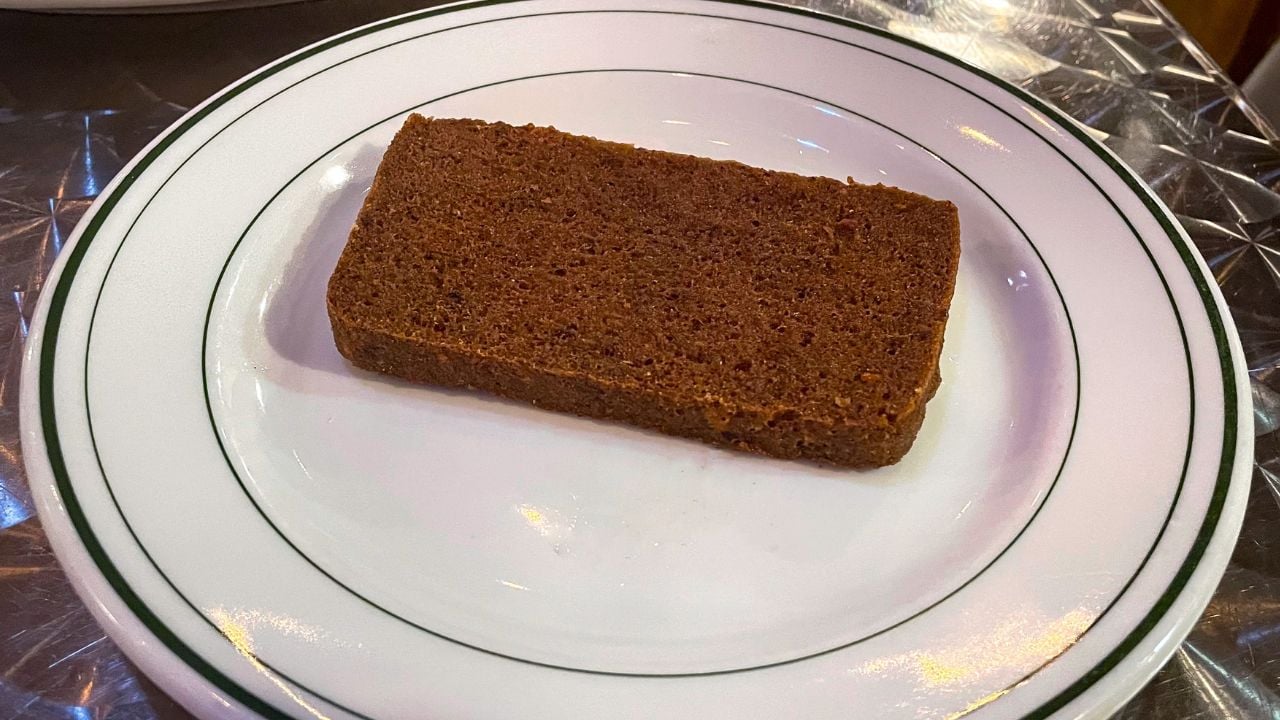
9 Pennsylvania Festival Foods That Confuse Everyone Who Didn’t Grow Up There

One Berks County fire company has sold the same square, hole-less doughnut every winter for 58 years running.
Fire companies, bakeries, and churches across Pennsylvania Dutch country fry the same treat to use up a year’s worth of lard before Lent starts.
Nobody blinks.
These are the Pennsylvania festival foods that leave newcomers staring at the menu board.
1. Chicken Corn Soup With Rivels
Chicken corn soup turns up at nearly every Pennsylvania fire company carnival and church picnic long before anyone explains the rivels floating in it.
Congregations like St. Paul Evangelical Lutheran in Penryn have simmered the soup for their end-of-summer picnic since the 1800s, and Penryn’s volunteer fire company sells the same soup every year to help pay for equipment.
A rivel is no noodle and no dumpling: Flour and egg rubbed between two fingers into an irregular little clump, dropped raw into the simmering broth, with no rolling pin involved.
Nothing from a can.
A newcomer scoops one out and asks what went wrong with the noodles.
How One Kettle Feeds a Whole Carnival
Pennsylvania fire companies start cooking chicken corn soup long before they open their doors for the day.
Farmers in Pennsylvania Dutch country often donate part of their corn harvest, and volunteers spend hours husking it before any of it goes into the kettle.
Rivels need no resting time, so a crew can mix a fresh batch and drop it straight into a simmering kettle that already holds enough soup to feed hundreds.
2. Pennsylvania Dutch Chicken Pot Pie
Ask for chicken pot pie at a Pennsylvania Dutch fire hall supper, and what arrives has no crust anywhere in it.
Fire companies and churches across Pennsylvania Dutch country have advertised pot pie suppers all winter for generations, and Hand-in-Hand Fire Company in Bird-in-Hand has run its own pot pie fundraiser every year since 1994.
In the Pennsylvania Dutch dialect, cooks call the dish bott boi, a thick stew built on homemade squares of dough, shredded chicken, and potatoes in a rich broth.
Comfort food, hold the crust.
A newcomer digs for a flaky top that was never coming.
Locals just call it slippery pot pie and pass the ladle.
3. Fastnachts
Fastnachts come out of Pennsylvania Dutch fire company and church kitchens before sunrise every Shrove Tuesday.
The German name means roughly “the eve of the fast,” and the potato doughnuts come out square, with no hole, no filling, and no frosting.
A newcomer expecting a hole in the middle assumes the baker made a mistake.
Mt. Penn Fire Company has kept its fastnacht sale running for 58 years, one of many Pennsylvania Dutch fundraisers built around using up a year’s worth of lard and sugar before Lent begins.
It never was a mistake.
A tradition older than the fire company selling it.
4. Shoofly Pie
Pennsylvania Dutch church bazaars serve shoofly pie under a name that sounds like a joke about kitchen pests.
It isn’t a joke.
Bakers layer a gooey molasses custard, called a wet bottom in Lancaster County, under a crown of buttery crumbs.
Many Pennsylvania Dutch families eat a wedge for breakfast, crumbled into a bowl with milk poured over the top like cereal.
Coffee, not dessert.
A newcomer ordering it after dinner gets a confused look right back.
5. Potato Filling
Granges, fire companies, and Pennsylvania Dutch church basements across Berks County sell potato filling ahead of Thanksgiving, a dish that never settles into just one category.
Cooks fold mashed potatoes together with toasted bread cubes, butter, and eggs, so the result sits somewhere between a side dish and a stuffing without ever fully becoming either.
Not mashed potatoes.
Not quite stuffing, either.
The Pioneer Grange in Topton moves 800 to 900 pounds of it in a typical year, and some customers call in their orders as early as September.
A first-time guest asks which dish it’s supposed to replace.
Neither, and both.
6. Hog Maw
Hog maw’s nicknames, Dutch goose and Susquehanna turkey, don’t mention pork at all, though many Pennsylvania Dutch families serve the dish at church suppers every winter.
A newcomer hears either name and pictures poultry.
What a cook serves is a cleaned pig’s stomach, stuffed with cubed potatoes, sausage, and onions, then roasted until the seams split.
An acquired taste worth trying.
There’s no poultry in it at all.
Many Pennsylvania Dutch and Mennonite families choose hog maw as their New Year’s Day pork, following the same good-luck belief that puts pork on tables throughout the region on Jan. 1.
Skip it, and some families say you’re tempting fate.
7. Haluski and Halupki
Haluski and halupki share a table at Pittsburgh-area parish festivals, and first-time visitors often mix up the two from the names alone.
Haluski is fried cabbage and egg noodles, soft and buttery, nothing stuffed about it.
Halupki is the opposite: Whole cabbage leaves wrapped around rice and meat, simmered low for hours.
Nothing alike.
Two dishes, one confusing set of names, zero relation on the plate.
The Epiphany of Our Lord Parish Festival near Pittsburgh puts both dishes on its Polish platter every year, made the same way generations of Slovak, Polish, and Rusyn families in the region have made them.
Order the wrong dish, and a volunteer will gently set you straight.
8. Roast Pork Italian Sandwich
The roast pork Italian sandwich shows up at South Philadelphia’s Italian street festivals, and many newcomers order it expecting barbecue.
Ask for something smoky and sauced, and a vendor hands back something else completely.
Vendors pile thin-sliced roast pork onto a seeded roll with sharp provolone and broccoli rabe, no sauce and no smoke anywhere near it.
The 9th Street Italian Market Festival has been a South Philadelphia tradition since the 1970s.
Butchers like Cannuli’s bring the sandwich right out to the sidewalk, layered the same classic way, alongside cannoli and fresh pasta from the shops next door.
A South Philly original.
South Philadelphia has built sandwiches this way since Domenico Bucci opened a riverside pork stand for dockworkers in the 1930s.
Nowhere else serves it quite the same way.
9. Scrapple
Scrapple lands on Pennsylvania breakfast tables and county fair menus with an ingredient list many newcomers would rather not know before the first bite.
Butchers boil down pork scraps and organ meat, bind the mixture with cornmeal and buckwheat flour, then slice and pan-fry it until the edges crisp.
Not bacon.
Not sausage, either.
The Great Allentown Fair has run a scrapple eating contest since 2024, and families who grew up on scrapple still call it “poor man’s bacon.”
Ask what’s in it after you’ve already finished the plate.
Psst! How much do you know about Pennsylvania’s fairs and fire company fundraisers? Take our quiz and see if you can ace it.
Quiz
Pennsylvania Fair IQ
Answer these questions on Pennsylvania’s fairs, fire company sales, and food fundraisers. We bet you can’t get them all right. Prove us wrong?
What do Pennsylvanians call the fire company sales held every spring, right when the thawing ground turns messy underfoot?
4 Ways Wawa Culture in Pennsylvania Differs From Other States It's In
Ask someone who grew up near Philadelphia what Wawa means to them, and settle in for a long answer.
Pennsylvania treats the convenience store like a hometown fixture, and that loyalty doesn't look the same everywhere else Wawa opens.
4 Ways Wawa Culture in Pennsylvania Differs From Other States It's In
Why So Many Pennsylvania Towns Share Names With European Cities
An English king once settled a personal debt by handing over an entire American colony instead of paying cash.
That colony was Pennsylvania, and the payoff still shows up on road signs in towns named after cities an ocean away.
Why So Many Pennsylvania Towns Share Names With European Cities
