
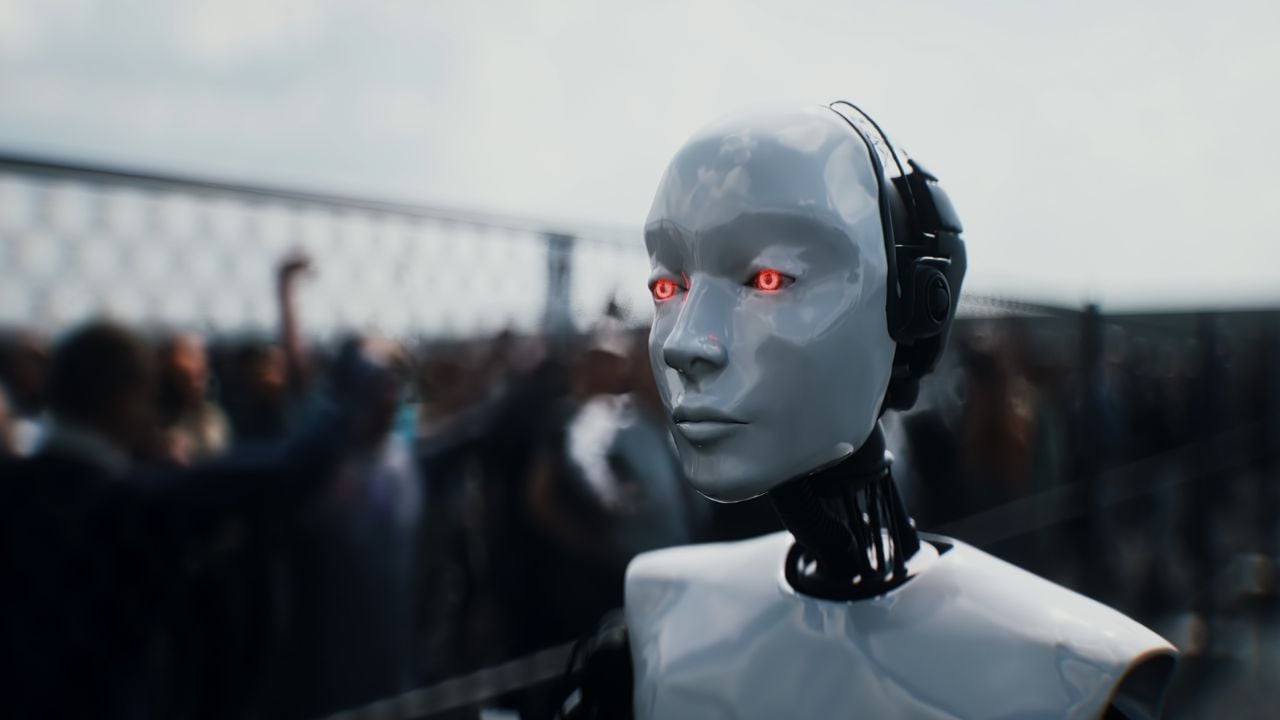
10 Everyday Decisions Pennsylvanians Refuse to Let AI Make for Them

McDonald’s spent nearly three years testing AI voice ordering at its drive-throughs with IBM’s help, then shut the whole experiment down in 2024 after it kept mishearing customers.
That failure made national news because voice ordering looked like the easiest problem AI could solve.
Across Pennsylvania, harder calls than a drive-through order still get left to a person on purpose.
These are the everyday decisions many Pennsylvanians refuse to let AI make for them.
1. Setting Your Home’s Asking Price
Zillow’s Zestimate runs a Pennsylvania home through neural network-based machine learning models before it ever hits the market, spitting out a dollar figure in seconds.
A seller in Bucks County rarely stops there.
Zillow itself says to treat that number as a starting point, and recommends getting a professional appraisal or a comparative market analysis from a real estate agent instead.
So the seller sits down with a local agent who has walked the block.
The agent’s number ends up on the sign.
Not the algorithm’s.
Why a Pennsylvania Seller Doesn’t Stop at the Zestimate
Zillow builds the Zestimate from public records and recent sales, then lets its models fill in the gaps between them.
Those gaps get wider on a block with older housing stock, additions, or a finished basement no public record ever mentions, exactly the kind of block a Pennsylvania rowhome or farmhouse often sits on.
A real estate agent’s comparative market analysis fills that same gap with a set of eyes instead of a formula.
2. Wit or Witout
Philadelphia cheesesteak counters like Pat’s and Geno’s still run on one spoken exchange: Wit or witout, meaning with onions or without.
Nobody taps it in.
McDonald’s spent nearly three years testing AI voice ordering at its drive-throughs with IBM, then ended the test in 2024 after the system kept mishearing orders.
Philadelphia never signed up for that experiment in the first place.
A cheesesteak order still has to be heard, not guessed at.
3. Building Your Own Hoagie
Wawa and Sheetz, both born as Pennsylvania gas stations that grew into sandwich empires, run their hoagie orders through a touchscreen that builds the sandwich to exact spec.
Self-order kiosks nationwide increasingly nudge customers toward an AI-generated recommended combo, an upsell dressed up as a suggestion.
Not here.
A Pennsylvanian standing at that screen taps every topping, every bread, every extra by hand, then walks away with a sandwich nobody else built for them.
4. Setting Your Fantasy Lineup
Eagles and Steelers fans fill fantasy football league rooms across Pennsylvania every fall, and ESPN’s platform now runs on an IBM AI engine that generates more than 36 billion insights a season on who to start and who to sit.
None of it’s locked in.
A manager still opens the app Sunday morning and taps submit on their own lineup, gut feeling and all.
Ignore the machine’s advice entirely, and the league still counts your score.
5. Talking to a Person About the Claim
Lemonade sells homeowners insurance in Pennsylvania, and its AI can review and pay a straightforward claim in as fast as three seconds, no human involved at any point.
Many Pennsylvania homeowners never see that speed.
The moment a claim gets messy, a burst pipe, storm damage, a number that doesn’t match the receipts, the file leaves the AI and lands with Lemonade’s own human claims team.
Many homeowners call ahead and ask for that person directly instead of waiting on the app to decide it’s too complicated for a bot.
A claim form can’t hear the panic in your voice.
A person can.
6. Choosing Your Rowhome’s Color
A rowhome owner in Philadelphia’s Society Hill or Pittsburgh’s South Side stands on the sidewalk holding a paint chip up against the actual brick in daylight before committing to a color.
Sherwin-Williams sells an AI-powered app called Color Expert that scans a photo of a room and suggests colors that complement what’s already there.
That rowhome owner rarely opens it.
No app was standing there at 4 p.m. to see how the color changed.
A person was.
Psst! How much do you know about Pennsylvania’s tech history? Take our quiz and see how many you can get right.
Quiz
Pennsylvania Tech IQ
Answer these questions on Pennsylvania inventions and firsts. We bet you can’t get them all right. Prove us wrong?
Before it did anything resembling modern computing, Pennsylvania’s ENIAC was built during World War II to calculate what?
7. Squeezing Your Own Tomatoes
Reading Terminal Market has run under one roof in Philadelphia since 1893, and its Amish-run stalls still let a shopper pick up a peach or a tomato and judge it by hand.
No app sorts that produce for you.
Large distributors increasingly run tomatoes through optical sorting machines before a truck ever reaches a store, cameras built to recognize an item's color, size, and shape and grade it automatically.
At Reading Terminal, the customer squeezes first and decides second.
Nobody else gets that call.
8. Overriding the Thermostat
PECO, the Philadelphia-area electric utility, sells ecobee smart thermostats through its own marketplace, complete with a rebate, and ecobee markets its Eco+ software as an actual AI engine that predicts a home's heating and cooling needs on its own.
Many Pennsylvania homeowners install it, then turn around and shut off the automatic scheduling.
They set their own numbers instead: Cooler at night, warmer the second someone's out of the shower.
The algorithm optimizes for savings.
A person optimizes for comfort, and those two goals don't always agree.
9. Filling Out Your Bracket
Villanova, Pitt, and Penn State fans fill out March Madness brackets by hand every spring, penciling in upsets on a gut feeling and nothing more.
Whole platforms now sell AI-simulated brackets built from thousands of statistical projections.
The office pool doesn't care.
A Pennsylvania fan picks their alma mater to make a run they know, deep down, probably isn't coming.
That's not a data problem.
That's loyalty.
10. Calling the Pharmacist
UPMC, the Pittsburgh-based health system with hospitals across the state, has warned patients against leaning on AI symptom checkers for a diagnosis.
Its own doctors point people back toward an actual pharmacist or physician instead.
A chatbot can rattle off a list of possible causes for a headache.
It can't feel your forehead.
It can't ask the one follow-up question that changes everything, either.
Pennsylvanians still pick up the phone and ask a person.
The Machine That Started It All
Pennsylvania's habit of keeping a person in charge goes back further than anything on this list.
ENIAC, the world's first general-purpose electronic computer, started running at the University of Pennsylvania in 1946, built to calculate artillery firing tables faster than a room full of people with pencils could.
It filled a room, weighed roughly 30 tons, and still needed a person to feed it every question by hand.
Eighty years later, the state that built the first computer still treats that arrangement as correct.
The machine calculates.
A person decides.
Rite Aid got its start in Scranton in 1962, when Alex Grass opened Thrift D Discount Center, a general discount store with no pharmacy counter at all.
The pharmacy came a few years later, and today that counter is still where many Pennsylvanians walk up first, no matter what a symptom-checker app just told them.
9 Reasons Retirees Are Rethinking Pennsylvania in 2026
Pennsylvania's lottery has sent more than $37 billion to programs for older residents since 1972, one of the few state lotteries in the country built that way.
That sounds like retirees have it made in Pennsylvania, and the picture turns out to be more complicated.
9 Reasons Retirees Are Rethinking Pennsylvania in 2026
9 Signs You Grew Up in a Pennsylvania Steel Town
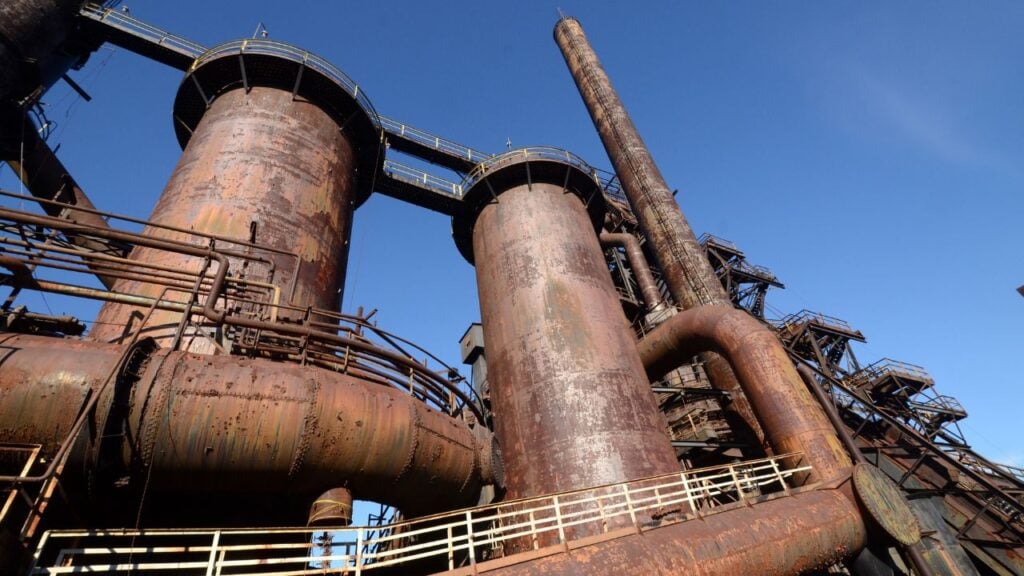
Bethlehem Steel once ran the biggest mill many Pennsylvania families had ever seen.
An entire way of raising a family grew up around its furnace schedule, and none of it looked like anywhere else in the country.
